Midnight Express: A Cinematic Classic Revisited
Midnight Express stands as one of the most visceral and controversial films ever committed to celluloid. Released in 1978 and directed by Alan Parker, this biographical drama chronicles the harrowing true story of Billy Hayes, an American college student imprisoned in a Turkish prison for drug smuggling. The film became a cultural phenomenon, earning four Academy Award nominations and sparking international diplomatic tensions that would persist for decades. Its raw emotional power, combined with technical brilliance and controversial storytelling choices, makes it essential viewing for anyone serious about cinema history.
The film’s impact transcends typical movie entertainment—it became a geopolitical incident, a cautionary tale, and a masterclass in how cinema can provoke, disturb, and ultimately transform audiences. Whether you’re revisiting this classic film through Movies HD or discovering it for the first time, understanding its context, production, and legacy reveals why Midnight Express remains perpetually relevant to discussions about justice, cinema, and human resilience.

The True Story Behind the Film
Billy Hayes’ ordeal began in 1970 when the 23-year-old American was arrested at Istanbul’s airport with four kilograms of hashish in his possession. What followed was a nightmare spanning nearly five years within the brutal Turkish penal system. Hayes was sentenced to thirty years in prison, a sentence that seemed effectively permanent given the conditions and corrupt judicial system he faced. His imprisonment became a symbol of American vulnerability abroad and raised questions about international drug enforcement, personal responsibility, and the ethics of harsh punishment.
The narrative of Midnight Express transforms Hayes’ biography into dramatic cinema, inevitably taking creative liberties with facts and timelines. Screenwriter Oliver Stone, who also wrote the screenplay, compressed events and heightened emotional beats to create maximum dramatic impact. This approach—combining documentary authenticity with theatrical interpretation—would become standard practice in biographical filmmaking, though Midnight Express pushed these boundaries further than most films before it.
Hayes ultimately escaped from prison in 1975 with help from fellow inmates and sympathetic guards. His subsequent memoir, published in 1977, became the foundation for Stone’s screenplay. The book itself was controversial, depicting Turkish officials and fellow prisoners in unflattering ways that would later cause significant diplomatic friction between the United States and Turkey. When the film adaptation amplified these portrayals, Turkish authorities and citizens viewed it as a deliberate attack on their national character.
Production and Direction
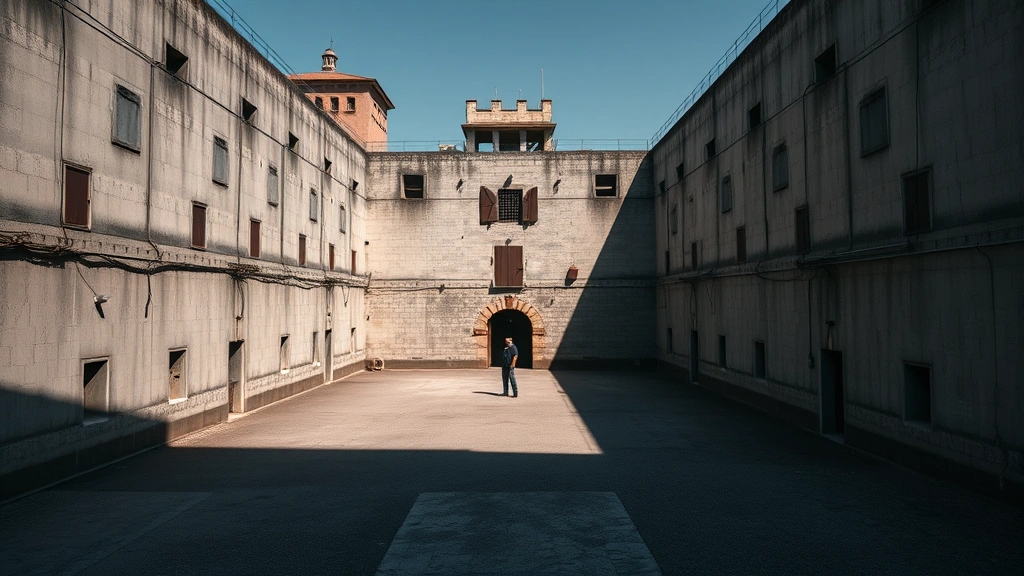
Alan Parker’s directorial approach to Midnight Express established many visual and narrative conventions that would influence prison dramas for decades. Parker, already known for his work in film criticism and analysis, brought unprecedented intensity to the project. His decision to film primarily in Malta rather than Turkey proved crucial—it allowed creative freedom while maintaining visual authenticity. The production design by Geoffrey Kirkland created a convincing representation of Sagmalcilar Prison that audiences found utterly believable.
Parker’s direction emphasizes psychological deterioration alongside physical confinement. Rather than relying solely on external depictions of prison brutality, Parker internalized Billy’s experience, using subjective camera work, disorienting editing, and sound design to convey mental anguish. The film’s aesthetic becomes increasingly distorted as Billy’s mental state deteriorates, a technique that influenced how filmmakers would subsequently approach depicting psychological trauma and institutional dehumanization.
The production faced significant challenges beyond logistics. The Turkish government, even before seeing the final film, expressed concerns about its content. This pre-release tension only heightened public interest and created an aura of controversy that paradoxically boosted the film’s commercial prospects. Parker’s willingness to maintain artistic vision despite political pressure became part of the film’s mythology.
Cast and Performances
Brad Davis delivered a career-defining performance as Billy Hayes, capturing both the youthful naiveté that led to his arrest and the hardened survivor he became. Davis’s physical transformation throughout the film—from athletic college student to emaciated prisoner—required genuine commitment to the role. His emotional range, particularly in scenes depicting psychological breakdown and desperate hope, established him as a serious dramatic actor. Tragically, Davis passed away in 1991 from AIDS-related complications, making his performance in Midnight Express even more poignant in retrospect.
Randy Quaid’s portrayal of Jimmy Booth, Billy’s fellow inmate and friend, provided crucial emotional grounding. Their relationship forms the emotional core of the narrative, representing human connection as survival mechanism in a dehumanizing environment. Quaid’s performance oscillates between humor and despair, illustrating how inmates develop coping mechanisms to endure psychological torture.
John Hurt’s appearance as Max, another prisoner, and Bo Hopkins as the sympathetic American consular official, rounded out a supporting cast that elevated the material beyond typical prison drama conventions. Each performance contributed to the film’s documentary-like authenticity despite its theatrical presentation.
Technical Mastery and Cinematography
Cinematographer Michael Chapman created visual language that transformed Midnight Express into a sensory experience. Chapman’s lighting design progressively desaturates color as Billy’s imprisonment continues, reflecting his emotional and psychological deterioration. Early scenes in Istanbul contain vibrant, almost touristic colors, establishing a stark contrast with the gray, cold prison environment that dominates the film’s latter half.
The editing by Gerry Hambling deserves particular recognition. The film employs subjective editing that mirrors Billy’s disorienting experience—sudden cuts, rapid montages, and temporal distortion create visceral unease. This technical approach influenced countless subsequent films exploring psychological states and institutional confinement. When examining how critics evaluate films, technical achievement like this editing becomes central to serious analysis.
Giorgio Moroder’s electronic score amplifies the film’s intensity without overwhelming its naturalistic performances. The synthesized music creates an otherworldly quality, suggesting Billy’s alienation from normal human experience. The score’s pulsing rhythms mirror heartbeat and anxiety, becoming almost a character itself in the narrative. This innovative approach to film scoring influenced how composers would subsequently use electronic music for psychological dramas.
Controversy and International Impact
The Turkish government’s response to Midnight Express proved unprecedented in cinema history. Turkish officials claimed the film presented their nation as barbaric and corrupt, depicting Turkish citizens as sadistic and unjust. The film was banned in Turkey, and Turkish-American relations suffered measurable strain. Decades later, the Turkish government continued to protest the film’s distribution and legacy, viewing it as a permanent stain on their international reputation.
The controversy raises legitimate questions about cinematic representation and national stereotyping. Critics argued that the film, while based on true events, exaggerated Turkish brutality while minimizing Billy’s own responsibility for his circumstances. The narrative framing suggests Turkish society itself as pathological rather than examining systemic corruption affecting all prisoners regardless of nationality. This debate about accuracy, artistic license, and ethical representation in biographical cinema remains relevant to contemporary filmmaking discussions.
Interestingly, Billy Hayes himself later expressed regret about aspects of the film, noting that it perpetuated negative stereotypes and didn’t fully represent the complexity of Turkish culture or his own experience. His evolution in perspective illustrates how biographical subjects often experience complicated relationships with their cinematic representations—the dramatic necessities of film sometimes conflict with nuanced truth.
The controversy paradoxically enhanced the film’s cultural significance. It transformed Midnight Express from entertainment into a geopolitical text, something that transcended typical movie discussion. When exploring extensive film libraries, viewers encounter Midnight Express laden with historical context that shapes their interpretation.
Cultural Legacy and Modern Relevance
Midnight Express established template conventions for prison dramas that persist today. The film’s emphasis on psychological deterioration, the dehumanizing machinery of institutional systems, and individual resistance against overwhelming circumstances became archetypal narrative structures. Films from The Shawshank Redemption to Papillon to contemporary international prison dramas owe intellectual debt to Parker’s groundbreaking approach.
The film’s exploration of American vulnerability abroad resonates particularly in contemporary contexts. As international travel increases and geopolitical tensions fluctuate, Midnight Express remains a cautionary narrative about the consequences of breaking foreign laws, the limitations of diplomatic protection, and the randomness of fate. Billy’s story suggests that circumstance, youthful poor judgment, and geographic misfortune can converge catastrophically, a theme that transcends 1978 specificity.
Modern viewers encountering Midnight Express
Critical Analysis and Awards Recognition
The Academy recognized Midnight Express with four nominations: Best Film Editing, Best Original Score, Best Director, and Best Adapted Screenplay. While the film won only the editing award, the nominations validated its technical and artistic achievement. Critics praised Parker’s direction, Chapman’s cinematography, and the performances, though some noted the ethical problems embedded in the narrative perspective.
Serious film analysis reveals layers of meaning in Midnight Express beyond surface narrative. The film functions as critique of American exceptionalism—the implicit assumption that American citizens deserve different treatment than locals. It simultaneously critiques Turkish institutional corruption while suggesting that Billy’s arrest, however brutal the subsequent treatment, resulted from genuine criminal activity. These tensions remain unresolved, creating productive complexity for interpretation.
When consulting memorable cinema dialogue, Billy’s final monologue in Midnight Express
Contemporary academic film studies examines Midnight Express as historical document revealing 1970s attitudes about international relations, drug policy, and criminal justice. The film captures specific moment when American confidence in global supremacy was fractured by Vietnam, Watergate, and hostage crises. Billy’s imprisonment became metaphor for American vulnerability in an increasingly complex geopolitical landscape.
The film’s influence extends beyond cinema into documentary filmmaking and journalism. Many subsequent documentaries about imprisoned Americans abroad explicitly or implicitly reference Midnight Express, using its narrative framework to contextualize contemporary cases. This demonstrates how cinema shapes how we understand real events, a phenomenon worth considering critically when engaging with biographical films.
For those interested in comprehensive film analysis and critical perspectives, exploring research on media consumption patterns reveals how films like Midnight Express influence public opinion about international affairs. Academic research demonstrates that cinema significantly shapes attitudes toward foreign nations and criminal justice systems, making the ethical representation questions raised by this film perpetually relevant.
Understanding Midnight Express requires acknowledging its dual nature: it’s simultaneously a masterpiece of filmmaking craft and a problematic representation of Turkish society. This complexity prevents easy dismissal or uncritical celebration, instead demanding engaged critical thinking about how cinema tells stories and shapes understanding of real events and real nations.
FAQ
Is Midnight Express based on a true story?
Yes, Midnight Express is based on Billy Hayes’ true experience of imprisonment in a Turkish prison from 1970-1975. However, the film takes creative liberties with timelines, character portrayals, and specific events. The core narrative—American arrested for drug smuggling, subjected to harsh prison conditions, eventually escapes—is factually accurate, though the cinematic presentation emphasizes drama over documentary precision.
Was Billy Hayes actually imprisoned for five years?
Billy Hayes was imprisoned for nearly five years (1970-1975) before escaping. The film compresses his experience and dramatizes certain events, but the duration and general brutality of his imprisonment are accurately represented. His escape itself, while genuine, was dramatized for cinematic effect.
Why did Turkey ban Midnight Express?
Turkey banned the film because Turkish officials and citizens viewed it as presenting their nation and people in an unfairly negative light. The film depicts Turkish authorities as corrupt and sadistic, and Turkish society as barbaric. The Turkish government argued these portrayals constituted defamation and requested the film’s suppression, a controversy that persisted for decades.
Did Billy Hayes apologize for the film?
Years after the film’s release, Billy Hayes expressed regret about how it portrayed Turkey and Turkish people, acknowledging that the film perpetuated negative stereotypes. However, he also maintained that his imprisonment and the brutality he experienced were genuine, creating a complex legacy where the film’s controversial portrayal coexists with authentic trauma.
How does Midnight Express compare to other prison dramas?
Midnight Express distinguished itself through psychological intensity, technical innovation, and willingness to present morally ambiguous situations. While subsequent prison dramas may feature more graphic violence or elaborate escape sequences, few achieve Midnight Express‘ balance of artistic craft and emotional devastation. The film’s influence on the genre remains substantial.
What awards did Midnight Express win?
Midnight Express won the Academy Award for Best Film Editing. It received additional nominations for Best Director (Alan Parker), Best Adapted Screenplay (Oliver Stone), and Best Original Score (Giorgio Moroder), but won only the editing award. Despite limited awards success, the film achieved critical acclaim and significant cultural impact.
Where can I watch Midnight Express?
You can find Midnight Express through various streaming platforms, on Blu-ray and DVD, or through services like Movies HD that specialize in classic cinema. The film remains widely available despite its controversial history, though some international markets may have restrictions based on government policies.


