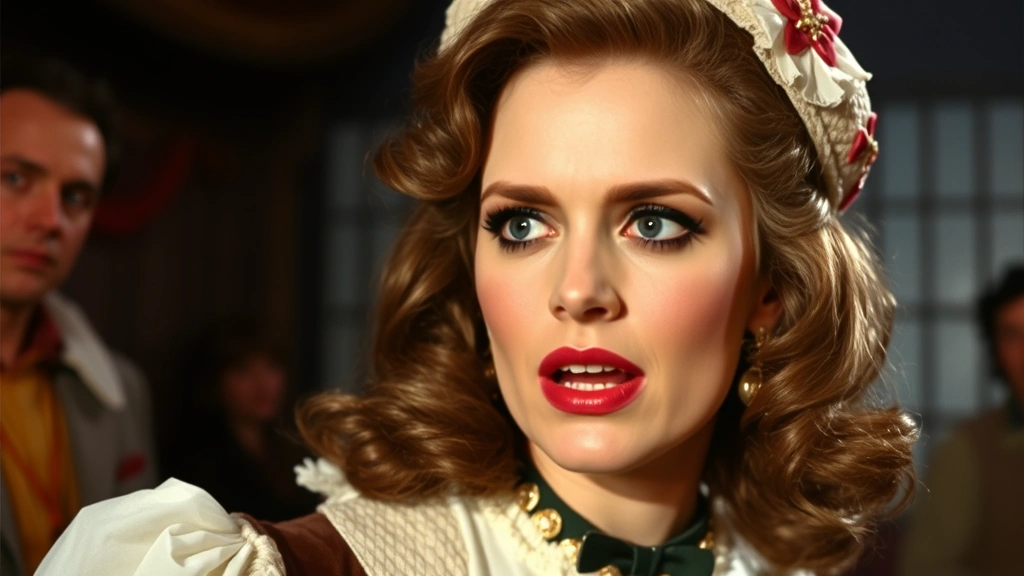
Madeline Kahn’s Top Roles: Expert Insights Into a Comedy Legend’s Career
Madeline Kahn remains one of cinema’s most versatile and underrated performers, delivering unforgettable comedic moments across four decades of film and television. Her distinctive voice, impeccable timing, and ability to balance absurdist humor with genuine pathos made her a favorite among audiences and filmmakers alike. From her breakout roles in Mel Brooks classics to her dramatic turns in prestige cinema, Kahn’s filmography showcases an artist constantly pushing boundaries and refusing to be typecast.
This comprehensive analysis explores Madeline Kahn’s most significant performances, examining how her unique talents shaped American comedy and influenced generations of performers. Whether you’re revisiting her classic work or discovering her brilliance for the first time, understanding her career trajectory reveals the complexity of a performer who could make audiences laugh while simultaneously delivering nuanced, human characters.
Early Career Breakthrough and Musical Theater Foundation
Before Madeline Kahn became a household name, she spent years honing her craft in theatrical productions, where her exceptional vocal abilities and comedic instincts were first recognized. Her early work in Broadway productions established her as a performer capable of handling complex musical numbers while maintaining character integrity. This theatrical foundation proved invaluable when she transitioned to film, bringing a level of physicality and vocal expressiveness rarely seen in cinema comedy during the 1970s.
Kahn’s breakthrough film role came in Paper Moon (1973), directed by Peter Bogdanovich, where she demonstrated remarkable range as a con artist opposite Ryan O’Neal and Tatum O’Neal. Her performance earned her an Academy Award nomination and immediately established her as a talent worth watching. The role showcased her ability to portray morally ambiguous characters with depth and humor, a skill that would define much of her career. She brought a vulnerable quality to what could have been a one-dimensional character, creating someone simultaneously comedic and sympathetic.
Following this success, Kahn appeared in Blazing Saddles (1974), which would become one of her most iconic and frequently referenced roles. Her portrayal of Lili Von Shtupp, the German cabaret singer, has become legendary in cinema history. The character’s extended musical number remains one of comedy’s most memorable sequences, demonstrating Kahn’s ability to commit fully to absurdist material while maintaining technical perfection. Her timing, delivery, and willingness to embrace the ridiculous nature of the character made the scene transcendent, elevating it beyond mere slapstick into genuine artistic achievement. When exploring famous movie quotes, Kahn’s lines from this film remain endlessly quotable and beloved.
Her rapid ascension during this period established her as a comedic force, but what distinguished Kahn from her contemporaries was her refusal to become merely a comic relief performer. She sought roles that challenged her and allowed her to demonstrate the full spectrum of her abilities, from dramatic intensity to musical virtuosity.
Mel Brooks Collaborations: Comedy Gold and Creative Partnership
The partnership between Madeline Kahn and director Mel Brooks represents one of cinema’s most fruitful creative collaborations. Beyond Blazing Saddles, Kahn appeared in Young Frankenstein (1974), where she played Elizabeth, the fiancée of Gene Wilder’s Victor Frankenstein. In this film, Kahn demonstrated her ability to anchor a comedy with genuine warmth while participating in increasingly absurd scenarios. Her performance provided an emotional center to the film, making audiences invest in her character’s romantic storyline even as chaos erupted around her.
Kahn’s work in High Anxiety (1977) further showcased her versatility within Brooks’s comedic universe. Playing Victoria Brisbane, the love interest and therapist, she managed to be simultaneously funny and genuinely touching. The character could have been merely decorative, but Kahn infused her with intelligence and agency, making her an equal partner in the comedic proceedings rather than simply a target for jokes. This approach to female characters in comedy became increasingly important as her career progressed.
What made these Brooks collaborations particularly special was Kahn’s understanding of the director’s comedic sensibilities. She could deliver broad, physical comedy with the same precision she brought to subtle, character-based humor. Brooks clearly appreciated her talents, repeatedly casting her in roles that allowed her to shine. These films remain among the most rewatched and quoted comedies in cinema history, with Kahn’s contributions essential to their enduring popularity.
Her ability to make audiences laugh while maintaining character integrity influenced how subsequent performers approached comedy roles. Rather than playing characters for laughs, Kahn played characters who happened to be in funny situations, a distinction that elevated the material and created more memorable performances.
Expanding Dramatic Range Beyond Comedy
While Kahn’s comedic genius earned her fame, her dramatic work deserves equal recognition and appreciation. She appeared in The First Wives Club (1996), a film that allowed her to explore more mature themes while maintaining her comedic edge. The ensemble cast provided her with talented scene partners, and she held her own against established dramatic performers. Her ability to shift between comedy and drama within the same scene demonstrated the depth of her acting abilities.
In Clue (1985), Kahn played Mrs. White in this cult classic mystery-comedy. The film’s ensemble cast and rapid-fire comedic style suited her perfectly, allowing her to deliver both physical comedy and witty dialogue. The movie has become beloved by multiple generations of viewers, and Kahn’s performance remains a highlight, proving her ability to thrive in ensemble comedies where every actor contributes equally to the humor.
Her television work, particularly in dramatic roles, revealed dimensions of her talent that her film work sometimes didn’t fully explore. Guest appearances on prestige television programs showed her capability to deliver intense, emotionally resonant performances. This versatility made her invaluable to producers and directors seeking performers who could handle any genre or dramatic requirement.
For those interested in understanding how to evaluate performances across different genres, learning how to become a film critic provides frameworks for analyzing acting choices and performance techniques. Kahn’s career offers an excellent case study for aspiring critics seeking to understand how great performers build careers across multiple mediums and genres.
Television Legacy and Guest Appearances
Madeline Kahn’s television work extended her reach beyond film audiences and demonstrated her versatility across mediums. Her appearances on variety shows and sketch comedy programs showcased her ability to perform in live settings, where her timing and physical comedy could be fully appreciated. These performances often became legendary among television enthusiasts and comedy historians.
She appeared in numerous television movies and dramatic series, bringing her distinctive talents to projects ranging from comedy to serious drama. Her guest appearances on shows like The Mary Tyler Moore Show and Laverne & Shirley introduced her to broader audiences and demonstrated her ability to work effectively in ensemble casts. Television allowed her to reach viewers who might not frequent art house cinemas, making her a more universally recognized performer.
Her television work also allowed her to develop recurring characters and longer narrative arcs than films typically permit. This extended time with characters enabled deeper exploration of their personalities and motivations, showcasing Kahn’s ability to build complex characters over multiple episodes. Her television legacy remains underexplored by contemporary critics and historians, deserving greater recognition and analysis.
When exploring contemporary entertainment options, checking the best movies currently on Netflix or visiting ScreenVibeDaily’s entertainment blog can help you discover both classic and contemporary content worth your time. Understanding how performers like Kahn worked across mediums provides context for appreciating modern entertainers.
Understanding Her Performance Style and Influence
Madeline Kahn’s distinctive performance style combined several elements that made her uniquely recognizable and influential. Her vocal delivery—featuring characteristic inflections, comic timing, and musicality—became immediately identifiable to audiences. She could make ordinary dialogue hilarious through her delivery, a skill that separates great comedians from merely competent ones. Her voice itself became a comedic instrument, capable of expressing emotion, humor, and character simultaneously.
Her physical comedy was equally sophisticated. Rather than relying on slapstick or exaggerated movements, Kahn used subtle physicality to enhance her characterizations. A raised eyebrow, a specific hand gesture, or a particular posture could communicate volumes about her character’s emotional state or intentions. This restraint made her comedy more elegant and sophisticated than broader styles, appealing to audiences across demographics and education levels.
Kahn’s influence on subsequent performers cannot be overstated. She demonstrated that female comedians could be complex, intelligent, and capable of anchoring films. She refused to be limited to decorative roles or supporting players, instead demanding substantial parts that allowed her talents to flourish. Contemporary comedians frequently cite her as an influence, recognizing how she elevated the medium and refused to accept limitations based on gender.
Her approach to character development influenced how comedy itself was understood and appreciated. Rather than separating character from comedy, she integrated them seamlessly, creating performances where the humor emerged naturally from the character’s personality and situation. This approach has become standard in contemporary comedy, a testament to her influence on the medium.
Research into performance techniques and comedy evolution reveals how performers like Kahn shaped audience expectations and professional standards. Understanding the best movie review sites helps you access critical perspectives on her work from film scholars and professional critics who have analyzed her contributions in depth.
Her career demonstrates the importance of versatility and refusal to be typecast. While she became famous for comedy, she continuously sought roles that challenged her and allowed her to explore new dimensions of her talent. This approach to career building—prioritizing interesting roles over commercial considerations—has become a model for performers seeking longevity and respect in the entertainment industry.
The legacy of Madeline Kahn extends beyond her individual performances to influence how comedy itself is created and understood. She proved that comedy could be intelligent, sophisticated, and deeply character-driven while remaining accessible and entertaining. Her refusal to accept limitations on what she could do as a performer opened doors for subsequent generations of comedians and actresses.
FAQ
What was Madeline Kahn’s most famous role?
While she had many iconic roles, her performance as Lili Von Shtupp in Blazing Saddles (1974) remains her most famous and frequently referenced. The extended musical number showcasing her character has become legendary in cinema history and remains endlessly quotable. However, her work in Paper Moon, Young Frankenstein, and High Anxiety are equally important to understanding her career and talents.
Did Madeline Kahn win any major awards?
Kahn received an Academy Award nomination for Best Supporting Actress for her role in Paper Moon (1973). While she didn’t win the Oscar, she received numerous other accolades and recognition from industry peers and critics. Her influence and legacy have grown considerably since her active career, with contemporary critics and performers frequently praising her contributions to cinema and comedy.
Why is Madeline Kahn considered underrated?
Despite her significant contributions to comedy and cinema, Kahn remains underappreciated in mainstream entertainment discourse. Her comedic talents were sometimes overshadowed by the broader films she appeared in, and her dramatic work has not received the critical attention it deserves. Contemporary film criticism has begun reassessing her career and recognizing her as a major talent, but she remains less discussed than contemporaries like Lily Tomlin or Gilda Radner.
What other films should I watch to appreciate her work?
Beyond her most famous roles, Kahn appeared in Clue (1985), The First Wives Club (1996), and numerous television appearances. Exploring her complete filmography reveals the breadth of her talents and demonstrates her ability to work effectively across genres and mediums. When looking for comprehensive film recommendations, free streaming options and entertainment blogs provide curated selections of her work.
How did Madeline Kahn influence contemporary comedy?
Kahn’s approach to character-driven comedy, her refusal to be typecast, and her demonstration that female comedians could be complex and substantial influenced how comedy is created and understood. Contemporary performers frequently cite her as an influence, and her work serves as a model for how to build a career that respects both artistic integrity and entertainment value. Her influence extends beyond comedy to how performances generally are approached and evaluated.


