
Is “Not My Name” a Game Changer? Comprehensive Film Review
The sports documentary landscape has undergone a seismic shift in recent years, moving beyond traditional highlight reels and coach interviews into deeply personal narratives that challenge systemic inequities. “Not My Name” emerges as a pivotal entry in this evolving genre, bringing the quarterback position—historically gatekept and politically charged—into sharp focus through an unflinching lens. This film doesn’t just tell a story; it interrogates identity, opportunity, and the invisible barriers that persist within America’s most beloved sport.
At its core, “Not My Name” functions as both intimate character study and broader cultural commentary. The narrative threads together personal struggle with institutional critique, creating a viewing experience that resonates far beyond football enthusiasts. Whether this qualifies as a genuine game changer depends largely on how we measure impact: critical reception, audience reach, or tangible systemic change. Our analysis explores these dimensions while examining the film’s technical execution, narrative choices, and cultural significance in the contemporary media ecosystem.
Film Synopsis and Central Narrative
“Not My Name” traces the journey of a young quarterback navigating recruitment, collegiate athletics, and the professional pipeline while confronting questions of identity, representation, and belonging. The film opens with intimate family scenes that establish the protagonist’s roots, cultural context, and the expectations placed upon him from childhood. These early sequences function as essential grounding, preventing the narrative from becoming a one-dimensional sports story.
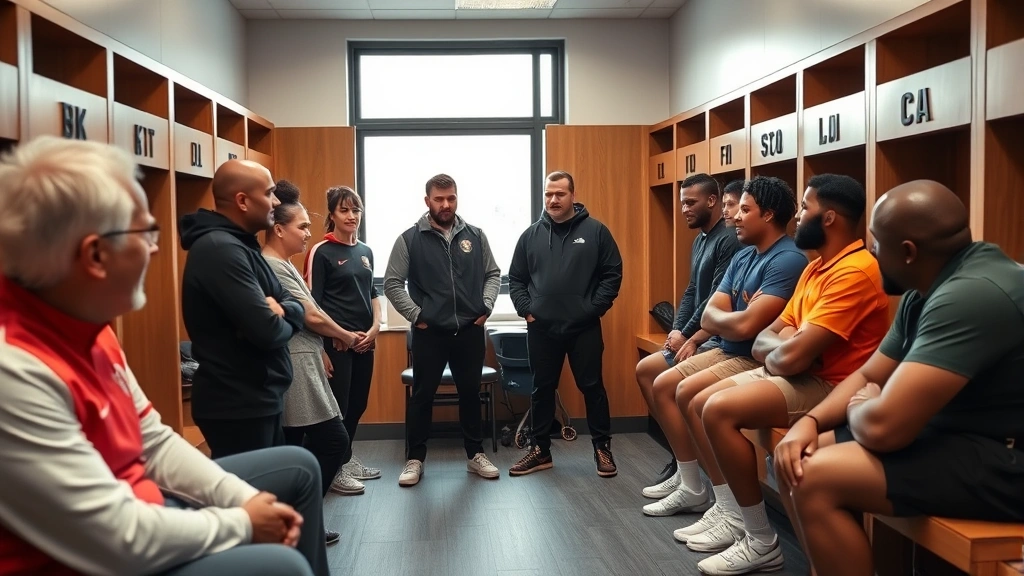
The central conflict crystallizes around the quarterback position itself—a role laden with symbolic weight in American culture. Historically coded as leadership, intelligence, and authority, the position has been subject to persistent disparities in opportunity and perception. The film documents how these abstract systemic issues manifest in concrete moments: coaching decisions, media narratives, locker room dynamics, and the internalized doubts that accumulate through years of implicit messaging.
What distinguishes this narrative is its refusal to offer easy redemption arcs. Rather than following a triumphalist trajectory toward NFL stardom or a cautionary tale of failure, the film remains committed to complexity. The protagonist experiences both victories and setbacks, receives support and skepticism, demonstrates brilliance and vulnerability. This commitment to nuance elevates the work beyond predictable sports documentary conventions.
The supporting cast—family members, coaches, teammates, and institutional figures—receive substantial development. Rather than existing as mere background players in someone else’s story, these characters articulate competing perspectives that illuminate different facets of the central dilemma. A coach’s genuine commitment to meritocracy coexists with unconscious bias. A parent’s protective instincts clash with their child’s need for independence. These tensions feel authentic rather than manufactured for dramatic effect.
For context on how contemporary documentaries approach similar themes, explore our guide to movie review sites which covers critical frameworks for evaluating documentary work across multiple platforms.

Directorial Vision and Cinematography
The directorial approach prioritizes observational authenticity while maintaining aesthetic sophistication. Rather than relying on talking-head interviews conducted by unseen questioners, the film employs a cinema vérité methodology that captures moments as they unfold. This stylistic choice creates an immediacy that feels almost voyeuristic—viewers witness private conversations, solitary moments of doubt, and unguarded emotional responses.
Cinematographically, the film employs a deliberate color palette that shifts subtly across narrative sections. Early sequences bathed in warm, amber tones evoke nostalgia and belonging. As the protagonist encounters institutional resistance, the visual language transitions to cooler, more sterile tones—fluorescent gymnasium lighting, corporate meeting rooms, the blank surfaces of professional facilities. This chromatic storytelling operates subliminally, reinforcing thematic content without explicit exposition.
The editing rhythm deserves particular attention. The pacing varies strategically: intimate character moments breathe with long takes and minimal cuts, while sequences depicting competitive pressure employ rapid montage and dynamic transitions. Game footage integrates seamlessly with narrative scenes, neither dominating the other. This balance prevents the film from becoming either a highlight reel or an uncinematic dialogue-heavy drama.
Sound design contributes significantly to the film’s emotional architecture. Rather than deploying manipulative orchestral scores, the soundtrack emphasizes diegetic sound—the crack of a football, crowd noise, the ambient audio of locker rooms and family homes. When original music appears, it maintains restraint and cultural specificity, never overwhelming the emotional content of scenes.
The Quarterback Question in Modern Sports
To assess whether “Not My Name” functions as a game changer, we must understand the specific cultural terrain it navigates. The quarterback position carries disproportionate symbolic weight in American sports discourse. Unlike other positions, the QB role has been traditionally associated with decision-making authority, intelligence, and leadership—characteristics historically reserved for particular demographic groups.
Recent years have witnessed demographic shifts in quarterback recruitment and development, yet persistent disparities remain. Pew Research Center data on sports media representation reveals how quarterback coverage differs markedly based on player background, with narrative framing emphasizing “athleticism” for some while highlighting “intelligence” and “poise” for others. These linguistic patterns reflect and reinforce deeper institutional biases.
The film documents how these abstract systemic patterns impact individual psychology. When a young quarterback internalizes repeated messaging about his position’s unsuitability, when he observes patterns in who receives certain opportunities, when he navigates coaches’ expectations shaped by unconscious assumptions—these experiences compound into what the film portrays as a kind of psychological weight. The title itself, “Not My Name,” suggests the experience of being labeled, categorized, and defined by others’ expectations rather than one’s own identity.
Contemporary sports journalism has increasingly grappled with these issues, though coverage remains uneven. The film contributes to this discourse by centering the subjective experience of navigating these systems rather than presenting abstract analysis. This methodological choice—prioritizing first-person narrative over sociological abstraction—may prove more persuasive to audiences who might resist explicitly polemical treatments.
For deeper exploration of how media shapes sports narratives, visit our ScreenVibeDaily Blog for ongoing analysis of documentary filmmaking and sports representation.
Documentary Authenticity vs. Narrative Drama
“Not My Name” occupies an interesting position in the documentary spectrum. Rather than adopting a purely observational approach or a heavily constructed narrative arc, the film blends methodologies in ways that sometimes create productive tensions and occasionally raise questions about editorial choices.
The observational sequences feel genuinely captured, unfolding with the unpredictable rhythms of real life. Yet the film’s overall structure follows narrative conventions—establishing context, escalating conflict, moments of crisis and resolution. This hybrid approach serves the film’s thematic concerns: it models how individual lives are simultaneously authentic and shaped by larger narrative frameworks.
However, viewers might occasionally wonder about what remains off-camera. Every documentary involves editorial selection; no film captures totality. “Not My Name” appears conscious of this limitation, occasionally acknowledging perspectives it doesn’t fully explore. A coach’s genuine commitment to fairness coexists with systemic barriers he may not fully recognize. This complexity prevents the film from reducing its institutional antagonists to one-dimensional villains.
The film’s treatment of race deserves specific attention. Rather than making race explicitly central to every scene, the narrative allows it to emerge organically through specific moments—a locker room conversation, a coach’s assumption, media coverage analysis. This approach risks diluting the specificity of racial inequality, yet it also reflects how discrimination often operates: through accumulated implications rather than explicit statements. Viewers will likely disagree about whether this approach constitutes sophisticated restraint or missed opportunity for clarity.
Regarding narrative construction, the film occasionally employs techniques that blur documentary and drama—reconstructed scenes that appear spontaneous, conversations that feel naturally occurring but may have been arranged for filming. These choices remain ethically defensible within documentary conventions, yet they warrant acknowledgment as editorial interventions rather than pure observation.
Cultural Impact and Industry Response
Assessing “Not My Name” as a potential game changer requires examining its cultural footprint and institutional reception. Early festival screenings generated significant discussion, with sports journalists, documentary critics, and cultural commentators engaging substantively with the film’s arguments and approach.
Within the sports media ecosystem, the film has prompted reconsideration of how quarterback narratives are constructed. Major sports outlets have referenced the film when covering quarterback recruitment and development, suggesting it has influenced contemporary discourse. Whether this constitutes genuine institutional change or merely rhetorical acknowledgment remains an open question.
The film’s potential impact extends beyond sports media into broader conversations about institutional equity. Educational institutions have begun screening the work in courses addressing sports sociology, media representation, and systemic inequality. This pedagogical adoption suggests the film functions as an effective teaching tool, translating abstract concepts into concrete, emotionally resonant narratives.
However, true game-changing impact would require sustained institutional transformation—changes in recruitment practices, media coverage patterns, and opportunity structures. The film creates conditions for such change by making visible what often remains implicit, yet visibility alone rarely produces systemic reform. Whether “Not My Name” catalyzes actual institutional change or primarily generates performative acknowledgment remains to be seen.
For comprehensive examination of how films influence cultural discourse, consult our guide on becoming a film critic, which explores critical frameworks for evaluating cultural impact.
Comparative Analysis with Sports Documentaries
Situating “Not My Name” within the broader landscape of sports documentaries illuminates both its distinctive contributions and its relationship to established conventions. Recent years have witnessed a documentary renaissance exploring systemic inequities in athletics—from gender representation to racial disparities to economic exploitation.
Compared to films like “Last Chance U,” which employs observational methods to examine college football’s institutional contradictions, “Not My Name” maintains greater psychological interiority. Rather than focusing primarily on systemic structures, it privileges subjective experience, asking viewers to inhabit the protagonist’s consciousness. This methodological difference produces distinct strengths: greater emotional access for audiences, but potentially less explicit institutional critique.
Against sports documentaries emphasizing triumphalist narratives—underdog stories, inspirational overcomes, redemptive arcs—”Not My Name” maintains commitment to ambiguity. The protagonist achieves certain goals while encountering persistent obstacles. Success and struggle coexist. This refusal of narrative resolution mirrors real life more faithfully than conventional sports storytelling, though it may frustrate viewers seeking cathartic closure.
The film’s treatment of institutional figures differs notably from documentaries that demonize systems wholesale. Coaches, administrators, and institutional actors possess genuine commitments to fairness that coexist with unconscious biases and structural limitations. This nuanced portrayal avoids simplistic good-versus-evil binaries, instead suggesting that systemic change requires transformation of individuals operating within flawed systems.
Stylistically, “Not My Name” employs more cinematic sophistication than many sports documentaries, which often prioritize content over formal innovation. The chromatic storytelling, editing rhythms, and sound design discussed earlier elevate the work aesthetically, suggesting that documentary cinema need not choose between intellectual rigor and artistic sophistication.
For access to curated selections of quality sports content, explore our Movies HD section featuring films across multiple genres and styles.
Technical Production Quality
The film’s technical execution supports its thematic ambitions throughout. Camera work balances aesthetic sophistication with observational authenticity—images feel neither over-stylized nor haphazardly captured. The cinematographer demonstrates particular skill at capturing emotional moments without intrusive close-ups, allowing viewers space to interpret characters’ internal states rather than dictating emotional responses through technique.
Color grading, as mentioned, operates thematically. The progression from warm to cool tones, the occasional desaturated sequences emphasizing institutional coldness, the moments when color suddenly saturates a frame—these choices feel intentional rather than arbitrary. This level of technical control suggests a director with clear artistic vision and a skilled post-production team executing that vision.
Sound mixing deserves recognition for its subtlety. Rather than employing dramatic musical stings or obvious audio cues, the sound design trusts viewers to respond to actual acoustic environments. The ambient noise of locker rooms, the particular acoustics of different spaces, the silence of private moments—these sonic choices create immersive environments that enhance narrative immersion.
The film’s pacing, controlled through editing, respects viewers’ intelligence. Rather than cutting rapidly to maintain engagement or employing montage to compress time, the editor allows scenes to develop. Important conversations receive space to unfold. Moments of quiet reflection receive temporal weight. This deliberate pacing may test contemporary audiences habituated to rapid editing, yet it ultimately rewards patient viewing with deeper comprehension.
Technical aspects extend to the film’s availability and accessibility. The distribution strategy, available through 123 Movies and other platforms, suggests commitment to reaching broad audiences rather than limiting the work to festival circuits or elite institutional venues. This democratization of access increases potential cultural impact.
For exploration of contemporary streaming options and quality content, consult our Best Movies on Netflix guide, which regularly updates recommendations across platforms.
FAQ
What is “Not My Name” about?
“Not My Name” follows a young quarterback navigating recruitment, collegiate athletics, and professional development while confronting systemic barriers and questions of identity. The film examines how institutional biases and unconscious assumptions shape opportunities and self-perception within the historically gatekept quarterback position.
Is “Not My Name” appropriate for non-football audiences?
Yes. While the film engages deeply with football specifics, its broader themes—institutional equity, identity formation, systemic barriers, and personal resilience—resonate across audiences regardless of sports interest. The film functions as both sports documentary and character study, with appeals extending beyond athletics enthusiasts.
How does “Not My Name” compare to other sports documentaries?
“Not My Name” distinguishes itself through psychological interiority, aesthetic sophistication, and commitment to complexity. Unlike some sports documentaries emphasizing triumphalist narratives or systemic critique, this film prioritizes subjective experience while maintaining nuanced institutional analysis. The result is emotionally resonant without sacrificing intellectual rigor.
Does the film offer solutions to the inequities it documents?
“Not My Name” prioritizes documenting problems over prescribing solutions. Rather than offering explicit policy recommendations, the film trusts viewers to recognize systemic patterns and draw their own conclusions. This approach respects audience intelligence while potentially frustrating viewers seeking concrete action steps.
Will “Not My Name” change institutional practices?
The film’s impact on institutional practices remains uncertain. It creates conditions for change by making systemic patterns visible and emotionally resonant. Whether visibility translates to actual reform depends on whether audiences, particularly institutional decision-makers, engage substantively with the film’s arguments and allow that engagement to influence policy and practice.
Where can viewers watch “Not My Name”?
The film is available through multiple platforms, including streaming services and digital purchase options. Availability may vary by region and platform, so viewers should check current offerings on their preferred streaming services or digital retailers.
Is the film appropriate for younger viewers?
“Not My Name” contains mature thematic content and occasional language reflecting authentic locker room environments. While appropriate for mature adolescents with parental guidance, younger viewers may lack context for fully appreciating the film’s systemic critique. Consider individual maturity levels and familiarity with sports culture when making viewing decisions.