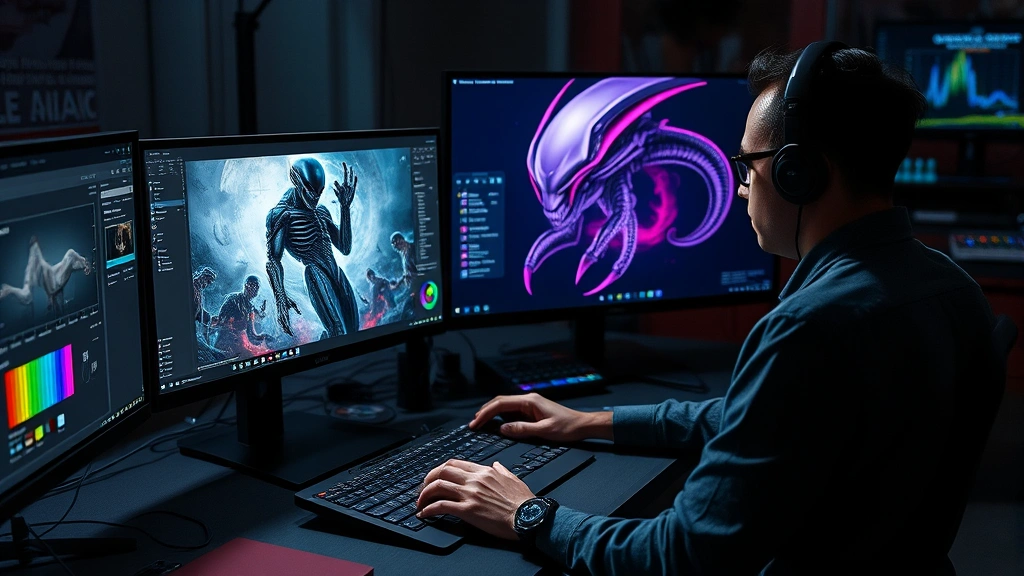
Alien Movie Posters: Design Evolution & Trends
The alien movie poster represents one of cinema’s most compelling visual battlegrounds, where science fiction aesthetics collide with marketing psychology to create some of the most iconic imagery in entertainment history. From the minimalist terror of the original Alien (1979) to the bombastic spectacle of contemporary blockbusters, these posters have evolved into sophisticated visual narratives that communicate narrative stakes, tonal complexity, and franchise identity in mere seconds. The design evolution of alien movie posters tells a broader story about how visual culture responds to technological advancement, audience expectations, and the shifting landscape of digital media distribution.
Today’s alien movie posters operate within a fundamentally different ecosystem than their predecessors. Where vintage posters relied on painted artwork, hand-drawn typography, and limited color palettes, modern designs integrate photorealistic rendering, dynamic composition techniques, and platform-specific optimization strategies. The journey from practical artistry to digital sophistication reflects not just technological capability but a deeper transformation in how filmmakers, studios, and audiences engage with science fiction imagery. Understanding this evolution requires examining the design principles, cultural contexts, and marketing strategies that have shaped alien cinema’s visual identity across decades.
The Foundation Era: 1979-1989
Ridley Scott’s Alien (1979) established the visual template that would dominate science fiction poster design for generations. The original poster featured a deceptively simple composition: a dark, textured surface dominated by a single glowing element—the iconic egg that would become synonymous with xenomorph horror. This restraint represented a philosophical shift in how science fiction could be marketed. Rather than displaying elaborate alien creatures or sprawling space vistas, the designers understood that suggestion and mystery proved more compelling than explicit revelation.
The poster’s genius lay in its negative space and psychological manipulation. The predominantly black background created an sense of cosmic void, while the luminescent egg introduced both beauty and dread. This approach reflected broader design trends in 1970s cinema, where minimalism and psychological horror influenced marketing strategies across multiple genres. The ScreenVibeDaily Blog has explored how this era fundamentally reshaped expectations for science fiction visual communication.
Throughout the 1980s, alien movie posters began experimenting with more elaborate compositions while maintaining the foundation of visual intrigue. Aliens (1986) introduced a more action-oriented aesthetic, featuring Sigourney Weaver’s character in tactical gear surrounded by xenomorphs. The poster shifted from psychological horror toward military sci-fi spectacle, reflecting the film’s tonal evolution from survival thriller to combat narrative. Painted artwork remained the dominant medium, with artists like John Alvin creating hyper-detailed renderings that showcased creature design while maintaining atmospheric tension.
The practical limitations of physical artwork during this period actually contributed to poster effectiveness. Artists couldn’t achieve photorealistic precision, so they compensated through exaggerated lighting, dramatic shadows, and carefully orchestrated focal points. This constraint forced creative problem-solving that resulted in visually distinctive work. When you examine Movies HD collections featuring these era posters, the hand-crafted quality remains immediately apparent and continues resonating with contemporary audiences.
Digital Revolution: 1990s-2000s
The emergence of digital design tools fundamentally transformed alien movie poster creation. Software like Photoshop, introduced in 1990, gradually replaced traditional painting as the primary medium. This transition enabled unprecedented precision, layer manipulation, and photographic integration. Designers could now combine multiple photographic elements, apply sophisticated color grading, and iterate designs with minimal resource investment compared to traditional methods.
The 1990s witnessed alien movie posters embracing increasingly complex visual narratives. Independence Day (1996) featured densely packed compositions showing alien spacecraft, human military forces, and iconic landmarks—a maximalist approach reflecting the film’s apocalyptic scope. The poster communicated narrative stakes through visual abundance rather than restraint. Simultaneously, The Fifth Element (1997) demonstrated how vibrant color palettes and stylized character portraiture could define alien cinema aesthetics, moving beyond the monochromatic darkness that characterized earlier entries.
Digital technology also democratized poster creation, allowing smaller productions to achieve professional visual standards. Creature design became increasingly sophisticated, with 123 Movies featuring numerous examples of how digital rendering enabled detailed alien anatomies that would have been impossible to achieve through traditional painting. The photorealistic rendering of extraterrestrial beings became a technical benchmark for establishing production credibility and visual sophistication.
However, this era also witnessed potential pitfalls of digital abundance. Some posters became visually overwhelming, cluttering composition with excessive elements competing for attention. The lack of physical constraints that had previously guided design decisions sometimes resulted in less focused work. Nevertheless, the best examples from this period—particularly Alien: Resurrection (1997) and Pitch Black (2000)—demonstrated how digital tools could enhance rather than replace fundamental design principles.
Contemporary Design Paradigms
Modern alien movie posters operate within distinctly different parameters than predecessors. The rise of platform-specific design requirements means a single film now requires dozens of variations: theatrical posters, IMAX formats, streaming platform dimensions, social media crops, and international region-specific versions. This fragmentation has created new design challenges while simultaneously enabling targeted visual communication strategies.
Contemporary posters demonstrate sophisticated understanding of attention economy principles. Designers recognize that viewers typically spend 2-3 seconds engaging with poster imagery, necessitating immediate visual impact and clear focal hierarchy. The most effective recent alien movie posters employ bold color contrasts, dramatic lighting, and strategically positioned character elements that communicate genre and tone instantaneously. Best Movies on Netflix collections showcase how streaming platforms have influenced poster aesthetics toward more intimate, character-focused compositions compared to theatrical releases.
The aesthetic has also shifted toward greater visual sophistication and artistic ambition. Films like Prometheus (2012) and Alien: Covenant (2017) featured posters emphasizing philosophical themes and visual poetry rather than creature spectacle. These designs incorporated negative space, subtle color gradations, and layered meaning that rewarded sustained contemplation. This approach reflects broader cultural shifts toward treating science fiction as serious artistic medium rather than merely entertainment product.
Technological advancement in rendering, lighting simulation, and color grading has enabled poster designers to achieve unprecedented visual fidelity. However, the most successful contemporary examples demonstrate that technical capability alone doesn’t guarantee effective design. The strongest alien movie posters balance technical sophistication with conceptual clarity, using advanced tools to serve fundamental design principles rather than overwhelming them.
Typography and Visual Hierarchy
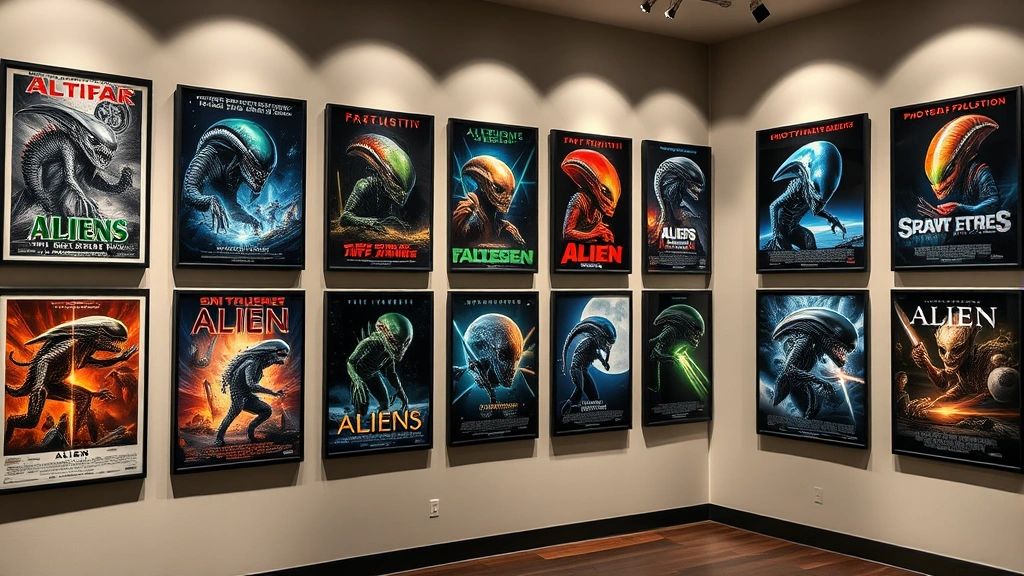
Typography represents a frequently overlooked yet crucial element in alien movie poster design. The title treatment communicates genre expectations, tonal positioning, and franchise identity through letterform selection, spacing, and integration with imagery. Early alien posters often featured utilitarian sans-serif typography, reflecting science fiction’s association with technological precision and modernist aesthetics.
Contemporary approaches demonstrate greater typographic experimentation. Some posters employ custom typefaces specifically designed for individual films, creating unique visual signatures. Others leverage existing typeface families while applying sophisticated modifications—altered letter spacing, custom kerning, or integrated imagery—to achieve distinctive results. The Action Movies 2025 collection features numerous examples of how typography strategies have evolved to support increasingly complex visual narratives.
The relationship between typography and imagery has become increasingly sophisticated. Rather than treating text as overlay element, modern designs frequently integrate titles into compositional structure. Letterforms might emerge from alien creatures, echo architectural elements, or respond to lighting conditions within the image. This integration serves dual purposes: it establishes visual unity while demonstrating creative ambition and attention to detail that signals production quality.
Color application to typography has evolved from simple contrast enhancement to sophisticated chromatic strategies. Designers employ color psychology principles, ensuring title treatment reinforces emotional content and thematic concerns. A poster emphasizing dread might employ cool colors and minimal saturation, while action-oriented designs leverage warm tones and dynamic color relationships.
Color Psychology in Alien Imagery
Color represents perhaps the most psychologically powerful tool in alien movie poster design. The color palette immediately communicates genre, tone, and narrative positioning before viewers consciously engage with specific imagery. Understanding these chromatic strategies reveals sophisticated psychological manipulation underlying apparently simple design decisions.
Dark blue and black dominate alien movie posters associated with horror and existential dread. These colors evoke cosmic void, unknown depths, and psychological darkness. The original Alien established this chromatic vocabulary, which continues influencing contemporary horror-inflected alien cinema. The near-absence of color creates tension and forces viewers toward small chromatic elements—a glowing creature, illuminated spacecraft, or strategically placed highlight that commands disproportionate attention.
Conversely, science fiction posters emphasizing wonder and exploration frequently employ vibrant blues, purples, and cyan tones. These colors suggest technological sophistication, cosmic grandeur, and aspirational futures. Avatar (2009), while not strictly alien cinema, demonstrated how vibrant blue palettes could dominate contemporary blockbuster aesthetics and influence subsequent design trends across the genre. The color became so associated with extraterrestrial environments that subsequent alien films either adopted similar chromatic strategies or deliberately diverged to establish visual distinctiveness.
Warm colors—oranges, reds, and yellows—typically signal danger, conflict, or apocalyptic scenarios. These colors appear prominently in action-oriented alien cinema, suggesting explosion, fire, and combat. Independence Day leveraged warm color palettes extensively, creating visual associations between alien invasion and urban destruction. The psychological impact of warm colors combined with imagery of destruction creates immediate comprehension of narrative stakes.
Grayscale and desaturated palettes represent increasingly common contemporary approach, suggesting technological dystopia or scientific detachment. These approaches often appear in posters emphasizing intellectual content or philosophical complexity. By removing chromatic distraction, designers direct viewer attention toward compositional elements, facial expressions, and structural relationships that might otherwise be obscured by color.
The sophistication of contemporary color grading technology has enabled nuanced applications of color psychology. Rather than applying uniform color overlays, designers can create complex chromatic relationships where colors shift across composition, respond to lighting conditions, and create layered emotional messaging. This technical sophistication allows single poster to communicate multiple emotional registers simultaneously.
Platform-Specific Optimization Strategies
The contemporary media landscape has fundamentally altered poster design methodology. Rather than creating single definitive poster design, studios now require comprehensive visual systems adapting to diverse platforms with distinct requirements, audience contexts, and technical specifications. This fragmentation represents both challenge and opportunity for design innovation.
Theatrical posters remain the flagship format, designed for large-scale display and sustained viewing. These designs prioritize visual impact, detail clarity, and compositional sophistication that rewards contemplation. However, theatrical poster placement has shifted—billboards and transit advertising now compete with dynamic digital displays requiring even more immediate visual impact than traditional static placements.
Digital and streaming platform requirements necessitate fundamentally different design approaches. Streaming services display posters at thumbnail scale on television screens, mobile devices, and computer monitors. This constraint requires much simpler compositions with greater color contrast, larger typography, and clearer focal points than theatrical versions. A poster that reads effectively at 40 feet becomes illegible at 2 inches. Designers must create versions that function across this enormous scale variation.
Social media optimization demands even greater simplification. Instagram, TikTok, and Twitter display posters at microscopic scales with frequent cropping for feed integration. The most successful social media poster variations employ bold, high-contrast imagery with minimal text, recognizing that platform algorithms and user scrolling behavior necessitate immediate visual impact. Some studios now create distinct social media poster variants that differ significantly from theatrical versions.
International market requirements create additional complexity. Studios produce region-specific poster variations considering cultural aesthetics, language requirements, and local marketing strategies. A poster effective in North American markets might require substantial modification for Asian, European, or Latin American audiences. These variations extend beyond simple translation, encompassing fundamental compositional and thematic adjustments reflecting regional preferences.
Pew Research Center studies on media consumption patterns demonstrate how platform fragmentation has fundamentally altered entertainment marketing. Designers must now operate within ecosystem thinking, creating cohesive visual systems rather than individual posters.
IMAX and premium format requirements introduce additional variables. These large-format presentations demand compositions that expand effectively beyond standard aspect ratios. Designers must consider how compositional elements behave when enlarged dramatically, ensuring clarity and impact at unprecedented scale. This technical consideration influences fundamental compositional choices from project inception.
Franchise Identity and Poster Consistency
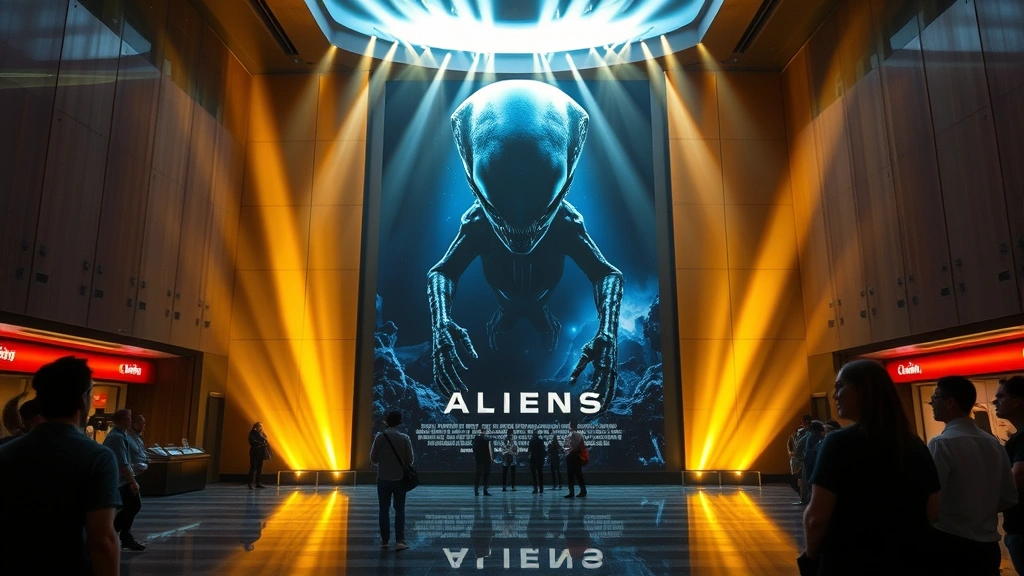
Successful alien movie franchises establish distinctive visual languages that remain recognizable across multiple films while allowing individual installment differentiation. The Alien franchise exemplifies this balance, with each entry maintaining visual continuity—dark palettes, biomechanical aesthetics, xenomorph prominence—while developing distinct visual personality reflecting directorial vision and narrative evolution.
The earliest Alien films established visual conventions subsequent entries both honored and subverted. Ridley Scott’s original and James Cameron’s Aliens created a visual foundation where darkness, biomechanical design, and creature-centric composition became franchise hallmarks. When other directors inherited the franchise, they navigated tension between maintaining franchise identity and establishing individual vision. Jean-Pierre Jeunet’s Alien: Resurrection introduced more vibrant colors and baroque compositional complexity while retaining core xenomorph imagery, creating visual bridge between established convention and directorial distinctiveness.
Franchise poster consistency serves multiple functions. Visually unified series creates brand recognition enabling audiences to identify related content immediately. A viewer encountering an Alien franchise poster recognizes franchise membership through chromatic, compositional, and thematic cues. This recognition facilitates marketing efficiency—audiences actively seeking franchise content can locate it readily, while incidental viewers understand genre and tone instantly.
However, excessive uniformity risks visual fatigue and creative stagnation. The most successful franchises establish flexible visual systems allowing individual films distinctive identities while maintaining cohesive franchise aesthetic. This requires sophisticated design thinking, where fundamental principles remain consistent while specific applications evolve. Color palettes might shift slightly, compositional approaches vary, and typography receives individual treatment—all while maintaining immediately recognizable franchise DNA.
Contemporary franchise management increasingly employs design system thinking, where studios establish comprehensive visual guidelines defining acceptable variation ranges. These guidelines specify color palettes, typography families, compositional approaches, and imagery conventions that individual films must navigate. This systematized approach ensures consistency while providing sufficient flexibility for creative expression and individual film differentiation.
The Alien franchise’s visual evolution across four decades demonstrates how franchise identity can accommodate significant directorial variation while maintaining cohesive brand presence. Each film’s poster reflects its director’s sensibility—Scott’s austere precision, Cameron’s action dynamism, Jeunet’s baroque elaboration, and Ridley’s philosophical restraint—yet franchise membership remains immediately apparent. This achievement represents sophisticated design thinking applied across extended creative partnerships.
Looking at best movie review sites and entertainment journalism, critics frequently note how poster design contributes to broader audience perception of franchise health and creative vitality. Posters represent first visual contact with film content, establishing expectations and framing interpretive contexts. When franchise posters demonstrate visual sophistication and creative ambition, audiences infer comparable quality in film itself.
Emerging Trends and Future Directions
The future of alien movie poster design will likely emphasize dynamic, interactive, and platform-native approaches. Static imagery increasingly competes with video content, animated sequences, and interactive experiences. While traditional posters remain important, studios experiment with animated poster variations, interactive social media content, and augmented reality experiences that extend poster engagement beyond passive viewing.
Artificial intelligence and generative design tools represent emerging frontier in poster creation. AI systems can rapidly generate compositional variations, color palettes, and design solutions, potentially accelerating design iteration and enabling unprecedented personalization. However, AI integration raises questions about creative authorship, artistic integrity, and whether algorithmic solutions can achieve emotional resonance comparable to human-directed design. The most likely scenario involves AI augmentation rather than replacement—designers leveraging computational tools while maintaining creative direction and intentional decision-making.
Environmental and sustainability considerations increasingly influence design decisions. Digital distribution reduces physical printing requirements, yet simultaneously demands optimization for screen display. Designers increasingly consider energy consumption of digital displays, carbon footprints of production processes, and environmental impact of marketing materials. This consciousness will likely influence aesthetic choices, potentially favoring efficient design approaches that minimize technical complexity while maintaining visual impact.
The continued fragmentation of media platforms will intensify design system complexity. Rather than single poster designs, studios will likely develop comprehensive visual ecosystems encompassing dozens of variations optimized for specific platforms, contexts, and audience segments. This systematized approach requires sophisticated design thinking, understanding of platform algorithms, and psychological knowledge of audience behavior across diverse contexts.
Research from Columbia Graduate School of Architecture, Planning and Preservation and similar institutions increasingly examines how digital design influences aesthetic evolution and cultural communication. Academic attention to poster design as meaningful cultural artifact reflects growing recognition of visual communication’s significance in contemporary media ecosystem.
FAQ
What makes an effective alien movie poster design?
Effective alien movie posters balance visual impact with conceptual clarity. The strongest designs communicate genre, tone, and narrative stakes within seconds while demonstrating creative ambition and artistic sophistication. Whether through minimalist restraint or complex composition, successful posters establish immediate focal points, employ sophisticated color psychology, and integrate typography meaningfully into overall design. They recognize platform-specific requirements while maintaining cohesive visual identity.
How has digital technology transformed alien poster design?
Digital tools democratized poster creation, enabling photorealistic rendering, complex layer manipulation, and rapid iteration. Designers gained unprecedented precision and creative flexibility while losing physical constraints that previously guided decision-making. Contemporary designers must navigate platform fragmentation, creating multiple variations optimized for distinct contexts. Technology enabled greater sophistication but didn’t automatically improve design quality—fundamental principles remain crucial.
Why do many alien movie posters employ dark color palettes?
Dark colors—particularly blacks and deep blues—evoke cosmic void, unknown depths, and psychological darkness. These chromatic choices align with science fiction’s frequent engagement with existential themes, fear of unknown, and exploration of dangerous environments. Dark palettes also create visual contrast enabling dramatic highlighting of key elements. This color psychology connects to broader cultural associations between darkness and mystery, danger, and the unknown.
How do studios balance franchise consistency with individual film identity?
Successful franchises establish visual systems defining acceptable variation ranges. Core elements—color palettes, typography families, compositional approaches, and imagery conventions—remain consistent while specific applications evolve. This flexible systematization maintains brand recognition enabling audiences to identify franchise membership while allowing individual films distinctive visual personality reflecting directorial vision and narrative uniqueness.
What role do social media requirements play in contemporary poster design?
Social media fundamentally altered poster design methodology. Thumbnail scale viewing, rapid scrolling, platform algorithms, and cropping requirements necessitate simplified compositions with greater color contrast and clearer focal points than theatrical versions. Studios now create distinct social media variations differing significantly from theatrical designs. Designers must consider cross-platform functionality while optimizing for individual platform specifications and user behavior patterns.
How do international markets influence alien movie poster design?
Studios produce region-specific variations considering cultural aesthetics, language requirements, and local marketing preferences. These adaptations extend beyond translation, encompassing fundamental compositional and thematic adjustments reflecting regional preferences. Color psychology, imagery choices, and compositional emphasis may shift significantly across markets. This international approach recognizes that visual communication operates within cultural contexts requiring localized strategies.


