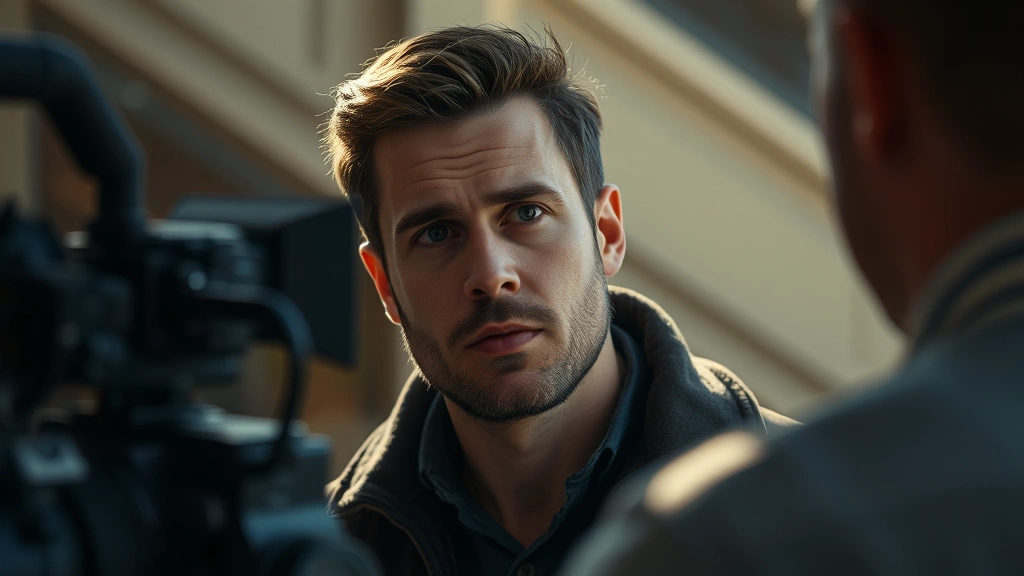
Top Emilio Estevez Movies: A Fan’s Guide
Emilio Estevez has carved an indelible mark on cinema, particularly through his iconic roles in films that defined generations. From his breakthrough performances in the 1980s to his continued work behind the camera, Estevez represents a unique blend of acting talent and directorial vision. His filmography spans genres, showcasing his versatility as both a performer and storyteller. Whether you’re a longtime admirer or discovering his work for the first time, understanding his most significant contributions to film culture provides insight into the evolution of American cinema.
The actor’s career trajectory reveals much about the changing landscape of Hollywood and audience preferences over four decades. His roles in ensemble pieces, dramatic narratives, and action-driven stories demonstrate a willingness to take creative risks. Today’s film enthusiasts can explore his catalog through various platforms, each film offering distinct perspectives on character development, narrative structure, and cinematic craft. This comprehensive guide examines his most essential movies while contextualizing their cultural significance and lasting impact on popular entertainment.
The Breakfast Club: A Cultural Phenomenon
The Breakfast Club (1985) stands as Emilio Estevez’s most recognizable and culturally significant film. In this John Hughes masterpiece, Estevez portrays Andrew Clark, the privileged athlete forced to confront his own privileged perspective during Saturday detention. The film’s ensemble cast—featuring Ally Sheedy, Anthony Michael Hall, Judd Nelson, and Molly Ringwald—created a generational touchstone that remains relevant decades later. Estevez’s performance captures the vulnerability beneath Andrew’s athletic bravado, revealing layers of insecurity and social pressure that resonate with audiences across age groups.
The film’s cultural impact extends far beyond its theatrical run. It became a defining representation of 1980s youth culture, exploring themes of identity, social stratification, and the universal desire for acceptance. Estevez’s character arc demonstrates significant growth throughout the narrative, transforming from a stereotypical jock into a more self-aware individual capable of genuine connection. The famous closing monologue, delivered collectively by the ensemble, encapsulates the film’s central message about breaking down social barriers. When exploring famous movie quotes, The Breakfast Club consistently appears among cinema’s most memorable moments.
The film’s legacy in cinema studies cannot be overstated. Film scholars frequently reference it when discussing ensemble casting, character development, and the art of dialogue-driven narratives. Its influence appears throughout contemporary coming-of-age films, many of which attempt to capture similar authenticity in depicting teenage experience. Estevez’s contribution to this cultural artifact remains a defining element of his professional identity, even as his career has evolved into other territories.
St. Elmo’s Fire and the Brat Pack Era
St. Elmo’s Fire (1985) positioned Emilio Estevez alongside other emerging young talents in what became known as the “Brat Pack” phenomenon. Directed by Joel Schumacher, the film explored post-college adult life with unprecedented depth, following a group of Georgetown graduates navigating career ambitions, romantic complications, and personal growth. Estevez’s portrayal of Kirby Keeger showcased his range beyond the high school setting of The Breakfast Club, demonstrating his capacity to carry narratives focused on adult concerns and relationships.
The ensemble included Rob Lowe, Demi Moore, Andrew McCarthy, and Ally Sheedy, creating a dynamic that reflected real-world friendship groups. Estevez’s character operates as a moral anchor within the narrative, often serving as the voice of reason amid chaos and poor decision-making by his peers. The film’s exploration of ambition, love, and professional disappointment provided audiences with sophisticated character studies often absent from mainstream entertainment. Its visual style, featuring the iconic synthesizer score by David Foster, became synonymous with 1980s cinema aesthetics.
St. Elmo’s Fire represents a transitional moment in Estevez’s career, moving beyond teen-focused narratives into more complex adult drama. The film’s cultural commentary on postmodern adulthood and the pressures of contemporary professional life remains relevant for contemporary audiences examining similar themes. Its influence appears throughout subsequent ensemble dramas exploring interconnected adult relationships and professional ambitions.

Young Guns and Action Cinema
Young Guns (1988) demonstrated Emilio Estevez’s versatility within action-adventure narratives. Portraying Billy the Kid, Estevez brought charisma and complexity to the legendary outlaw, creating a version that transcended simplistic good-versus-evil categorization. Director Christopher Cain crafted a western that appealed to contemporary audiences while maintaining historical interest, and Estevez’s energetic performance drove the narrative forward with genuine enthusiasm. The film’s ensemble cast, including Kiefer Sutherland, Lou Diamond Phillips, and Charlie Sheen, created dynamic chemistry that elevated the material beyond standard genre conventions.
The film’s commercial success proved that Estevez could carry action-oriented narratives, a revelation that expanded his career opportunities significantly. Young Guns employed innovative cinematography and editing techniques that modernized the western genre, making it accessible to audiences less familiar with traditional horse-opera conventions. Estevez’s Billy emerges as a sympathetic character despite his criminal activities, exploring themes of loyalty, betrayal, and the search for belonging within an outlaw community. The film’s visual style, featuring vibrant color palettes and dynamic camera movements, influenced subsequent action films throughout the late 1980s and 1990s.
Young Guns spawned a successful sequel, Young Guns II (1990), in which Estevez reprised his role as Billy. The sequel continued exploring the character’s mythology while maintaining the original’s energy and stylistic innovation. Both films contribute significantly to Estevez’s filmography by demonstrating his capacity to lead action narratives while maintaining character depth and emotional authenticity.
Men at Work and Behind-the-Camera Work
Men at Work (1990) marked Emilio Estevez’s directorial debut, a comedy-thriller that showcased his emerging interest in filmmaking beyond performance. Estevez directed and starred alongside Charlie Sheen as two garbage collectors who stumble upon evidence of corporate malfeasance. The film demonstrated Estevez’s understanding of genre conventions while attempting to subvert audience expectations through unconventional protagonists. While commercial reception proved mixed, Men at Work revealed directorial ambitions that would increasingly occupy Estevez’s creative energy throughout subsequent decades.
The film’s premise—elevating working-class characters to protagonist status—aligned with Estevez’s broader thematic interests in examining overlooked segments of American society. His directorial approach emphasized character development and comedic timing alongside action sequences and thriller elements. Men at Work established patterns that would characterize his subsequent directing work: ensemble casting, attention to character nuance, and thematic exploration of community and social responsibility.
This transition from primarily acting-focused work to directing-centered projects represented a significant evolution in Estevez’s career trajectory. His willingness to move behind the camera demonstrated confidence in his creative vision beyond performance, a decision that ultimately led to more artistically fulfilling projects exploring his deepest thematic interests.
Bobby and Historical Drama
Bobby (2006) represented Emilio Estevez’s most ambitious directorial project, a sprawling historical drama examining the assassination of Robert F. Kennedy. Estevez’s film employed an ensemble structure similar to The Breakfast Club, weaving together multiple character narratives converging on a single historical moment. The cast included Anthony Hopkins, Laurence Fishburne, Sharon Stone, and numerous other notable performers, each portraying distinct perspectives on the Kennedy era and American political consciousness.
Estevez’s directorial approach to Bobby demonstrated sophisticated understanding of ensemble storytelling and historical contextualization. Rather than focusing exclusively on Kennedy himself, the film examined ordinary Americans whose lives intersected with this pivotal moment in American history. This democratizing approach to historical narrative aligned with Estevez’s consistent interest in elevating overlooked voices and experiences. The film’s narrative structure, intercutting between multiple storylines, required precision in editing and pacing that Estevez executed with considerable skill.
Bobby’s critical reception proved mixed, with some praising its ambitious scope and thematic coherence while others criticized its narrative diffusion. Regardless of critical reception, the film demonstrated Estevez’s commitment to substantial, idea-driven filmmaking. His work examining historical moments through the lens of ordinary individuals continued patterns established in his earlier projects while achieving greater scale and complexity. The film’s exploration of American idealism, political engagement, and collective trauma remains relevant for contemporary audiences examining similar themes.
The Way and Spiritual Filmmaking
The Way (2010) stands as Emilio Estevez’s most personally meaningful directorial project, exploring spirituality, family relationships, and personal transformation. Co-written by Estevez and starring his real-life father Martin Sheen, the film follows a grieving father who undertakes the Camino de Santiago pilgrimage in honor of his deceased son. Estevez’s approach to spiritual storytelling emphasized character development and emotional authenticity over didactic messaging, creating a narrative accessible to secular and religious audiences alike.
The film’s production involved genuine pilgrimage experience, with cast and crew walking significant portions of the actual Camino de Santiago route. This commitment to authenticity infused the film with emotional sincerity that resonates powerfully with audiences. Estevez’s direction emphasizes visual beauty and contemplative pacing, allowing viewers space for personal reflection alongside narrative progression. The relationship between Martin Sheen’s character and the various individuals encountered during pilgrimage provides opportunities for thematic exploration of human connection, redemption, and meaning-making.
The Way achieved considerable commercial success, particularly within faith-based cinema communities, while maintaining artistic credibility among broader audiences. Its success demonstrated audience appetite for spiritually-oriented narratives that avoid simplistic messaging or heavy-handed moralizing. Estevez’s work here represents his most fulfilled artistic vision, combining personal investment, thematic sophistication, and emotional authenticity. The film’s exploration of grief, family, and spiritual seeking continues attracting new audiences seeking family movies with meaningful themes.

Notable Supporting Roles
Beyond his leading roles, Emilio Estevez delivered memorable supporting performances that contributed significantly to various films’ overall impact. In The Mighty Ducks (1992), Estevez portrayed Gordon Bombay, a cynical lawyer forced to coach youth hockey as community service. The role proved surprisingly effective, combining comedic timing with genuine warmth as Bombay transforms through his relationships with young athletes. The character’s arc—from self-absorbed cynic to community-minded mentor—aligned with thematic patterns throughout Estevez’s work emphasizing personal transformation and social responsibility.
The Mighty Ducks spawned two sequels, with Estevez reprising his role and eventually directing the third installment. The franchise’s success demonstrated his appeal to family audiences while maintaining sufficient sophistication for adult viewers. The films explored themes of teamwork, perseverance, and personal growth through accessible sports-comedy narratives. Estevez’s Bombay became an iconic character within 1990s cinema, influencing subsequent sports-comedy narratives exploring similar transformation arcs.
Additional notable supporting roles include appearances in Stakeout (1987) alongside Richard Dreyfuss and Freejack (1992). These performances, though secondary to primary narratives, demonstrated Estevez’s ability to enhance ensemble dynamics and elevate material through committed characterization. His consistent approach to supporting work—treating every role with equal seriousness regardless of screen time—contributed to professional reputation for reliability and artistic dedication.
Estevez’s Directorial Vision
Emilio Estevez’s evolution from actor to director-writer represents one of contemporary cinema’s most interesting career trajectories. His directorial projects consistently emphasize ensemble narratives, character-driven storytelling, and thematic exploration of American identity, community, and personal transformation. Unlike many actors transitioning to direction, Estevez demonstrated sophisticated understanding of cinematic language and narrative structure from his directorial debut onward.
His work behind the camera reflects consistent thematic interests established throughout his acting career. Whether examining high school social dynamics in conceptual work or spiritual pilgrimage in The Way, Estevez’s directorial vision emphasizes human connection and the possibility of transformation through genuine encounter with others. His films often feature ensemble structures that democratize narrative focus, ensuring multiple perspectives receive consideration alongside primary storylines. This approach aligns with contemporary narrative trends while maintaining distinctly personal artistic vision.
Estevez’s directorial output remains relatively modest compared to his acting work, suggesting careful selection of projects aligned with his deepest creative interests. This selectivity contributes to the perception of artistic integrity, distinguishing his work from directors pursuing commercial viability above artistic consideration. His commitment to personally meaningful projects—particularly The Way—demonstrates willingness to prioritize creative fulfillment over commercial calculation. For aspiring filmmakers interested in understanding career development and creative evolution, examining Estevez’s trajectory provides valuable insights into balancing commercial viability with artistic authenticity. Those interested in film criticism and analysis may appreciate resources on becoming a film critic.
Estevez’s work demonstrates that substantial filmmaking can emerge from actors willing to invest time developing directorial skills and thematic vision. His films frequently explore similar philosophical questions across different contexts, suggesting deep engagement with particular ideas about human experience and American society. This thematic consistency distinguishes his work from directors pursuing stylistic variety or genre experimentation for its own sake.
Contemporary audiences discovering Estevez’s filmography benefit from existing resources for finding quality movie reviews and analysis across various platforms. Critical reassessment of his work continues as film scholars recognize the sophistication underlying his seemingly accessible narratives. The ScreenVibeDaily movie blog frequently examines his contributions to contemporary cinema alongside other significant filmmakers.
FAQ
What is Emilio Estevez’s most famous movie?
The Breakfast Club (1985) remains Emilio Estevez’s most culturally significant and widely recognized film. His portrayal of Andrew Clark, the athlete confronting his own privilege during detention, became iconic within 1980s cinema and continues resonating with contemporary audiences.
Did Emilio Estevez direct any major films?
Yes, Estevez has directed several notable films including Men at Work (1990), Bobby (2006), and The Way (2010). The Way, co-written by Estevez and starring his father Martin Sheen, achieved considerable critical and commercial success while demonstrating his sophisticated directorial vision.
What happened to Emilio Estevez’s acting career?
Estevez gradually transitioned from acting-focused work toward directing and writing, allowing him to pursue more personally meaningful creative projects. While he continues occasional acting roles, his primary focus shifted toward filmmaking that explores his deepest thematic interests regarding community, transformation, and spirituality.
Are there any Emilio Estevez movies currently available for streaming?
Many of Estevez’s films remain widely available across various streaming platforms, though availability varies by region and subscription service. The Breakfast Club, St. Elmo’s Fire, Young Guns, and The Way maintain consistent availability across major platforms, while other titles may require rental or purchase through specialty services.
What themes appear consistently throughout Estevez’s work?
Estevez’s projects consistently explore personal transformation, community building, social responsibility, and the possibility of meaningful connection across difference. Whether directing or acting, he demonstrates interest in elevating overlooked voices and examining how individuals negotiate identity within social structures.
How has Emilio Estevez influenced contemporary filmmaking?
Estevez’s work, particularly The Breakfast Club and his directorial projects, influenced subsequent ensemble narratives and character-driven storytelling. His approach to depicting youth experience authentically while maintaining thematic sophistication established patterns that contemporary filmmakers continue exploring and adapting.