
Korean Movies’ Global Rise: Industry Insights and Market Trends
The Korean film industry has undergone a remarkable transformation over the past two decades, evolving from a regional player to a dominant force in global cinema. What began as a domestic market primarily serving Korean audiences has blossomed into an international phenomenon, with films from South Korea commanding attention at prestigious film festivals, breaking box office records worldwide, and reshaping how the entertainment industry approaches storytelling. This ascension represents far more than commercial success—it reflects fundamental shifts in global media consumption, the power of streaming platforms, and audiences’ appetite for diverse narratives that challenge Western-centric storytelling conventions.
The global recognition of Korean cinema reached an unprecedented apex with Bong Joon-ho’s Parasite winning the Academy Award for Best Picture in 2020, a watershed moment that signaled the end of an era where non-English language films occupied a peripheral position in mainstream discourse. Yet this victory was merely the culmination of decades of creative excellence, strategic industry development, and cultural export initiatives that transformed Korea into a creative powerhouse. Understanding this rise requires examining the industrial, technological, and cultural factors that positioned Korean movies at the forefront of contemporary global cinema.
The Foundation: Korean Cinema’s Modern Era
Korean cinema’s contemporary dominance has roots extending back to the 1990s, when government deregulation and cultural policies began reshaping the industry landscape. The Korean New Wave, which emerged in the late 1990s and early 2000s, introduced directors who would become internationally acclaimed auteurs. Filmmakers like Park Chan-wook, Lee Chang-dong, and Hong Sang-soo pioneered distinctive visual languages and narrative approaches that distinguished Korean productions from their Hollywood counterparts and Japanese competitors.
The transition from analog to digital filmmaking coincided with Korea’s technological advancement as a nation. As a country with world-leading internet infrastructure and electronics manufacturing, Korea naturally embraced digital cinematography earlier than many regions. This technological adoption enabled Korean filmmakers to experiment with innovative visual techniques while maintaining cost efficiency—a crucial advantage for building an export-oriented industry. The Screen Vibe Daily Blog has documented how technological infrastructure shapes creative output across global film industries.
Government support through the Korea Film Council and strategic cultural policies proved instrumental in establishing industry standards and funding mechanisms. Unlike purely market-driven models, Korean cultural policy treated cinema as both an art form and a strategic export commodity. This dual approach meant that critically acclaimed films received support even when commercial prospects seemed uncertain, creating space for artistic risk-taking that ultimately proved commercially viable. The government’s investment in film infrastructure, training programs, and international festival participation created a virtuous cycle where critical success bred commercial interest.
Streaming Platforms and Global Distribution
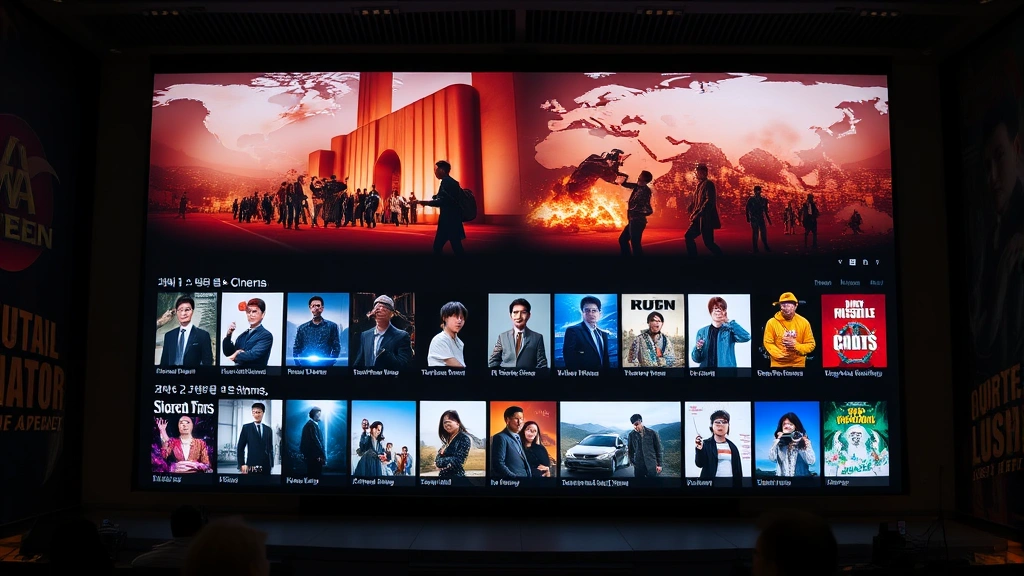
The emergence of global streaming platforms fundamentally altered the distribution landscape for Korean movies, removing geographical and linguistic barriers that previously limited international reach. Netflix’s aggressive expansion into Korean content during the 2015-2020 period represented a pivotal inflection point. The platform’s investment in Korean films and series—from Okja to Squid Game—demonstrated that non-English content could achieve massive global viewership when presented through algorithms designed for discoverability and personalization.
Streaming platforms solved a critical problem that had constrained Korean cinema’s international growth: theatrical distribution. Securing screens in multiplexes outside major cities required expensive marketing campaigns and distribution partnerships that were economically unfeasible for most foreign-language films. Streaming democratized access, allowing viewers worldwide to encounter Korean movies through the same interface they used for English-language productions. The recommendation algorithms employed by Netflix, Amazon Prime, and Apple TV+ treat Korean content with the same prominence as Hollywood productions, fundamentally altering the competitive dynamics.
This distribution transformation occurred precisely when Korean filmmakers were producing their most accomplished work. Directors like Bong Joon-ho, Lee Isaac Chung, and Na Hong-jin had developed distinctive voices that resonated with international audiences, but they previously lacked viable pathways to global theatrical distribution. Streaming platforms provided the infrastructure that matched Korean cinema’s creative excellence with audience access. The result has been exponential growth in viewership, with Korean films now regularly appearing in Netflix’s global top-ten lists and generating hundreds of millions of viewing hours.
Beyond Netflix, Korean production companies have established direct relationships with international distributors, and Korean films increasingly secure theatrical releases in North America, Europe, and other regions. Everything Everywhere All at Once, featuring Korean-American stars and Korean-influenced aesthetics, grossed over $140 million globally—demonstrating that Korean cultural elements possess significant commercial appeal in mainstream Western markets. This success has encouraged studios to greenlight more projects with Korean directors, writers, and stars, further expanding the industry’s international presence.
Creative Innovation and Genre Mastery
Korean filmmakers have distinguished themselves through exceptional genre versatility and willingness to blend genres in unexpected ways. The industry has produced masterworks across virtually every cinematic category: psychological thrillers like Oldboy and Memories of Murder, science fiction epics like The Host, intimate dramas like Burning, horror films like Train to Busan, and action spectacles like Assassination. This genre mastery reflects both artistic ambition and commercial pragmatism—Korean studios developed expertise in multiple genres to maximize domestic market appeal while building international credibility.
The thriller and mystery genres have become particularly associated with Korean cinema, with directors achieving levels of narrative complexity and visual sophistication that have influenced filmmakers globally. The structural innovations in Korean thrillers—non-linear narratives, unreliable narrators, shocking plot reversals—have become influential templates studied in film schools worldwide. Park Chan-wook’s trilogy of vengeance films (Sympathy for Mr. Vengeance, Oldboy, Sympathy for Lady Vengeance) essentially redefined how contemporary cinema approaches moral ambiguity and visual violence.
Korean horror films have similarly achieved international recognition, with directors like Na Hong-jin and Yeon Sang-ho creating works that transcend genre conventions. The Wailing combines mystery, horror, and philosophical inquiry into a complex meditation on faith and doubt. Train to Busan elevated zombie fiction into social commentary about class and survival. These films demonstrate that Korean creators understand how to use genre frameworks as vehicles for substantive thematic exploration—a quality that distinguishes their work from purely formulaic productions.
This creative versatility has made Korean cinema attractive to international audiences seeking films that challenge conventional narrative structures. Western audiences, increasingly sophisticated in their media consumption and fatigued by repetitive franchises, have responded enthusiastically to Korean films that offer narrative unpredictability and visual inventiveness. The best movies based on books often share this quality of narrative complexity, and Korean adaptations have proven particularly skilled at capturing literary nuance in cinematic form.
Economic Factors Driving Industry Growth
The Korean film industry’s economic structure differs significantly from Hollywood’s model, enabling different production strategies and risk calculations. Korean studios typically operate with lower per-film budgets than major Hollywood productions while maintaining high production values through efficient cost management and specialized talent pools. A Korean film budgeted at $10-15 million might achieve visual sophistication comparable to a $30-40 million Hollywood production, creating more favorable return-on-investment ratios.
The domestic market, while smaller than the American market, provides crucial baseline revenue that justifies production investments. Korea’s population of 52 million supports a theatrical exhibition culture with relatively high per-capita cinema attendance. Korean audiences have demonstrated strong support for local productions, with domestic films regularly capturing 50% or more of the national box office. This domestic revenue floor means that international success becomes pure profit rather than necessary cost recovery, enabling continued investment in ambitious projects.
Production financing has become increasingly sophisticated, with Korean companies developing co-production arrangements with international partners. These collaborations distribute financial risk while providing access to international distribution networks and talent. The top historical movies often represent significant production investments, and Korean companies have proven skilled at securing international financing for prestige projects that appeal to festival circuits and discerning audiences.
Tax incentives and government subsidies have supported industry development without creating long-term dependency. Rather than permanent subsidies, Korean cultural policy focused on seed funding for emerging talent and festival participation support. This approach created conditions for sustainable industry development based on creative excellence and market viability rather than permanent government support. The result has been an industry that generates significant export revenue while creating employment and establishing Korea as a cultural leader globally.
Cultural Soft Power and International Appeal
Korean cinema’s global rise represents a broader phenomenon of Korean cultural influence—what scholars term “Korean Wave” or “Hallyu.” This cultural export includes music (K-pop), television dramas, beauty products, and culinary traditions, but cinema serves as a particularly significant vehicle for cultural transmission. Films reach audiences across linguistic and geographical boundaries, introducing viewers to Korean aesthetics, values, and perspectives in emotionally resonant ways that transcend purely informational content.
The appeal of Korean cinema to international audiences reflects several factors. First, Korean films often center characters and narratives that challenge Western assumptions about morality, justice, and social organization. Parasite explicitly critiques class hierarchy and wealth inequality through narrative structures that refuse simplistic moral judgments. The Handmaiden explores gender, sexuality, and power through a complex historical narrative set in Japanese-occupied Korea. These films engage with political and social themes in ways that feel fresh to audiences accustomed to American cinema’s particular ideological frameworks.
Second, Korean visual aesthetics—influenced by traditional Korean art, contemporary design sensibilities, and technological sophistication—create distinctive cinematic languages that appeal to audiences seeking visual novelty. The color palettes, compositional approaches, and spatial relationships in Korean films often differ markedly from Hollywood conventions. This visual distinctiveness makes Korean films immediately recognizable and contributes to their appeal among cinephiles and general audiences alike.
Third, Korean cinema’s treatment of violence, sexuality, and moral complexity reflects different cultural attitudes than American cinema. Korean films often depict violence with unflinching directness that American studios avoid due to ratings concerns. Similarly, sexual content receives treatment that is neither prurient nor evasive. This mature, unsentimental approach to adult themes resonates with international audiences seeking films that treat them as intellectually sophisticated viewers rather than consumers requiring moral reassurance.
The success of Korean cinema has also influenced how other Asian film industries are perceived and distributed globally. The international recognition of Korean films has created pathways for Chinese, Japanese, Thai, and Filipino filmmakers to reach global audiences. This rising tide has expanded the diversity of non-English cinema available to international viewers, fundamentally altering the global film landscape. Platforms dedicated to best movie review sites now routinely feature Korean and other Asian productions alongside Hollywood releases.

Current Market Dynamics and Future Trajectory
The Korean film industry currently faces both unprecedented opportunities and significant challenges. The success of Korean cinema has attracted massive investment from both domestic and international sources, potentially creating conditions for oversaturation and market correction. Additionally, the industry must balance artistic integrity with commercial pressures arising from increased budgets and international expectations.
Box office performance has become volatile, with Korean films experiencing both massive successes and disappointing underperformances. Avatar: The Way of Water and Top Gun: Maverick have dominated Korean multiplexes alongside local productions, creating intense competition for screens. This competitive environment means that Korean films must compete on quality and distinctiveness rather than relying on cultural novelty or algorithmic advantage. The industry is responding by increasing production budgets for tentpole projects while continuing to support smaller, auteur-driven films that feed the festival circuit and streaming platforms.
Streaming platforms’ continued appetite for Korean content provides stability, but also raises concerns about creative autonomy. Platforms’ algorithmic optimization for global audiences may incentivize genre formulas and narrative structures that appeal to the broadest possible demographic rather than challenging or distinctive work. The how to become a film critic guide discusses how critical discourse shapes industry development—and maintaining strong critical tradition becomes increasingly important as commercial pressures intensify.
International co-productions represent a growing portion of Korean cinema. While these collaborations provide access to larger budgets and global distribution, they also risk diluting the distinctive characteristics that made Korean cinema internationally appealing. The challenge for the industry involves maintaining creative distinctiveness while accessing international resources and audiences. Directors like Bong Joon-ho have navigated this balance successfully, creating films with international budgets and casts that remain unmistakably Korean in sensibility.
Research from Pew Research Center indicates that global audiences increasingly consume content across linguistic boundaries, with subtitled and dubbed content gaining acceptance among demographics that previously avoided foreign-language films. This trend strongly favors Korean cinema, which has built significant audience loyalty among viewers comfortable with subtitles. The normalization of non-English content consumption suggests that Korean cinema’s current success may represent a new baseline rather than a temporary phenomenon.
The industry’s future depends on maintaining the balance between commercial viability and artistic ambition that has characterized its rise. Korean film education and training programs continue producing talented directors, cinematographers, and screenwriters, ensuring a pipeline of creative talent. International recognition has elevated prestige associated with Korean cinema, making it an attractive destination for emerging talent. The combination of institutional support, market demand, and creative excellence positions Korean cinema for sustained international prominence.
FAQ
Why have Korean movies become so popular globally?
Korean cinema’s global popularity results from multiple converging factors: exceptional creative talent producing innovative narratives and visual styles, streaming platforms providing frictionless global distribution, lower production costs enabling higher risk-taking, government support for film infrastructure, and cultural distinctiveness that appeals to audiences seeking alternatives to Hollywood conventions. The combination of artistic excellence and strategic distribution has made Korean films increasingly visible and accessible worldwide.
Which Korean directors are most influential internationally?
Directors like Bong Joon-ho, Park Chan-wook, Lee Chang-dong, Na Hong-jin, and Lee Isaac Chung have achieved international recognition and influenced global cinema. Bong Joon-ho’s Parasite winning the Academy Award for Best Picture represents the industry’s apex achievement. These directors are studied in film schools, referenced by international critics, and have inspired filmmakers globally to experiment with narrative and visual innovation.
How do Korean movies compare to Hollywood productions?
Korean films typically feature lower budgets but comparable production values, greater willingness to challenge narrative conventions, more mature treatment of violence and sexuality, and distinctive visual aesthetics influenced by Korean cultural traditions. Rather than direct competition, Korean and Hollywood films increasingly target complementary audiences—viewers seeking different storytelling approaches and cultural perspectives. Many audiences enjoy both simultaneously.
Are Korean movies available on streaming platforms?
Yes, extensively. Netflix, Amazon Prime Video, Apple TV+, and other platforms feature substantial Korean cinema libraries, including both recent releases and classic films. Streaming availability has been crucial to Korean cinema’s global reach, making films accessible to viewers worldwide without theatrical release requirements. New Korean films often premiere on streaming platforms alongside or instead of theatrical releases.
What makes Korean thrillers particularly effective?
Korean thriller directors have mastered complex narrative structures, moral ambiguity, shocking plot reversals, and visual sophistication that create emotionally intense viewing experiences. Films like Memories of Murder, Oldboy, and The Wailing combine genre entertainment with philosophical depth. Korean audiences’ appreciation for challenging narratives and international audiences’ sophistication have created conditions where Korean thrillers can be both commercially successful and artistically ambitious.