Dunkirk’s Cast Brilliance: A Deep Dive into Christopher Nolan’s Ensemble Masterpiece
Christopher Nolan’s Dunkirk (2017) stands as a watershed moment in war cinema, not merely for its technical innovation or narrative ambition, but for its masterful assembly of acting talent across multiple generations. The film’s ensemble cast delivers performances that operate on a different register than traditional war dramas—eschewing melodrama for visceral authenticity, replacing exposition-heavy dialogue with meaningful silence and gesture. This approach demands exceptional actors capable of conveying psychological depth through minimal verbal communication, a challenge that Nolan’s carefully curated cast met with remarkable precision.
The brilliance of Dunkirk‘s casting extends beyond individual performances. Nolan orchestrated a delicate balance between established stars and emerging talent, creating a narrative tapestry where no single actor dominates the frame. This ensemble methodology reflects the film’s thematic preoccupation with collective survival over individual heroism, making the casting strategy inseparable from the film’s artistic vision. Understanding how these actors contributed to the film’s impact requires examining both their individual performances and their collaborative chemistry within Nolan’s innovative three-timeline structure.
Tom Hardy’s Minimalist Mastery: Acting Behind the Mask
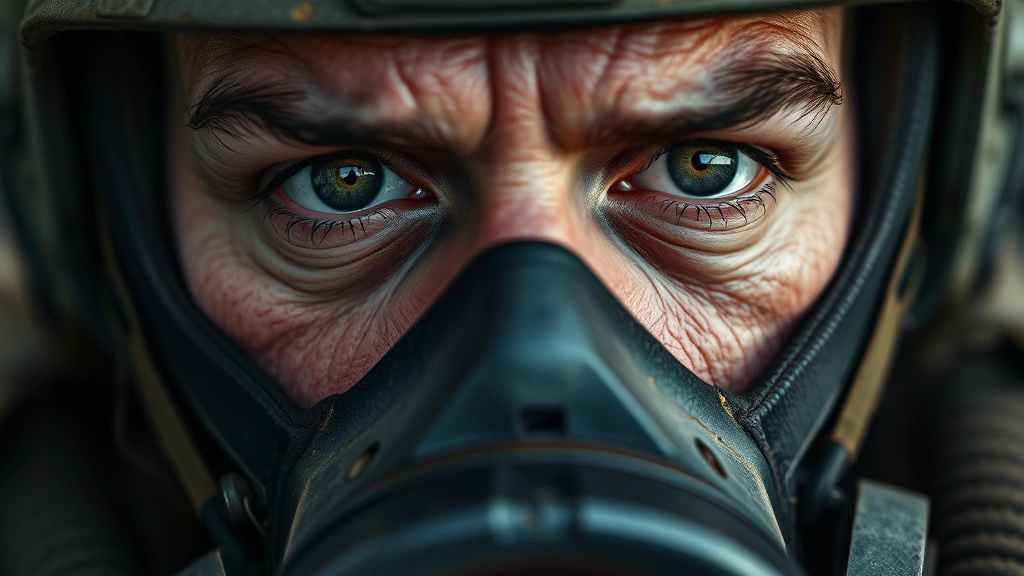
Tom Hardy’s performance as Farrier, the RAF pilot, represents one of contemporary cinema’s most audacious acting challenges. Throughout substantial portions of the film, Hardy’s face remains obscured by an oxygen mask and flight helmet, leaving only his eyes visible to communicate emotional states and psychological transformation. This constraint could have rendered the performance invisible, yet Hardy transforms this limitation into an opportunity for profound minimalist acting. His work recalls the silent film era’s greatest performers, who conveyed complete emotional narratives through eye movement, body tension, and breath.
The genius of Hardy’s approach lies in his understanding that restriction breeds expressivity. Unable to rely on facial expressions, Hardy choreographs minute variations in breathing patterns, the angle of his head, and the intensity of his gaze. When Farrier realizes his fuel situation has become critical, Hardy communicates this existential crisis almost entirely through ocular performance. His eyes widen fractionally; his breathing becomes audible through the mask. These micro-expressions, magnified on IMAX screens, create a portrait of a man confronting mortality with professional detachment masking profound fear.
Hardy’s performance also demonstrates sophisticated understanding of Nolan’s non-linear narrative structure. Farrier appears across all three timelines, yet Hardy subtly modulates his performance to reflect the character’s psychological state at different moments. In the one-week timeline, he embodies youthful confidence; in the one-day timeline, creeping desperation; in the one-hour timeline, philosophical acceptance. These variations occur with minimal dialogue, forcing Hardy to rely on physical vocabulary—posture, gesture, the tension in his shoulders—to communicate temporal displacement and emotional arc.
Fionn Whitehead and the Everyman Protagonist
Fionn Whitehead’s casting as Tommy, the primary ground-level protagonist, represented a significant risk for Nolan. Whitehead was virtually unknown before Dunkirk, lacking the established credibility that typically anchors ensemble films. Yet this apparent vulnerability became the performance’s greatest asset. Whitehead’s relative anonymity allows audiences to project themselves onto Tommy without the interference of star persona. He functions as a blank canvas onto which the audience inscribes their own survival instincts and moral compromises.
Whitehead’s performance captures the psychological disorientation of military catastrophe with remarkable authenticity. His Tommy undergoes a journey from confused civilian-soldier to pragmatic survivor, a transformation that requires shifting from reactive desperation to calculated self-preservation. The actor navigates these moral territories without ever becoming unsympathetic, even when Tommy’s actions border on selfish. This balance—maintaining audience empathy while depicting morally ambiguous behavior—demands exceptional nuance. Whitehead achieves this through his expressive eyes and the tremor in his voice when speaking, conveying internal conflict even when dialogue remains sparse.
The actor’s work benefits immensely from Nolan’s multi-timeline structure. Whitehead portrays Tommy across different psychological states simultaneously, creating a fragmented portrait of trauma and adaptation. When audiences encounter Tommy in the one-week timeline, his desperation reads differently than in the one-hour timeline, where he has already experienced the events that will traumatize him. This temporal complexity demands that Whitehead maintain internal consistency while appearing inconsistent across the narrative’s surface, a sophisticated acting challenge that he executes with impressive control.
Kenneth Branagh’s Authoritative Presence: Command Under Pressure
Kenneth Branagh’s portrayal of Commander Bolton represents classical acting authority deployed in service of understated restraint. Branagh brings Shakespearean gravitas to a character defined by stoic responsibility and the impossible burden of command. Unlike more bombastic military portrayals, Branagh’s Bolton communicates authority through stillness rather than volume, through careful deliberation rather than decisive action. His performance suggests a man whose leadership consists primarily of bearing witness to catastrophe while maintaining operational composure.
The brilliance of Branagh’s work emerges in scenes where he receives reports of escalating disaster—each casualty figure, each lost vessel—yet his expression remains essentially unchanged. This emotional containment communicates the psychological defense mechanisms that military command requires. Branagh understands that genuine authority doesn’t require constant assertion. His Bolton commands respect through his very presence, his careful word choices, and his evident understanding of the impossible situation he navigates. The actor’s classical training manifests in his precise diction and the measured pacing of his dialogue delivery.
Branagh’s performance also anchors the film’s moral complexity regarding military decision-making. He portrays a commander making impossible choices without access to complete information, operating within constraints that guarantee some decisions will result in death. Branagh conveys this moral weight without ever becoming self-pitying or seeking audience absolution. His Bolton accepts responsibility with grim professionalism, embodying a particular conception of masculine duty that the film treats with surprising sympathy while never fully endorsing.
Mark Rylance and Quiet Heroism: The Civilian Perspective
Mark Rylance’s performance as Mr. Dawson, the civilian boat captain, introduces a crucial thematic counterpoint to the military characters dominating the narrative. Rylance brings a distinctly English quality of understated decency to the role, embodying a particular cultural archetype of civilian virtue mobilized by historical necessity. His Dawson represents the ordinary person thrust into extraordinary circumstances through a combination of patriotic duty and simple human compassion. Yet Rylance never allows the character to become sentimental or self-congratulatory about his heroism.
The actor’s performance demonstrates sophisticated understanding of class and generational difference. Rylance’s Dawson operates from a different moral framework than the military characters; his authority derives not from rank but from competence, experience, and moral clarity. He speaks less frequently than other characters, yet his words carry disproportionate weight. When he decides to sail toward Dunkirk despite the danger, Rylance communicates this decision through facial expression and body language more than dialogue. The actor’s weathered features and measured movements suggest a man accustomed to making practical decisions without excessive deliberation.
Rylance’s work benefits from the film’s restoration of civilian agency within war narratives. His Dawson and his boat become symbolic of British civilian mobilization during the evacuation, yet Rylance never plays this symbolism explicitly. He maintains the character’s humanity and specificity, preventing Dawson from becoming merely allegorical. The actor’s subtle performance—his gentle interactions with the traumatized soldier he rescues, his quiet determination to complete his mission—creates a portrait of masculine virtue defined by competence and compassion rather than aggression or domination.
Cillian Murphy’s Psychological Intensity: Trauma Incarnate
Cillian Murphy’s portrayal of the shell-shocked soldier represents one of the film’s most challenging and psychologically demanding roles. Murphy’s character lacks even a name; he functions as a living embodiment of trauma, a man whose psychological damage has rendered him unable to communicate or participate in normal social interaction. This role demands that an actor convey complete psychological disassociation using only body language, expression, and occasional inarticulate vocalizations. Murphy executes this challenge with remarkable sensitivity and authenticity.
The power of Murphy’s performance lies in its refusal to exploit trauma for emotional manipulation. His character doesn’t provide cathartic moments of breakthrough or healing; he remains fundamentally damaged throughout the film, a reminder that not all psychological wounds resolve neatly. Murphy portrays a man locked within himself, communicating distress through tension in his shoulders, the haunted quality of his eyes, and his instinctive violent reactions to perceived threats. The actor understands that authentic trauma often resists narrative resolution, and he honors this reality through his commitment to psychological authenticity over dramatic satisfaction.
Murphy’s work also demonstrates how ensemble films allow actors to take risks that might overwhelm more conventional narratives. His character’s presence affects other characters disproportionately—Mark Rylance’s Dawson must confront the reality of trauma he previously encountered only abstractly. Murphy’s performance thus functions as a catalyst for other actors’ explorations, a role that requires exceptional discipline and generosity. The actor never seeks audience sympathy through conventional means; instead, he demands that audiences confront trauma without aesthetic mediation, creating an uncomfortable but ultimately more honest portrait of war’s psychological consequences.
The Supporting Cast Architecture: Collective Excellence
Beyond the principal roles, Dunkirk‘s supporting cast creates a intricate network of performances that collectively establish the film’s thematic and emotional landscape. Tom Glynn-Carney as George, the young sailor, brings youthful vulnerability to a character who experiences the evacuation’s horror with diminished ability to comprehend or contextualize it. His performance captures adolescent disorientation in the face of catastrophe, a perspective that humanizes the statistical enormity of the evacuation by filtering it through individual innocence and confusion.
Jack Lowden as Collins, the young pilot, provides crucial counterpoint to Hardy’s Farrier. Where Hardy embodies experienced professionalism, Lowden portrays youthful enthusiasm gradually transformed by combat reality. His scenes with Hardy demonstrate the generational transmission of military knowledge and psychological hardening. The actors create a mentorship dynamic through purely visual means—Lowden’s Collins watches Hardy’s Farrier with a combination of admiration and dawning comprehension of what combat demands. Their final scenes together communicate profound emotional resonance despite minimal dialogue.
Barry Keoghan as Whitworth, another young soldier, rounds out the ensemble with a performance characterized by nervous energy and desperate improvisation. Keoghan’s Whitworth lacks the stoic acceptance that characterizes older characters; his youth makes him volatile and unpredictable, a reminder that the evacuation involved predominantly young men whose psychological development remained incomplete. The actor captures the particular anxiety of adolescence amplified by existential threat, creating a character whose panic feels authentic rather than histrionic.
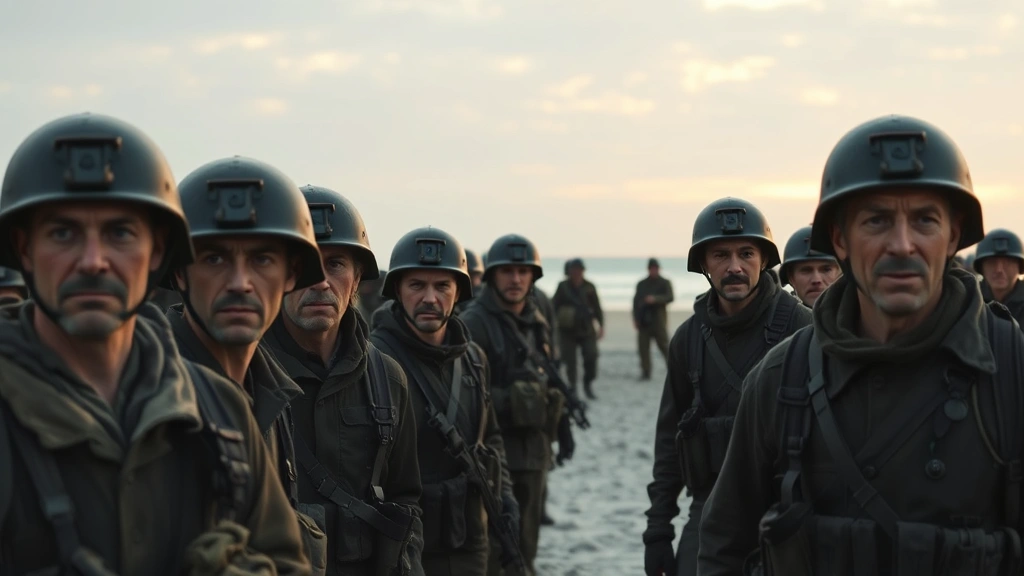
These supporting performances matter because they collectively establish Dunkirk‘s fundamental vision of war as mass experience rather than individual heroism. No single actor dominates; instead, the ensemble creates a democratic representation of evacuation where every perspective—military and civilian, experienced and novice, commanding and subordinate—receives meaningful consideration. This casting and performance strategy directly serves the film’s thematic architecture, making the ensemble approach inseparable from Nolan’s artistic vision.
Ensemble Dynamics and Nolan’s Direction: Creating Collaborative Authenticity
Christopher Nolan’s direction of this ensemble cast reveals a director deeply committed to collaborative authenticity. Rather than imposing interpretations, Nolan appears to have created conditions where actors could discover their characters through sustained engagement with the material and each other. The result is an ensemble that feels organically connected despite the film’s fragmented narrative structure and minimal dialogue. This achievement required exceptional casting acumen and directorial sensitivity to actors’ creative processes.
Nolan’s multi-timeline structure actually facilitates ensemble coherence by forcing actors to maintain internal consistency across temporally displaced scenes. When actors encounter themselves at different psychological moments, they develop sophisticated understanding of their characters’ internal journeys. This structure demands that performers work with unusual depth of preparation, understanding not just individual scenes but complete emotional arcs distributed across non-linear presentation. The ensemble’s commitment to this complex framework created a collaborative environment where performers could trust each other’s commitment and reliability.
The film’s famous minimal dialogue also serves ensemble dynamics by shifting emphasis from individual star power to collective presence. When actors cannot rely on witty dialogue or exposition to establish character, they must trust each other and the director to communicate through visual language. This creates vulnerability and interdependence among performers, qualities that often translate into authentic on-screen chemistry. The ensemble appears genuinely dependent on each other for emotional and narrative coherence, a quality that audiences intuitively recognize as authentic rather than performed.
Nolan’s documented preference for practical effects and real locations further strengthened ensemble dynamics. Actors performed amid genuine environmental challenges—the English Channel, functional military equipment, realistic evacuation conditions—rather than in controlled studio environments. This forced proximity to authentic conditions created shared experience among the ensemble, bonding them through common physical challenge. The actors’ visible exhaustion and exposure in the film reflects genuine physical ordeal, a reality that intensifies the authenticity of their performances.
For those interested in understanding how cinema represents historical events, exploring film criticism and analysis provides valuable frameworks. Additionally, understanding what makes compelling film criticism helps audiences engage more deeply with ensemble performances.
The ensemble’s collaborative excellence also reflects broader industry trends in contemporary cinema. Research institutions tracking media trends have documented increasing audience appreciation for ensemble narratives that distribute dramatic focus across multiple characters. Dunkirk‘s success validated this approach commercially while demonstrating its artistic merit. The film proved that audiences would engage with narratives lacking conventional protagonists, provided the ensemble maintained sufficient coherence and emotional authenticity.
This casting and performance strategy also influenced subsequent war films and historical dramas. Filmmakers observed how Nolan’s ensemble approach created both commercial appeal and critical respect, encouraging similar strategies in projects like 1917 (2019) and All Quiet on the Western Front (2022). The success of Dunkirk‘s ensemble cast demonstrated that war narratives could achieve both intimate character focus and epic historical scope by distributing dramatic emphasis across multiple perspectives rather than concentrating it in individual stars.
The film’s ensemble approach also reflected broader cultural shifts in how audiences understood historical events. Rather than experiencing evacuation through individual heroic narratives, audiences encountered it through multiple simultaneous perspectives—military and civilian, experienced and novice, traumatized and stoic. This multiplicity of viewpoints creates more complex historical understanding than conventional narrative structures allow. The ensemble cast’s collective performance communicates that historical events involve countless individual perspectives operating simultaneously, each contributing to collective outcome without any single perspective encompassing complete truth.
For those interested in exploring more sophisticated film narratives, contemporary cinema analysis offers valuable perspectives. Additionally, if you’re seeking films with similar ensemble excellence, curated streaming recommendations can guide discovery. For those interested in emerging cinema, weekend streaming selections often feature ensemble-driven narratives worth exploring.
FAQ
Who are the main actors in Dunkirk?
The principal cast includes Tom Hardy as RAF pilot Farrier, Fionn Whitehead as soldier Tommy, Kenneth Branagh as Commander Bolton, Mark Rylance as civilian boat captain Mr. Dawson, and Cillian Murphy as a shell-shocked soldier. The ensemble also features Jack Lowden, Tom Glynn-Carney, and Barry Keoghan in significant supporting roles.
Why does Tom Hardy wear a mask throughout Dunkirk?
Hardy’s character Farrier is an RAF pilot, and his oxygen mask and flight helmet are authentic to the historical period and military role. Nolan’s decision to keep the mask on throughout much of the film forces Hardy to communicate emotion through only his eyes and body language, creating a unique acting challenge that demonstrates minimalist performance technique.
What makes Dunkirk’s ensemble cast particularly effective?
Dunkirk‘s ensemble succeeds through Nolan’s deliberate choice to distribute dramatic focus across multiple characters rather than concentrating it in individual stars. The minimal dialogue forces actors to rely on visual communication and physical presence, creating authentic interdependence. Additionally, the film’s non-linear timeline structure demands that actors develop sophisticated understanding of their characters’ complete emotional arcs.
How does Cillian Murphy’s character differ from other roles in Dunkirk?
Murphy’s character remains unnamed throughout the film and communicates primarily through body language and inarticulate vocalizations. His role serves as a living embodiment of trauma, refusing conventional narrative resolution or cathartic healing. This approach honors authentic psychological damage while avoiding exploitative emotional manipulation.
Did any Dunkirk cast members receive major award recognition?
While the ensemble didn’t dominate major awards ceremonies, the film itself received numerous nominations and accolades. Individual performances, particularly Hardy’s and Branagh’s, received significant critical recognition for their nuanced and restrained approaches to character development.
How does the three-timeline structure affect casting and performance?
The non-linear narrative requires actors to portray characters at different psychological moments distributed across the film. This forces performers to maintain internal consistency while appearing inconsistent on the surface, demanding sophisticated preparation and understanding of complete character arcs. The structure essentially requires actors to work at greater depth than conventional linear narratives demand.