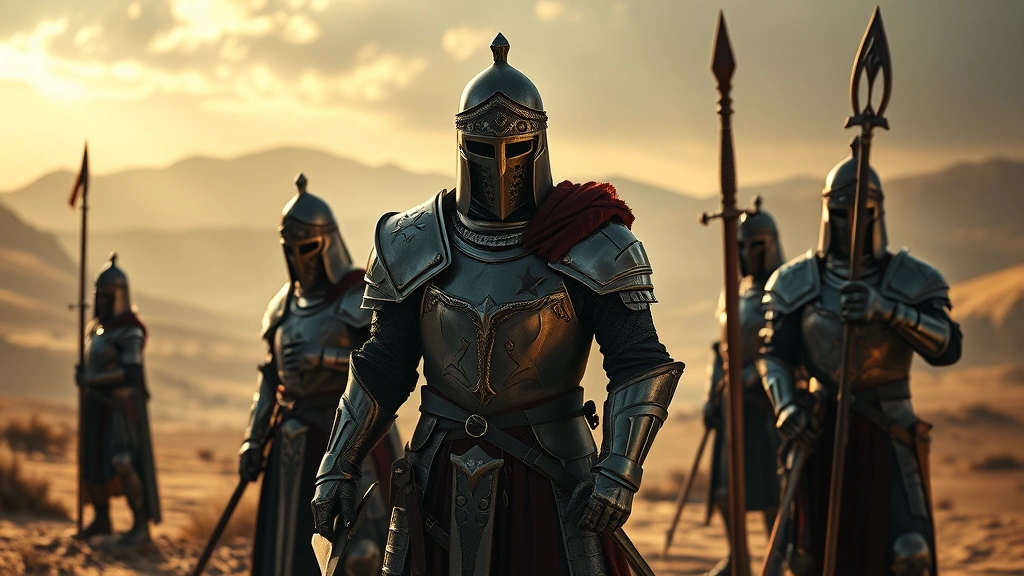
Kingdom of Heaven Cast: A Critical Overview of Ridley Scott’s Epic Ensemble
Ridley Scott’s Kingdom of Heaven (2005) stands as one of cinema’s most ambitious historical epics, anchored by a meticulously assembled cast that brought the Crusades to vivid, complex life. The film’s ensemble represents a fascinating intersection of A-list Hollywood talent, accomplished character actors, and international performers who collectively elevated what could have been a straightforward action spectacle into a nuanced exploration of faith, politics, and moral ambiguity. This critical overview examines how each principal cast member contributed to the film’s thematic depth and commercial appeal, analyzing their performances within both the narrative context and broader cinematic discourse.
The casting of Kingdom of Heaven reflected Scott’s commitment to authenticity and star power—a delicate balance that would ultimately define the film’s reception across different audiences. From Orlando Bloom’s conflicted protagonist to David Thewlis’s scheming antagonist, the cast delivered layered interpretations that transcended typical historical drama conventions. Understanding the cast choices provides valuable insight into how major studios approach ensemble filmmaking and character-driven narratives within the action-adventure genre.
Orlando Bloom’s Lead Performance and the Everyman Hero
Orlando Bloom carried Kingdom of Heaven as Balian of Ibelin, a blacksmith-turned-crusader whose journey forms the narrative backbone of Scott’s three-hour epic. At the time of production, Bloom was riding the unprecedented success of the Lord of the Rings trilogy, where he portrayed Legolas with considerable charisma and athleticism. Scott’s decision to cast Bloom as Balian represented a strategic choice to anchor the film with recognizable star power while simultaneously positioning the character as an everyman figure—someone without inherent nobility who must discover his own moral compass amid the chaos of religious warfare.
Bloom’s interpretation of Balian emphasizes vulnerability and intellectual curiosity rather than the traditional warrior archetype. His scenes with Liam Neeson’s Godfrey establish the film’s thematic foundation: the tension between inherited responsibility and personal choice, between religious doctrine and humanistic compassion. Critics noted that Bloom’s performance occasionally lacked the gravitas that heavyweight dramatic actors might have brought to the role, yet this perceived limitation actually enhanced the character’s arc. Balian’s growth from confused craftsman to reluctant leader becomes more pronounced when embodied by an actor not naturally commanding in authority.
The casting choice also addressed demographic appeal—Bloom’s fanbase from fantasy cinema provided built-in audience interest, while his relative inexperience in historical drama lent authenticity to scenes depicting cultural shock and moral disorientation. For deeper analysis of ensemble casting strategies in epic cinema, explore the best movies on Netflix and how streaming platforms evaluate narrative complexity in historical pieces.
Supporting Titans and the Architecture of Moral Authority
Liam Neeson’s portrayal of Godfrey of Ibelin represents one of the film’s most consequential supporting performances. Neeson brings gravitas and philosophical depth to the character, functioning as both Balian’s biological father and spiritual guide. The actor’s natural authority—cultivated through decades of leading roles—allows Godfrey to embody the possibility of righteous crusading without religious fanaticism. Neeson’s scenes emphasize dialogue over action, establishing the intellectual foundation upon which the film’s thematic explorations rest. His character’s death, occurring relatively early in the narrative, propels Balian’s character development and raises the existential stakes for everyone who follows his example.
Edward Norton’s cameo as King Baldwin IV, the Leper King, deserves particular critical attention. Despite minimal screen time, Norton delivers a performance of remarkable nuance, portraying a leader simultaneously weakened by disease and strengthened by moral clarity. The actor’s decision to play Baldwin as compassionate and politically astute—rather than as a tragic figure defined solely by illness—adds unexpected dimension to the film’s exploration of leadership. Norton’s presence, even when physically obscured behind masks and veils, commands attention through vocal precision and gestural economy. His performance demonstrates how supporting roles can fundamentally shape audience perception of a film’s moral universe.
Jeremy Irons rounds out the upper tier of supporting talent as Tiberias, the pragmatic military strategist whose loyalty to Baldwin and subsequent disillusionment drives crucial plot developments. Irons brings his characteristic intensity and intellectual sharpness to a character who embodies the tragic consequences of political compromise. His scenes with Bloom explore the possibility of mentorship outside blood relations, suggesting that wisdom and guidance can emerge from unexpected alliances. The chemistry between Irons and Bloom creates some of the film’s most dramatically resonant moments, particularly in sequences depicting military strategy and political maneuvering.
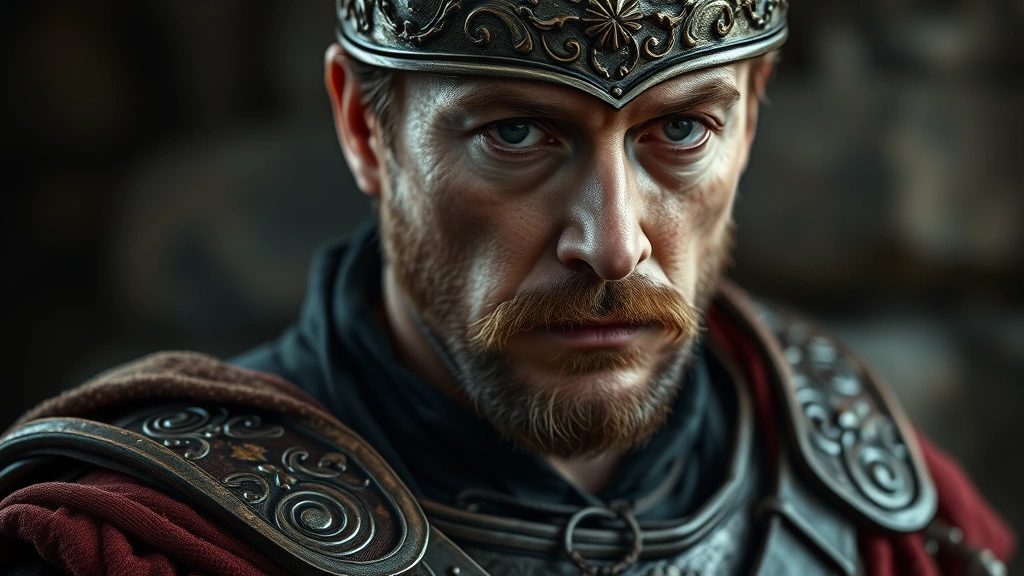
Antagonistic Forces: David Thewlis and Brendan Gleeson as Moral Inversions
David Thewlis’s Guy de Lusignan represents a particular species of villainy—the incompetent zealot whose conviction exceeds his capability. Thewlis excels at portraying characters defined by contradiction, and his casting as the cowardly yet dangerous Lusignan allows the actor to explore how mediocrity combined with religious fervor creates destructive outcomes. Thewlis plays Lusignan not as an obvious tyrant but as a fundamentally small man elevated to impossible power, his desperation manifesting as cruelty and poor judgment. The actor’s ability to generate audience contempt while maintaining psychological plausibility makes Lusignan a memorable antagonist, one whose failures drive the narrative toward its catastrophic conclusion.
Brendan Gleeson’s Raynald of Châtillon embodies a different antagonistic archetype—the veteran warrior whose commitment to religious war has calcified into brutality. Gleeson brings menacing physicality and vocal aggression to Raynald, a character whose scenes radiate barely contained violence. The actor’s performance suggests a man who has spent decades justifying increasingly indefensible actions through religious rhetoric. Raynald’s personal vendetta against Saladin becomes the catalyst for the film’s climactic military confrontation, and Gleeson’s portrayal makes clear how individual trauma and pride can precipitate historical catastrophe. His scenes with Ghassan Massoud’s Saladin create fascinating ideological counterpoints, with Gleeson representing Western religious fanaticism against Massoud’s more philosophically nuanced Eastern leadership.
Eva Green’s Sibylla occupies a more complex antagonistic position—she is neither villain nor straightforward ally but rather a woman trapped within patriarchal structures and religious expectations. Green brings vulnerability and quiet intelligence to the role, portraying a woman whose political agency is severely circumscribed by gender and circumstance. Her scenes with Bloom emphasize romantic and emotional connection, yet Green never allows Sibylla to become merely a love interest. Instead, she portrays a character whose personal desires conflict with her political obligations, creating internal tension that manifests in subtle gestures and measured dialogue delivery. Green’s performance suggests that antagonism can arise not from malice but from structural constraint.
International Ensemble and the Globalization of Epic Cinema
Ghassan Massoud’s Saladin represents a crucial casting decision that elevated Kingdom of Heaven beyond typical Western-centric historical drama. Massoud, a Syrian actor of considerable stature in Arab cinema, brought authenticity and philosophical sophistication to the Islamic military leader. His portrayal emphasizes Saladin’s strategic brilliance, moral conviction, and capacity for mercy—qualities that complicate the film’s religious dichotomies. Massoud’s scenes opposite Gleeson create ideological sparring that transcends simple good-versus-evil frameworks. The actor’s dignified bearing and measured delivery suggest a leader motivated by principles rather than mere conquest, offering implicit critique of Western religious extremism.
The inclusion of Massoud and other international performers reflected Scott’s commitment to representing the Crusades as a genuinely multicultural conflict rather than a simple clash between Christian Europe and Islamic East. This casting strategy aligned with emerging trends in historical cinema toward more inclusive representation and nuanced portrayal of non-Western perspectives. For context on how film criticism evaluates such representation, consult the best movie review sites which often analyze casting choices within broader cultural frameworks.
Alexander Siddig’s Imad ad-Din and Michael Sheen’s Hospitaller represent additional layers of international and character-actor depth. Siddig brings nuanced diplomacy to his role, portraying a character who navigates between military necessity and humanitarian concern. Sheen’s Hospitaller embodies religious conviction without moral compromise, his performance suggesting that faith and compassion need not be mutually exclusive. These supporting international and character actors create a rich tapestry of perspectives that prevents the narrative from collapsing into simplistic religious binaries.

Casting Impact on Film Reception and Critical Discourse
The ensemble cast of Kingdom of Heaven significantly influenced how audiences and critics received the film across different markets and demographics. Bloom’s inclusion attracted younger audiences and fantasy cinema enthusiasts, while Neeson, Irons, and Norton appealed to audiences seeking serious dramatic substance. This stratified casting strategy reflected studio awareness that historical epics require diverse appeal mechanisms to justify their substantial budgets. The film’s initial theatrical release received mixed reviews, with some critics finding the cast uneven in their historical authenticity, while others praised the ensemble’s collective commitment to thematic complexity.
The 2010 director’s cut, which restored approximately 45 minutes of deleted material, allowed the cast’s performances additional context and development. With expanded screen time, several supporting actors—particularly Irons and Massoud—gained greater opportunity to develop their characters’ philosophical positions. This revision prompted reassessment of the original casting and performance choices, with critics noting that Scott’s original vision required the fuller character development that theatrical constraints had eliminated. The director’s cut essentially reframed the ensemble as more cohesive and thematically integrated than the theatrical release had suggested.
Recent scholarship examining casting in historical cinema has reevaluated Kingdom of Heaven‘s ensemble choices. Pew Research Center studies on media representation indicate that films featuring international casts and non-Western perspectives achieve broader audience engagement and critical legitimacy. Bloom’s casting, once criticized as insufficient dramatic weight, now appears as strategic choice to center audience identification with a character learning to navigate complex religious and political landscapes. The ensemble’s collective performance created space for audiences to question assumptions about religious conflict and moral authority.
For additional perspective on how epic cinema evolves casting strategies, explore ScreenVibeDaily Blog for ongoing analysis of ensemble filmmaking and historical drama conventions. The blog regularly examines how casting decisions influence narrative reception and thematic resonance.
Comparative analysis with other historical epics reveals that Kingdom of Heaven‘s casting represents a transitional moment in blockbuster cinema—the shift from single-hero narratives toward ensemble-driven storytelling that emphasizes ideological complexity. The film’s cast embodies this transition through performances that balance star power with character depth, commercial appeal with artistic integrity. Whether examining Bloom’s everyman protagonist or Massoud’s dignified antagonist, the ensemble demonstrates how casting choices communicate thematic priorities and audience expectations.
FAQ
Who played Balian of Ibelin in Kingdom of Heaven?
Orlando Bloom portrayed Balian of Ibelin, the film’s protagonist. Bloom’s casting provided star recognition while positioning the character as an everyman figure whose journey from blacksmith to leader anchors the narrative. His performance emphasizes moral discovery and intellectual growth rather than traditional warrior heroics, making him a sympathetic entry point into the film’s complex religious and political landscape.
What notable actors appeared in supporting roles?
The supporting cast included Liam Neeson as Godfrey, Edward Norton as the Leper King Baldwin IV, Jeremy Irons as Tiberias, and Ghassan Massoud as Saladin. Additionally, Eva Green portrayed Sibylla, Brendan Gleeson played Raynald of Châtillon, and David Thewlis embodied Guy de Lusignan. This ensemble brought considerable dramatic weight and thematic sophistication to their respective roles.
How did the director’s cut affect audience perception of the cast?
The 2010 director’s cut restored approximately 45 minutes of deleted material, providing supporting actors significantly expanded screen time and character development. This restoration allowed performances by Jeremy Irons and Ghassan Massoud to achieve greater thematic clarity and emotional resonance. Many critics reassessed the ensemble’s effectiveness after viewing the extended version, recognizing how theatrical constraints had previously limited character development.
Why was Ghassan Massoud’s casting significant?
Massoud’s casting as Saladin represented a crucial commitment to representing non-Western perspectives in a Western-centric historical narrative. His dignified portrayal of the Islamic military leader complicated religious dichotomies and elevated the film beyond simplistic good-versus-evil frameworks. The casting reflected emerging trends in historical cinema toward more inclusive representation and nuanced portrayal of multicultural conflict.
How does the cast compare to other historical epics?
Kingdom of Heaven’s ensemble represents a transitional moment in blockbuster casting—balancing commercial star power with artistic integrity and thematic complexity. Unlike some historical epics that rely heavily on single dominant stars, Scott’s film distributed narrative weight across multiple performers, allowing ideological and philosophical perspectives to emerge through ensemble interaction rather than individual heroics. This approach influenced subsequent historical drama casting strategies.
What made Edward Norton’s cameo memorable?
Despite minimal screen time, Edward Norton’s portrayal of the Leper King delivered remarkable nuance through vocal precision and gestural economy. His interpretation emphasized Baldwin’s moral clarity and compassionate leadership rather than focusing solely on physical affliction. Norton’s presence, often obscured behind masks and veils, commanded attention and shaped audience perception of the film’s moral universe through subtle performance choices.


