Ethel & Ernest stands as one of animation’s most tender achievements—a masterclass in visual storytelling that proves animated films can tackle deeply personal, intimate narratives with remarkable grace. Directed by Roger Mainwood and based on Raymond Briggs’ beloved graphic novel, this 2016 film traces the entire life journey of an ordinary British couple from their 1928 meeting through decades of shared joy, sorrow, and quiet devotion. What makes this film extraordinary isn’t spectacle or action sequences; it’s the profound emotional authenticity that permeates every frame.
In an era when animation often chases blockbuster fantasy worlds and comedic mayhem, Ethel & Ernest reminds us that the medium’s greatest power lies in its ability to capture the sublime beauty of everyday human connection. The film’s gentle pacing, watercolor-inspired aesthetic, and restrained voice performances create an experience that feels less like watching entertainment and more like witnessing a deeply personal memory unfold. For audiences seeking meaningful family viewing experiences, this film offers something increasingly rare in contemporary cinema.
The Artistry Behind the Animation
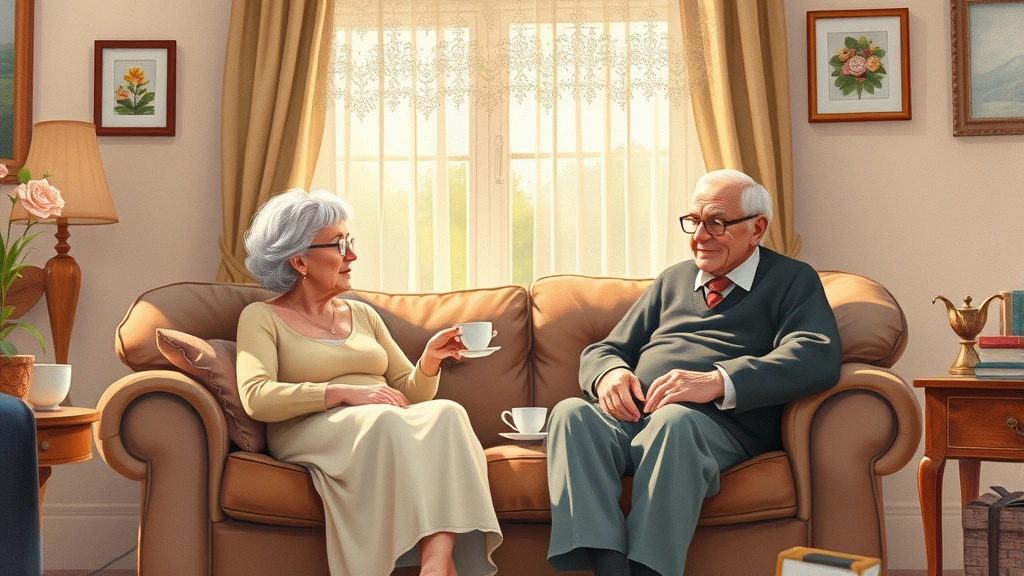
The visual language of Ethel & Ernest represents a deliberate departure from contemporary animation trends. Rather than pursuing photorealism or stylized exaggeration, director Roger Mainwood and the production team embraced a painterly approach that evokes the watercolor illustrations of Raymond Briggs’ original work. This aesthetic choice profoundly influences how audiences emotionally engage with the narrative. The soft color palettes, subtle character movements, and detailed background work create an atmosphere of nostalgic warmth without ever becoming saccharine or manipulative.
The animation style functions as a narrative device itself. By choosing muted earth tones and avoiding sharp, angular character designs, the filmmakers invite viewers into an intimate space where attention naturally focuses on subtle facial expressions and small gestural moments. When Ernest reaches for Ethel’s hand, the animation captures not just the physical action but the emotional weight of decades of partnership. When Ethel gazes out a window with a mixture of hope and resignation, her expression communicates volumes without dialogue. This restraint in animation represents sophisticated visual storytelling that rewards careful attention.
The backgrounds deserve particular praise. Each setting—from the modest London neighborhoods of the 1920s through postwar austerity to the modern era—is rendered with archaeological precision. The filmmakers conducted extensive research into architectural details, street furniture, signage, and material culture across different decades. This commitment to historical authenticity grounds the personal story in a larger historical narrative, reminding viewers that Ethel and Ernest’s lives unfolded against the backdrop of major twentieth-century events. The animation never feels like it’s showing off technical prowess; instead, it serves the emotional truth of the story.
Cinematography in animation functions differently than in live-action filmmaking, yet Ethel & Ernest demonstrates sophisticated compositional choices. The camera movements are deliberately paced, allowing viewers to absorb visual information and emotional content. Wide shots establish the characters within their environments, emphasizing how their personal story intersects with broader historical and social contexts. Close-ups on faces capture the aging process with remarkable delicacy—the gradual accumulation of wrinkles, changes in posture, shifts in eye clarity all tracked across the film’s timeline.
Narrative Structure and Emotional Depth
The film’s narrative architecture follows a chronological progression spanning approximately sixty years, yet it avoids the episodic flatness that might characterize such an expansive timeframe. Instead, Mainwood structures the story around key moments and seasons that crystallize the evolving relationship between Ethel and Ernest. The opening sequence—their first meeting at a dance hall in 1928—establishes the film’s tonal language: romantic, slightly awkward, infused with period-appropriate charm without descending into pastiche.
What distinguishes Ethel & Ernest from conventional relationship narratives is its refusal to dramatize conflict. There are no major betrayals, no explosive arguments, no melodramatic revelations. Instead, the film explores the texture of long-term partnership: the comfortable silences, the small disappointments absorbed without comment, the quiet celebrations of modest achievements. Ernest’s career as a postman provides structure to their lives; Ethel’s domestic work and later involvement in community activities define her sphere of influence. Neither character transcends their working-class circumstances, yet the film treats their lives with absolute seriousness and dignity.
The film’s treatment of aging and mortality represents its most profound achievement. Rather than sentimentalizing elderly characters or rendering them as objects of pathos, the narrative honors the continued vitality, humor, and emotional complexity of Ethel and Ernest in their later years. They remain sexual beings, curious about the world, capable of joy and frustration. The film doesn’t shy away from depicting physical decline—Ernest’s increasing frailty, Ethel’s health challenges—yet it refuses to reduce these characters to their limitations. This nuanced portrayal of aging stands in stark contrast to how cinema typically marginalizes older characters.
The historical backdrop provides counterpoint to the intimate personal narrative. We see rationing and austerity following World War II, the gradual modernization of Britain, changing social attitudes, technological advancement. Yet the film never allows these historical elements to overwhelm the personal story. Instead, they function as the texture of lived experience—the circumstances within which ordinary people navigate their relationships and find meaning. This integration of personal and historical narrative demonstrates sophisticated screenwriting that resists false dichotomies between intimate and epic storytelling.
The film’s conclusion handles the inevitable approach of death with remarkable grace. Rather than ending with Ernest’s passing, the narrative continues slightly beyond, allowing space for Ethel’s grief and continued existence. This choice acknowledges that relationships extend beyond individual lifespans—in memory, in the accumulated weight of shared experience, in the ways we carry loved ones forward. The final images, without spoiling specific details, affirm that a life lived in genuine partnership represents its own form of transcendence, regardless of external achievement or recognition.

Voice Acting and Performance
Jim Broadbent and Gillian Hills provide the voice performances for Ernest and Ethel respectively, and their work demonstrates the subtle artistry required for animated performances. Unlike voice acting in comedic animation, which often emphasizes exaggeration and theatrical delivery, the performances here privilege naturalism and restraint. Broadbent’s Ernest emerges as quietly determined, occasionally bemused by life’s circumstances, fundamentally decent without pretension. Hills’ Ethel possesses a warmth tempered by pragmatism, capable of both tenderness and dry humor.
The vocal performances complement rather than dominate the visual storytelling. Long sequences contain minimal dialogue, allowing the animation and music to carry emotional weight. When dialogue does appear, it often consists of brief exchanges—comments about the weather, gentle teasing, expressions of affection so routine they’ve lost their self-consciousness. This spareness makes moments of explicit emotional declaration feel weightier. When characters finally voice feelings they’ve carried silently, the impact resonates precisely because words have been used so judiciously throughout.
The chemistry between Broadbent and Hills creates palpable intimacy. Their vocal interactions capture the shorthand language of long-married couples—the ability to communicate volumes through inflection, the comfortable overlapping of sentences, the shared references that outsiders wouldn’t understand. This vocal texture contributes substantially to the film’s emotional authenticity. The performances never call attention to themselves; instead, they disappear into the characters, allowing viewers to relate to Ethel and Ernest as fully realized human beings rather than animated constructs.
Cultural Significance and Historical Context
Raymond Briggs’ original graphic novel, published in 1998, emerged from deeply personal motivation—his desire to honor his parents’ memory and document their lives with affection and honesty. The film adaptation preserves this fundamental impulse while translating the source material into animated form. The decision to adapt this work into animation rather than live-action proved inspired; animation’s inherent stylization creates appropriate distance that allows viewers to see the universal in the particular. We recognize Ethel and Ernest not as specific individuals but as archetypal representatives of an entire generation.
The film resonates particularly strongly with audiences who’ve experienced long-term caregiving relationships or witnessed parental aging. The portrayal of how partners adapt to changing circumstances—health challenges, shifting roles, the gradual inversion of dependency—speaks to experiences millions navigate without public acknowledgment or cultural representation. By centering these experiences in a major animated film, the production validates the emotional and existential significance of such relationships.
Culturally, Ethel & Ernest arrived during a period of renewed interest in working-class British narratives and experiences. The film’s refusal to treat Ernest and Ethel’s circumstances as tragic or somehow deficient—their modest home, their limited resources, their lack of formal education—represents a quiet political statement. The film asserts that ordinary lives contain profound meaning, that working-class experiences deserve serious artistic treatment, that the lives of people without wealth or fame merit cinematic attention. This democratic vision of whose stories deserve telling carries significant cultural weight.
According to Pew Research Center studies on media consumption, audiences increasingly seek emotionally substantive content that reflects authentic human experiences. Ethel & Ernest exemplifies this hunger for narratives that prioritize emotional truth over spectacle. The film’s critical and audience success demonstrates that sophisticated, intimate storytelling can achieve commercial viability without compromising artistic integrity.
Technical Achievements and Visual Language
The animation technique employed throughout Ethel & Ernest combines traditional hand-drawn animation with digital tools in ways that maximize the strengths of both approaches. The character animation displays the fluidity and expressiveness possible through traditional methods, while digital compositing allows for sophisticated color grading and atmospheric effects. This hybrid approach creates a visual texture that feels both timeless and contemporary.
The film’s color progression mirrors the emotional and historical arc of the narrative. The warm, slightly saturated tones of the 1920s gradually shift toward the cooler, more austere palettes of wartime and postwar Britain, eventually warming again as the couple moves into later life. This chromatic storytelling operates subtly—viewers may not consciously register the color shifts—yet it profoundly influences emotional reception. The visual language communicates historical progression and emotional states through means beyond dialogue or explicit narrative exposition.
The treatment of time deserves particular analysis. The film compresses sixty years into ninety minutes, yet it never feels rushed. The pacing allows moments to breathe while efficiently moving through decades. Seasonal imagery provides temporal markers—spring blossoms, summer holidays, autumn leaves, winter snow—creating cyclical patterns that echo the repetitions and variations of long-term partnership. The accumulation of these seasonal cycles visually represents the passage of time in ways that numerical markers could never achieve.
Technical precision in depicting aging represents one of the film’s most accomplished elements. The animation team studied extensive reference material documenting human aging across different body types and life circumstances. The gradual changes to Ernest’s posture, the increasing prominence of Ethel’s age spots, the subtle alterations in how characters move through space—all these details accumulate to create convincing depictions of aging without veering into caricature or grotesquerie. The film treats aging as a natural process worthy of respectful visual representation.
The sound design and musical score by Paul Englishby contribute substantially to the film’s emotional landscape. Rather than employing a bombastic orchestral score, Englishby creates intimate, often sparse musical accompaniment that frequently yields to ambient sound and silence. The music enhances emotional moments without overwhelming them, respecting the audience’s intelligence and emotional capacity. Piano pieces recur throughout, providing musical continuity while suggesting the interior emotional lives of the characters.

Audience Reception and Critical Acclaim
Upon its release, Ethel & Ernest garnered substantial critical appreciation, though it never achieved the mainstream commercial success of more conventional animated releases. Critics recognized the film as a significant artistic achievement, praising its emotional maturity, visual sophistication, and thematic depth. The film won numerous awards at international film festivals and received recognition from animation organizations worldwide.
Audience responses frequently emphasize the film’s emotional impact, with many viewers reporting profound experiences of catharsis or grief. The film’s exploration of aging and mortality resonates particularly strongly with older audiences and those navigating caregiving relationships. Younger viewers often discover unexpected emotional depths, recognizing in Ethel and Ernest’s relationship ideals of partnership and commitment that transcend romantic fantasy. This cross-generational appeal speaks to the film’s universal themes expressed through particular circumstances.
The film’s streaming availability through various platforms has introduced it to audiences who might never have encountered it theatrically. This expanded reach has generated ongoing appreciation and critical reassessment. Online film communities frequently cite Ethel & Ernest among the most emotionally affecting animated films ever created, often ranking it alongside acknowledged masterpieces of the medium. This sustained appreciation suggests the film possesses lasting cultural significance beyond initial release circumstances.
For those interested in exploring comprehensive film criticism and analytical perspectives, Ethel & Ernest provides rich material for deeper examination. The film rewards repeated viewing, with viewers frequently discovering new details in animation, noticing thematic patterns initially missed, and experiencing different emotional responses as their own life circumstances change. This quality of sustained engagement distinguishes truly significant artistic works from entertainment products designed for single consumption.
According to entertainment industry analysis, animated films addressing mature themes and older audiences represent a growing market segment. Ethel & Ernest helped pioneer this category, demonstrating that animation could successfully serve adult audiences seeking emotionally substantive content. The film’s influence can be observed in subsequent animated productions that similarly prioritize emotional authenticity and thematic depth over commercial conventionality.
For those interested in discovering quality films across streaming platforms, Ethel & Ernest represents exactly the type of gem that rewards active curation and thoughtful viewing. The film proves that animated cinema can achieve the emotional sophistication and artistic ambition traditionally associated with live-action prestige drama. It stands as a testament to animation’s potential as a serious artistic medium capable of exploring the most profound human experiences.
The film also demonstrates how contemporary film criticism and analysis increasingly recognizes animation’s artistic legitimacy. Rather than treating animated films as inherently juvenile or less sophisticated than live-action equivalents, serious critical discourse now acknowledges animation’s unique expressive possibilities. Ethel & Ernest exemplifies how the medium can achieve effects impossible in live-action cinema, particularly in its ability to compress time, depict aging gracefully, and translate the subjective experience of memory into visual form.
The film’s approach to source material adaptation offers lessons for filmmakers working with graphic novels and literary works. Rather than attempting to replicate the original artwork or translate it literally into film, Mainwood and the production team honored the source material’s emotional essence while creating something distinctly cinematic. This respectful adaptation approach respects both the original artist’s vision and the unique possibilities of the film medium. The result stands as a work that enriches rather than diminishes the original.
Perhaps most significantly, Ethel & Ernest affirms that cinema’s greatest power lies not in spectacular action sequences or technical wizardry, but in its capacity to illuminate human experience with clarity, compassion, and artistic integrity. The film reminds audiences that the most profound stories often emerge from careful attention to ordinary lives, that emotional truth transcends medium and style, and that meaningful art can emerge from genuine respect for human dignity and experience. These lessons extend far beyond animation into all artistic endeavor.
FAQ
What is Ethel & Ernest about?
Ethel & Ernest chronicles the entire life journey of an ordinary British couple from their 1928 meeting through their final years together. The film traces their relationship through major twentieth-century historical events, focusing on the intimate emotional landscape of long-term partnership rather than dramatic conflict or external action.
Is Ethel & Ernest appropriate for children?
While the film is animated, its sophisticated emotional content and themes of aging and mortality make it more suitable for mature audiences. Younger viewers may find it slow-paced or emotionally challenging. The film represents quality family viewing for older children and adults rather than entertainment for young children.
Where can I watch Ethel & Ernest?
The film is available through various streaming platforms and digital retailers. Availability varies by region and changes over time. Check your preferred streaming service or rental platform for current availability.
Who directed Ethel & Ernest?
Roger Mainwood directed the film adaptation of Raymond Briggs’ graphic novel. Mainwood’s previous experience directing animated television productions informed his distinctive directorial approach to this feature film.
How long is the film?
The film runs approximately 96 minutes, allowing sufficient time to develop the narrative across six decades while maintaining engaging pacing that respects viewer attention and emotional capacity.
Is the film based on a true story?
The film is based on Raymond Briggs’ graphic novel, which was inspired by the artist’s own parents. While the characters are fictionalized, the emotional truth and many specific details derive from Briggs’ genuine family history and memories.
What makes Ethel & Ernest unique among animated films?
The film’s focus on aging, mortality, and long-term partnership represents unusual subject matter for animation. Its artistic approach—emphasizing emotional authenticity over spectacle—distinguishes it from conventional animated entertainment and demonstrates animation’s capacity for mature thematic content.
How does the animation style contribute to the film’s emotional impact?
The watercolor-inspired aesthetic, muted color palette, and restrained animation choices create an intimate atmosphere that invites emotional engagement. The visual language functions as narrative device, communicating emotional states and historical progression through visual means rather than explicit exposition.