Kingdom of Heaven: Historical Accuracy Insights
Ridley Scott’s Kingdom of Heaven (2005) stands as one of cinema’s most ambitious historical epics, depicting the Crusades through the lens of a blacksmith-turned-knight. Yet beneath its sweeping cinematography and visceral battle sequences lies a complex relationship with historical fact. The film has sparked considerable debate among historians and film critics alike, with passionate arguments both defending its dramatic liberties and critiquing its departures from documented history. Understanding where Scott took creative license versus where he remained faithful to the historical record provides valuable insight into how modern cinema interprets and reimagines medieval history.
The film’s central narrative follows Balian of Ibelin, a fictional character loosely based on the historical Balian d’Ibelin, a real crusader who played a significant role during the siege of Jerusalem in 1187. This blending of fact and fiction characterizes much of the film’s approach to the Crusades era. Rather than presenting a straightforward historical documentary, Scott crafted a dramatic narrative that prioritizes storytelling and character development while maintaining certain historical frameworks. This approach raises important questions about the responsibilities of filmmakers when adapting historical events, particularly those as complex and contentious as the Crusades.
The Real Balian d’Ibelin and Hollywood Invention
The historical Balian d’Ibelin was indeed a prominent crusader knight who lived from approximately 1140 to 1193. He was born to the noble Ibelin family in the Kingdom of Jerusalem and played a crucial diplomatic and military role during the final days of the Crusader kingdom. However, Scott’s portrayal of Balian diverges significantly from the historical record in fundamental ways. The film presents Balian as an illegitimate blacksmith from France who discovers his noble heritage only after his father’s death, creating a classic hero’s journey arc that bears little resemblance to the actual biography of the historical figure.
In reality, Balian d’Ibelin was born into nobility and privilege, not poverty and obscurity. He inherited substantial lands and political influence as a member of one of the most powerful families in the Crusader states. His journey was not one of self-discovery through humble beginnings but rather one of political maneuvering and strategic decision-making within an established aristocratic framework. The film’s dramatic reimagining serves the narrative purpose of making Balian an underdog protagonist, a storytelling device that resonates with modern audiences but fundamentally alters the historical character’s nature and motivations.
The fictional backstory involving Balian’s father, Godfrey of Ibelin, is another significant departure from historical reality. While a character named Godfrey of Ibelin did exist historically, the relationship dynamics and the narrative of an illegitimate son discovering his true parentage is largely fabricated for dramatic effect. This invention allows Scott to explore themes of identity, legitimacy, and redemption that drive the film’s emotional core but distance it considerably from documented historical events.
The Siege of Jerusalem: Fact Versus Fiction
The climactic siege of Jerusalem in 1187 represents the film’s most historically significant event, yet even here substantial creative liberties are taken. Historically, the siege lasted approximately 88 days and resulted in the surrender of the city to Saladin’s forces. The film compresses this timeline and emphasizes Balian’s role in negotiating the city’s surrender far beyond what historical records suggest. According to contemporary chroniclers, the actual negotiations involved multiple parties and complex political dynamics that the film necessarily simplifies for dramatic purposes.
One of the film’s most praised elements is its relatively balanced portrayal of Saladin, the Muslim leader who conquered Jerusalem. Rather than depicting him as a one-dimensional villain, Scott presents Saladin as an honorable warrior with genuine respect for worthy opponents. This characterization aligns reasonably well with historical accounts of Saladin’s reputation for chivalry and strategic brilliance. Historians have noted that Saladin was indeed known for treating defeated crusaders with relative mercy compared to the brutality that had characterized earlier crusades, though the film may romanticize certain aspects of this relationship.
The specific terms of Jerusalem’s surrender are handled with interesting selectivity. Historically, Saladin demanded ransom for the Christian inhabitants and executed many of the military orders’ members. The film addresses the ransom but softens some of the harsher historical realities. Balian’s negotiation of better terms for the population reflects his actual historical role in advocating for the city’s Christian inhabitants, though the film amplifies his individual agency in these negotiations.
Character Portrayals and Historical Figures
Beyond Balian, the film features numerous other historical figures, each with varying degrees of historical accuracy. King Baldwin IV, known as the Leper King, appears as a significant character, and the film’s portrayal captures certain aspects of his historical reality—particularly his leprosy and his struggle to maintain the kingdom despite his illness. However, the film presents Baldwin as younger and more sympathetic than some historical accounts suggest, potentially romanticizing his political effectiveness.
Guy of Lusignan, the antagonist who becomes king, is depicted as a reckless warmonger whose poor decisions lead to the kingdom’s downfall. This characterization aligns with many historical assessments of Guy’s military incompetence, particularly regarding the catastrophic Battle of Hattin in 1187, which the film references. However, the film may oversimplify the political complexities that made Guy’s ascension to power possible, presenting him as a more straightforward villain than the nuanced historical figure.
Reynald of Châtillon appears as a brutal crusader, and the film’s harsh portrayal reflects genuine historical accounts of his brutality and his violation of truces with Saladin. His execution by Saladin is historically accurate, though the circumstances and dramatic weight given to this event are enhanced for cinematic effect. The film’s treatment of these secondary characters generally maintains historical plausibility while emphasizing dramatic conflict.
Religious Representation and Nuance
One of the film’s most distinctive features is its surprisingly nuanced approach to religion and faith. Rather than presenting a simplistic good-versus-evil narrative divided along religious lines, Scott explores the genuine religious conviction of both crusaders and Muslims while also critiquing religious extremism and hypocrisy. This approach reflects a more sophisticated understanding of the Crusades than many popular depictions, though it sometimes ventures into modern sensibilities that may anachronistically impose contemporary religious tolerance onto medieval characters.
The film’s portrayal of the Islamic world, while imperfect, avoids crude stereotyping. Saladin and his court are presented as cultured, strategic, and principled, which aligns with historical reality. The depiction of Muslim soldiers as disciplined and honorable contrasts with the chaotic, sometimes brutal crusader forces, a characterization that has historical basis but also reflects Scott’s deliberate narrative choices about which historical truths to emphasize.
The film’s critique of religious extremism, particularly through the character of the Hospitaller knight, speaks to genuine historical tensions within the crusader movement. Many crusaders were driven by genuine faith, but others were motivated by land acquisition, political power, and economic gain. The film’s exploration of these mixed motivations reflects legitimate historical understanding, though it necessarily simplifies the theological and political complexity of medieval Christianity.
Military Tactics and Battle Sequences
The film’s battle sequences, particularly the siege of Jerusalem and the earlier Battle of Hattin, are designed for visual spectacle rather than historical precision. The Battle of Hattin, one of the most significant military engagements of the Crusades, is depicted as a smaller-scale conflict in the film compared to the historical reality. The actual battle involved tens of thousands of soldiers and resulted in a comprehensive crusader defeat that effectively ended the Kingdom of Jerusalem’s military dominance.
The siege of Jerusalem is portrayed with impressive scale and detail, though certain tactical elements are simplified or altered for dramatic effect. The film shows crusaders using siege equipment and military strategy that is broadly consistent with medieval warfare, though specific details about the actual siege’s conduct are adjusted to serve the narrative. The portrayal of medieval combat, while stylized for modern audiences, generally maintains plausibility regarding weapons, armor, and fighting techniques of the period.
The film’s depiction of the Crusader’s military organization and the role of military orders like the Templars and Hospitallers reflects genuine historical structures, though the specific roles assigned to individual characters are fictional. The tension between different crusader factions and their conflicting strategic interests is historically grounded, even if specific incidents are dramatized.
Timeline Compression and Narrative Convenience
Like most historical epics, Kingdom of Heaven compresses complex historical timelines into a manageable narrative arc. Events that occurred over years are sometimes presented as happening within months or weeks. This compression is a necessary storytelling technique but inevitably sacrifices historical accuracy for dramatic pacing. The film’s timeline occasionally obscures the slow political deterioration that actually characterized the Kingdom of Jerusalem’s final decades.
Certain historical events are omitted entirely or significantly reordered to serve the narrative. The film focuses intensely on the 1187 events while glossing over decades of earlier crusader history that provided crucial context for understanding the kingdom’s vulnerability. This selective focus reflects the filmmakers’ judgment about what would engage modern audiences but necessarily presents an incomplete historical picture.
The romantic subplot involving Balian and Sibylla, while adding emotional depth and appealing to contemporary audiences, has limited historical basis. The actual historical Sibylla was a significant political figure in her own right, yet the film reduces her agency somewhat by framing her primarily through her relationship with Balian. This choice reflects common patterns in how cinema adapts historical events, often centering male protagonists and marginalizing female historical figures.
What the Film Gets Right
Despite its considerable departures from strict historical accuracy, Kingdom of Heaven succeeds in capturing several important historical truths. The film accurately portrays the geopolitical instability of the Crusader states and their vulnerability to unified Muslim opposition. The rise of Saladin as a formidable military and political leader is reasonably depicted, as is the general trajectory toward the crusader kingdom’s decline and eventual collapse. The best movie review sites have noted the film’s achievement in balancing spectacle with historical plausibility.
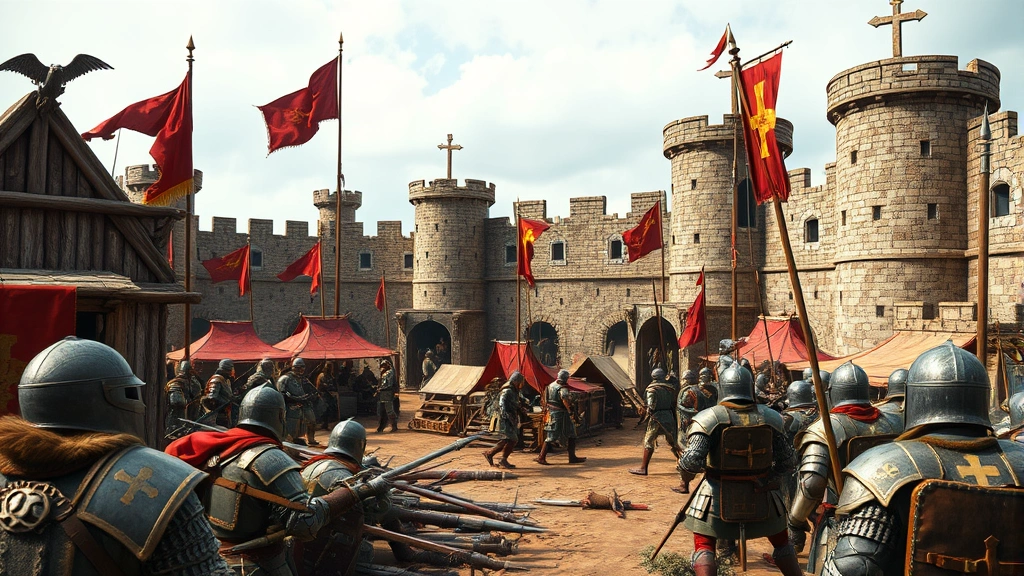
The film’s portrayal of medieval architecture, particularly the depiction of Jerusalem’s fortifications and structures, demonstrates considerable research and attention to detail. The visual representation of crusader castles and fortifications reflects genuine historical architecture of the period. The costume design, weapons, and material culture generally align with archaeological and historical evidence, even when specific narrative details diverge from documented fact.
The religious and political complexity of the Crusades era is treated with more sophistication than many popular depictions. The film acknowledges that crusaders held genuine religious conviction while also recognizing economic and political motivations. Similarly, the portrayal of the Islamic world as cultured and sophisticated rather than barbaric reflects historical reality and represents an advance over earlier crusade narratives.
The film also accurately conveys the devastating consequences of the crusader kingdom’s military defeat. The loss of Jerusalem was indeed catastrophic for the crusader presence in the Holy Land, though subsequent crusades would attempt to reclaim territory. The sense of finality and loss that pervades the film’s conclusion reflects the genuine historical trauma of 1187.
Critical Reception from Historians
Academic historians have offered mixed assessments of Kingdom of Heaven‘s historical accuracy. Some have praised Scott’s attempt to present a relatively balanced view of the Crusades, particularly his avoidance of crude religious stereotyping. Others have critiqued the film’s substantial departures from documented history and its creation of fictional characters as protagonists in major historical events. The approach to film criticism requires understanding both a film’s artistic merit and its historical fidelity.
Scholars of medieval history have noted that the film’s greatest strength lies in its thematic exploration of the Crusades rather than its factual precision. The film successfully conveys the ideological conflicts, strategic miscalculations, and human costs of the crusader enterprise. These thematic achievements matter considerably for public understanding of history, even when specific details are altered for dramatic effect.
Some historians have appreciated the film’s treatment of Saladin as a complex, honorable figure, viewing this as a corrective to earlier crusade narratives that demonized Islamic leaders. Others have argued that the film’s romanticization of crusader-Muslim relations represents a different form of historical distortion, imposing modern multicultural values on medieval societies with fundamentally different worldviews.
The film’s release sparked renewed scholarly interest in the Crusades and medieval history more broadly, with many academics noting that while Kingdom of Heaven is not a reliable historical document, it can serve as a gateway to deeper historical exploration. When viewers are motivated by the film to investigate the actual history of the Crusades, the film’s departures from fact become less problematic.
Research from Pew Research Center on media consumption patterns suggests that historical films significantly influence public understanding of past events, making accuracy considerations particularly important for filmmakers working with documented history. The tension between historical accuracy and dramatic necessity remains unresolved in film criticism and historical scholarship.
Understanding Kingdom of Heaven‘s relationship to historical truth requires recognizing that cinema operates under different constraints and conventions than academic history. The film succeeds as drama and achieves notable sophistication in its thematic treatment of the Crusades, even while departing substantially from documented historical events. For viewers interested in the actual history of the Crusades, the film serves as an engaging introduction that should prompt further investigation into more detailed historical sources. You might also explore movie news and reviews that examine how films interpret historical events, or consider famous movie quotes that capture the film’s thematic concerns.

” alt=”Medieval crusader knight in full armor and chainmail, standing in fortress courtyard with stone walls and banners, photorealistic medieval warfare aesthetic”>
The broader question of how historical films should balance accuracy with narrative necessity has implications beyond Kingdom of Heaven. Filmmakers face genuine constraints in adapting complex historical events into two-hour narratives. Compression, simplification, and dramatic invention are sometimes necessary to create compelling cinema. Yet these same techniques inevitably distort historical reality in ways that can mislead audiences who lack deeper historical knowledge. The film’s approach to depicting the final days of the Crusader kingdom reflects choices about which historical elements to emphasize and which to downplay. By centering Balian as the protagonist and focusing on his individual heroism, the film necessarily marginalizes other historical actors and broader structural factors that historians identify as crucial to understanding the kingdom’s collapse. This narrative choice serves cinema but compromises historical completeness. Ridley Scott’s Kingdom of Heaven ultimately represents a significant achievement in historical cinema despite its substantial departures from documented fact. The film engages seriously with the Crusades as a historical phenomenon, avoiding crude stereotyping while exploring genuine ideological and strategic conflicts. For audiences seeking entertainment and thematic exploration of crusader history, the film succeeds admirably. For those seeking historical accuracy and comprehensive understanding, the film should serve as a starting point for deeper investigation rather than as a reliable historical record. The extended director’s cut, released after the film’s theatrical run, includes additional material that provides somewhat greater historical context and complexity. Many historians have noted that this longer version demonstrates Scott’s genuine engagement with historical detail, even while the film remains substantially fictionalized. The availability of this extended version allows interested viewers to engage more deeply with the historical themes Scott intended to explore. Consider also how movies based on books and historical sources navigate the tension between fidelity and adaptation, a challenge that extends across multiple genres and historical periods. The lessons learned from analyzing Kingdom of Heaven‘s approach to historical adaptation apply broadly to understanding how cinema interprets and reimagines documented history. ” alt=”Panoramic view of ancient Jerusalem’s stone walls and fortifications at golden hour, Mediterranean landscape, photorealistic historical architecture”>
For those interested in learning more about the actual history of the Crusades and the siege of Jerusalem, Britannica’s historical resources provide detailed, scholarly information about the period. Academic journals focusing on medieval history offer peer-reviewed research that examines the Crusades from multiple perspectives and with greater precision than any film can achieve. The phenomenon of historical films influencing public perception of past events raises important questions about media literacy and historical education. Audiences should approach films like Kingdom of Heaven with awareness of the distinction between dramatic narrative and historical documentation. This critical viewing approach allows people to appreciate the film’s artistic achievements while maintaining appropriate skepticism about its historical claims. The film’s enduring popularity and critical reassessment over time demonstrate how perspectives on historical cinema evolve. What initially seemed like egregious historical inaccuracy may later be recognized as thematically coherent dramatic choice. Conversely, elements that seemed historically plausible may upon further investigation prove to be inventions. This dynamic relationship between cinema and history scholarship suggests that neither should be considered the final authority on historical truth. Ultimately, Kingdom of Heaven represents a significant moment in how popular cinema engages with the Crusades. The film’s influence on public understanding of this historical period is substantial, making its relationship to historical accuracy a matter of legitimate concern. By understanding both the film’s achievements and its limitations, audiences can appreciate its artistic merit while maintaining critical awareness of the distinction between dramatic narrative and historical fact. For further exploration of how cinema interprets history, you might investigate how different film genres approach historical subjects and adapt documented events for contemporary audiences.