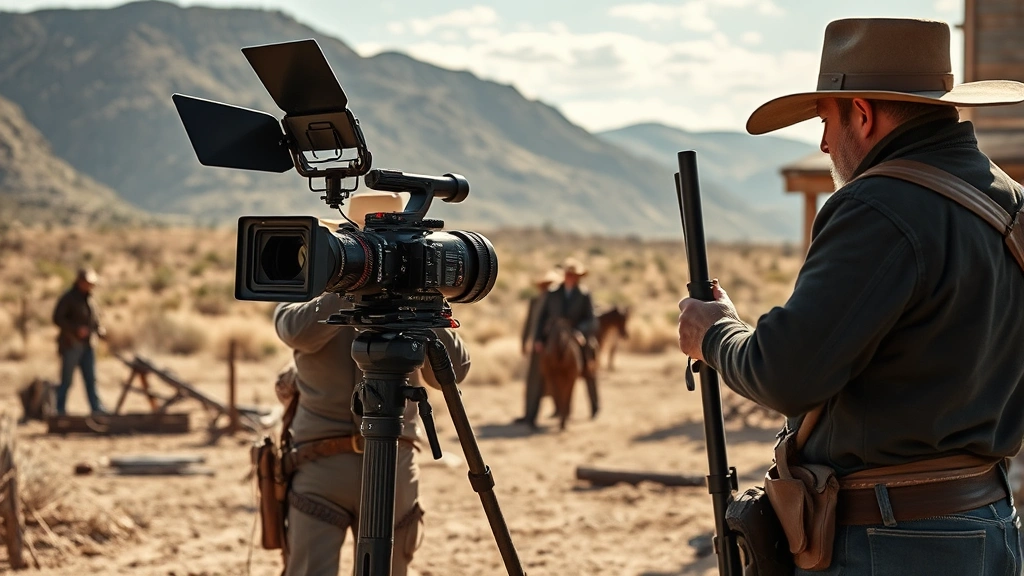
Will Red Dead Redemption Movie Succeed? Expert Insights on Adaptation Challenges and Box Office Potential
The announcement of a Red Dead Redemption movie adaptation has ignited passionate debates across entertainment media and gaming communities. As Hollywood continues mining the lucrative video game IP well, few franchises carry the narrative weight and cultural significance of Rockstar Games’ critically acclaimed Western epic. The 2023 announcement that Rockstar Games would develop a film adaptation of the massively successful game series raised immediate questions: Can a cinematic version capture the atmospheric storytelling that made the games legendary? Will audiences unfamiliar with the source material embrace a three-hour Western drama? What does the current state of theatrical cinema mean for an ambitious, expensive adaptation of this scale?
Industry analysts and film strategists have begun weighing in on the project’s viability, examining everything from comparable video game adaptations to broader trends in theatrical releases and streaming distribution. The conversation extends beyond simple box office predictions—it encompasses questions about creative vision, audience expectations, production timelines, and the evolving landscape of entertainment consumption in an era where prestige television often outpaces cinema in storytelling ambition.
The Red Dead Redemption Gaming Phenomenon
Red Dead Redemption 2, released in 2018, stands as one of the most critically acclaimed and commercially successful video games ever produced. The game generated over $750 million in revenue within its first two weeks and has sold more than 38 million copies globally. Beyond raw numbers, the game achieved something rare in interactive entertainment: it earned widespread recognition as a legitimate artistic achievement, with reviewers praising its narrative sophistication, character development, and thematic complexity.
The game’s protagonist, Arthur Morgan, represents a watershed moment in video game storytelling. Unlike many gaming protagonists who serve primarily as player avatars, Arthur emerges as a fully realized character with internal contradictions, moral struggles, and a narrative arc that rivals prestige television. His journey from outlaw enforcer to man confronting his mortality resonates across demographics and has become iconic within gaming culture. The supporting cast—including Dutch van der Linde, John Marston, and Micah Bell—demonstrates Rockstar’s commitment to ensemble storytelling that rivals contemporary prestige dramas.
The game’s setting in the American West during the decline of the frontier era provides thematic richness that extends beyond typical action-adventure narratives. Questions about progress versus tradition, individual freedom versus social responsibility, and the violence inherent in civilization form the philosophical backbone of the narrative. For a film adaptation, these thematic elements could position the movie as something more substantial than typical video game adaptations—potentially as a serious Western drama rather than action spectacle.
Video Game Movie Adaptations: Learning from Past Success and Failure
The history of video game-to-film adaptations provides crucial context for predicting Red Dead Redemption’s theatrical prospects. For decades, the track record was abysmal. From Super Mario Bros. (1993) to Assassin’s Creed (2016), most adaptations failed critically and commercially, with audiences and critics dismissing them as cynical cash grabs that misunderstood their source material.
However, recent years have witnessed a dramatic shift. Sonic the Hedgehog (2020) became a surprising box office success, largely because filmmakers listened to fan feedback and reimagined the character design. Detective Pikachu (2019) earned $431 million worldwide by balancing fan service with accessible storytelling. Most significantly, The Super Mario Bros. Movie (2023) generated $1.36 billion globally, demonstrating that video game adaptations could achieve blockbuster status when handled with creative respect.
The most instructive precedent comes from franchise adaptations that respected source material while expanding appeal. According to media analysis from The Atlantic, the turning point occurred when studios stopped viewing games as mere plot scaffolding and instead engaged with what made those games narratively and thematically distinctive.
For Red Dead Redemption, this principle suggests a path to success: preserve the character-driven narrative, the philosophical complexity, and the atmospheric world-building that made the game exceptional, while translating the interactive medium’s strengths into cinematic language. A straightforward action-Western could underperform; a thoughtful character study that happens to be based on a video game could resonate with both gaming audiences and broader cinema demographics.
The Uncharted adaptation (2022) offers a cautionary tale—it grossed $401 million worldwide but received middling reviews for prioritizing action sequences over character development. Conversely, The Last of Us HBO series demonstrated that gaming IP could achieve critical and commercial success through prestige television storytelling. This raises questions about whether Red Dead Redemption might ultimately find better creative expression on a streaming platform than in theatrical cinema.
The Creative Vision Behind the Film Project
Rockstar Games’ decision to develop the Red Dead Redemption film internally rather than outsourcing to a traditional studio reflects confidence in the property’s narrative potential. The company has a track record of ambitious storytelling across the Grand Theft Auto and Red Dead franchises, suggesting leadership understands what made these games culturally significant.
The critical question involves directorial approach. A successful Red Dead Redemption film requires a director comfortable with character-driven narratives, willing to slow pacing for character moments, and capable of handling the genre’s visual language. Comparisons naturally arise to True Grit (2010), Hell or High Water (2016), and The Assassination of Jesse James by the Coward Robert Ford (2007)—all contemporary Westerns that achieved critical acclaim by emphasizing psychological depth alongside action.
The narrative challenge involves translating a game that players experience across 60+ hours into a film typically lasting 120-180 minutes. Which storylines take priority? Arthur Morgan’s arc seems essential, but the game’s sprawling narrative includes numerous subplots, side characters, and thematic explorations that don’t translate neatly to linear film structure. Screenwriting decisions made during adaptation could determine whether the film feels comprehensive or reductive.
Thematic focus matters enormously. If the filmmakers emphasize the game’s meditation on mortality, masculinity, and civilization’s violence, they position the film as prestige drama. If they prioritize action sequences and outlaw mythology, they risk creating a conventional action-Western that doesn’t justify its video game origins or justify the substantial budget such a production demands.
Box Office Realities for Western Genres Today
The Western genre presents a paradox for contemporary theatrical releases. While classic Westerns remain culturally significant, recent theatrical Westerns have struggled commercially. The Harder They Fall (2021) found its audience on Netflix rather than in theaters. News of the World (2020) earned only $91 million globally despite critical acclaim and Tom Hanks’ star power. The Power of the Dog (2021) became a cultural phenomenon and award contender—on Netflix.
This pattern suggests theatrical audiences increasingly resist traditional Western narratives unless they offer significant novelty or star power. The Red Dead Redemption film’s video game origins could provide that novelty factor, attracting gaming audiences alongside cinema-goers interested in prestige Westerns. However, relying on novelty without exceptional execution creates risk.
According to box office analysis from Box Office Pro, successful contemporary Westerns either target international audiences (where the genre remains popular) or offer revisionist takes that subvert genre expectations. Red Dead Redemption could succeed internationally, particularly in markets where gaming culture drives entertainment consumption. However, domestic theatrical prospects depend heavily on critical reception and word-of-mouth.
Production budget represents another crucial variable. If the film costs $150-200 million (reasonable for a prestige Western with substantial action sequences), it requires $400-500 million globally to achieve genuine profitability when accounting for marketing, distribution, and theater cuts. This threshold is challenging but achievable for franchise properties with established fanbases.
Casting Challenges and Star Power Requirements
Casting Arthur Morgan represents the film’s most consequential decision. The character requires an actor capable of portraying quiet interiority, moral complexity, and physical presence. Unlike traditional action heroes, Arthur’s strength lies in restraint and emotional authenticity rather than charisma. This narrows the field significantly.
Potential candidates might include actors like Oscar Isaac, Pedro Pascal, or Adam Driver—performers comfortable with morally ambiguous characters and capable of carrying prestige dramas. Alternatively, casting a less established actor could provide financial benefits while ensuring the character rather than star power drives audience interest.
Supporting cast decisions matter equally. Dutch van der Linde requires an actor capable of portraying charisma masking psychological instability. John Marston needs someone who can embody weary resignation and paternal protectiveness. Micah Bell demands an actor comfortable playing irredeemable villainy. Poor casting in any of these roles could undermine the entire production.
The casting process will likely consume significant development time, as will negotiating contracts with major stars. This timeline consideration affects production schedules and release date projections. Industry reports suggest the film remains in early development, suggesting theatrical release dates likely extend into 2026 or beyond.
Streaming vs. Theatrical Release Strategy
The most consequential strategic question involves distribution platform. Major studios increasingly view prestige projects as streaming content, reserving theatrical releases for proven franchises and spectacle-driven narratives. Red Dead Redemption’s narrative focus and character emphasis could serve prestige streaming platforms well, while its substantial budget suggests theatrical ambitions.
A streaming release through a major platform (Netflix, Amazon Prime Video, Apple TV+) would guarantee massive viewership, eliminate theatrical box office risk, and position the project as prestige television rather than theatrical cinema. This approach aligns with how premium gaming adaptations have recently performed, with The Last of Us achieving critical acclaim and cultural impact through HBO rather than theatrical distribution.
However, theatrical release carries prestige and cultural significance that streaming cannot replicate. A successful Red Dead Redemption theatrical release would validate video game adaptations as theatrical properties and generate awards consideration that streaming releases rarely achieve. For Rockstar Games, theatrical release asserts the project’s artistic ambitions rather than positioning it as streaming content.
The decision likely hinges on studio partnerships and financial arrangements. If a major studio funds the project with theatrical distribution agreements, theatrical release becomes probable. If Rockstar partners with a streaming platform, streaming distribution becomes likely. Current reporting suggests negotiations remain ongoing, meaning the distribution question remains unresolved.
Production Timeline and Development Hurdles
Video game adaptations often face extended development periods as studios navigate complex intellectual property arrangements, creative vision conflicts, and casting negotiations. The Red Dead Redemption film appears to be in early development, suggesting theatrical release dates likely extend years into the future.
Production complexity involves translating the game’s open-world design into linear narrative structure. The game’s environmental storytelling—how players discover narrative details through exploration—doesn’t translate directly to cinema. Screenwriters must decide which narrative threads to prioritize and how to structure information revelation for maximum dramatic impact.
Practical production challenges include location scouting, period-accurate set design, costume creation, and choreographing action sequences that feel authentic to both the game’s aesthetic and Western genre conventions. Red Dead Redemption’s visual specificity—the attention to environmental detail that made the game visually stunning—raises expectations for production design. Anything less than exceptional visual quality could disappoint audiences familiar with the game’s aesthetic sophistication.
Post-production requirements for a prestige Western with substantial action sequences suggest 18-24 months of editing, visual effects, and sound design work. Combined with pre-production and principal photography timelines, a theatrical release before 2026 appears unlikely.
Audience Expectations and Adaptation Fidelity
Gaming audiences bring specific expectations to video game adaptations. They expect filmmakers to respect source material, preserve character relationships and story beats that mattered to them, and avoid condensing complex narratives into oversimplified plots. Simultaneously, broader cinema audiences expect compelling storytelling that works independent of source material familiarity.
Balancing these expectations presents an adaptation challenge comparable to translating beloved literary properties. Too much fidelity to the game risks creating a film that feels like extended cutscenes rather than cinema. Too much deviation risks alienating the gaming audience whose enthusiasm could drive box office success.
The most successful video game adaptations have navigated this balance by preserving thematic essence while reimagining narrative structure for cinematic pacing. Red Dead Redemption’s thematic richness—its meditations on mortality, frontier mythology, and violence’s moral weight—provides substantial material for adaptation while allowing structural flexibility.
Critical reception will likely emphasize how well the film captures the game’s philosophical dimensions. If reviewers perceive the adaptation as respecting the source material’s intellectual ambitions, positive word-of-mouth could extend beyond gaming audiences to cinema-goers interested in prestige drama. Conversely, if the adaptation feels like action-adventure spectacle stripped of thematic complexity, both gaming audiences and general audiences may dismiss it as a missed opportunity.
Consider how successful video game adaptations navigate audience expectations by understanding what made the source material resonate. For Red Dead Redemption, that resonance stems from character development, moral ambiguity, and thematic sophistication rather than action sequences or technical innovation.
Comparative Analysis: Gaming IP Success Metrics
Examining what separates successful gaming adaptations from failures reveals crucial patterns. Variety’s analysis of video game movie trends identifies several success factors: respecting source material aesthetics, casting actors capable of portraying character depth, maintaining thematic fidelity even when plot details change, and providing value proposition that justifies theatrical release.
Red Dead Redemption’s substantial gaming fanbase provides built-in audience enthusiasm. The game’s critical acclaim suggests source material worthy of cinematic adaptation. The Western genre’s visual language aligns naturally with cinema, unlike some gaming properties requiring significant translation. These factors position the project favorably compared to many gaming adaptations.
However, Western genre challenges and theatrical cinema’s current struggles create headwinds. The film must overcome skepticism about video game adaptations, declining theatrical attendance for non-superhero dramas, and questions about whether the project justifies its inevitable substantial budget.
Industry Expert Perspectives and Predictions
Film industry analysts remain cautiously optimistic about Red Dead Redemption’s prospects. The project benefits from Rockstar Games’ creative reputation, the source material’s critical acclaim, and favorable timing as successful gaming adaptations demonstrate market viability.
However, experts consistently emphasize execution risk. A prestige Western adaptation could achieve critical and commercial success, but mediocre execution could result in financial disappointment and critical dismissal. The project’s success depends less on its video game origins and more on whether filmmakers craft a compelling drama that happens to be adapted from a game.
Production budget represents another expert concern. Prestige Westerns with substantial action sequences routinely cost $150-200 million. At that budget level, the film requires exceptional box office performance to achieve profitability. While gaming audiences could provide audience boost, traditional Western audience decline creates risk.
Timeline considerations also warrant attention. By the time the film reaches theaters—likely 2026 or later—cultural momentum around the source material may have shifted. The game was released in 2018; a 2026 film adaptation represents an eight-year gap. Maintaining audience enthusiasm across that timeline presents a distinct challenge.
Most industry observers suggest the project’s ultimate success depends on director selection and creative vision clarity. A visionary director with proven ability to handle character-driven narratives and action sequences could elevate the material into something transcendent. A competent but uninspired director could produce a competent but forgettable Western that underperforms at the box office despite substantial marketing investment.
FAQ
Will Red Dead Redemption be theatrical or streaming?
The distribution platform remains unconfirmed as of current reporting. Discussions suggest both theatrical and streaming possibilities, with final decisions likely depending on studio partnerships and financing arrangements. Industry observers expect announcements regarding distribution strategy during upcoming development phases.
When will Red Dead Redemption movie release?
No official release date has been announced. Given the project’s current early development status, theatrical release likely extends into 2026 or beyond. Production timelines for prestige Westerns typically span 18-24 months of principal photography and post-production, plus extended pre-production periods for casting and creative development.
Who will play Arthur Morgan?
No official casting announcements have been made. The role requires an actor comfortable with morally complex characters and capable of portraying psychological depth alongside physical presence. Industry speculation suggests various accomplished actors could be considered, but official confirmation awaits development progression.
How much will Red Dead Redemption movie cost?
Budget details remain confidential. Comparable prestige Westerns with substantial action sequences typically cost $150-200 million. Red Dead Redemption’s scope, visual ambitions, and expected action sequences suggest similar budget range, though final costs depend on casting, location, and technical requirements.
Will the movie be faithful to the game?
Adaptation philosophy remains undeclared by filmmakers. Successful gaming adaptations typically preserve thematic essence and character relationships while restructuring narrative for cinematic pacing. Red Dead Redemption’s narrative complexity suggests selective adaptation rather than comprehensive translation of 60+ hours of gameplay into cinema.
Can a Western succeed at the box office today?
Contemporary theatrical Westerns face audience challenges, with recent entries like News of the World underperforming despite critical acclaim. However, Red Dead Redemption’s gaming fanbase could provide audience boost that traditional Westerns lack. Success depends on critical reception, word-of-mouth, and whether the film generates cultural momentum beyond gaming audiences.


