How ‘The Others’ Redefined Horror: A Deep Dive into Amenábar’s Masterpiece
Alejandro Amenábar’s The Others (2001) stands as a watershed moment in horror cinema, fundamentally challenging how filmmakers approach psychological terror and narrative structure. Starring Nicole Kidman in one of her most acclaimed performances, this English-language Spanish production proved that sophisticated horror doesn’t require gore, jump scares, or supernatural spectacle to achieve profound unease. Instead, Amenábar crafted a film that operates on subtlety, atmosphere, and the terrifying power of revelation—creating a template that influenced countless horror films in the decades that followed.
The film’s achievement lies not merely in its twist ending, though that twist remains one of cinema’s most perfectly executed narrative reversals. Rather, The Others redefined horror by prioritizing psychological complexity over visceral shock, by trusting audiences to piece together mounting dread from carefully planted clues, and by suggesting that the most horrifying truths often reside within ourselves. This analysis explores how Amenábar accomplished this transformation and why the film’s influence continues to resonate through contemporary horror cinema.
The Atmospheric Foundation of Modern Horror
Before analyzing The Others specifically, it’s essential to understand the horror landscape of 2001. The genre had fragmented into competing camps: torture-horror was emerging from underground cinema, teen slashers dominated mainstream markets, and supernatural films relied heavily on CGI spectacle. Amenábar’s film arrived as a deliberate counterpoint to these trends, suggesting that atmosphere—that intangible quality of creeping dread—could be more terrifying than any visual effect.
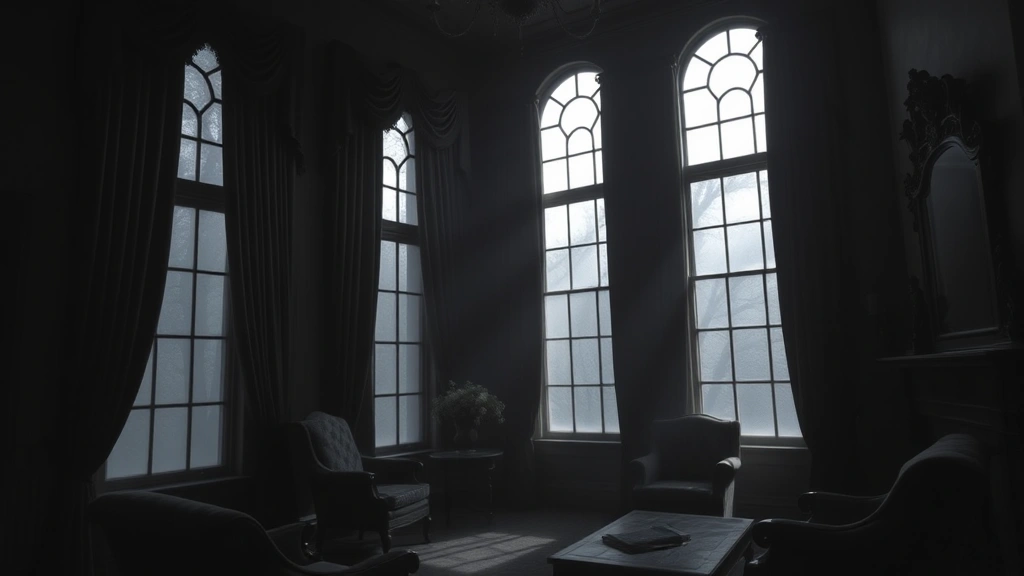
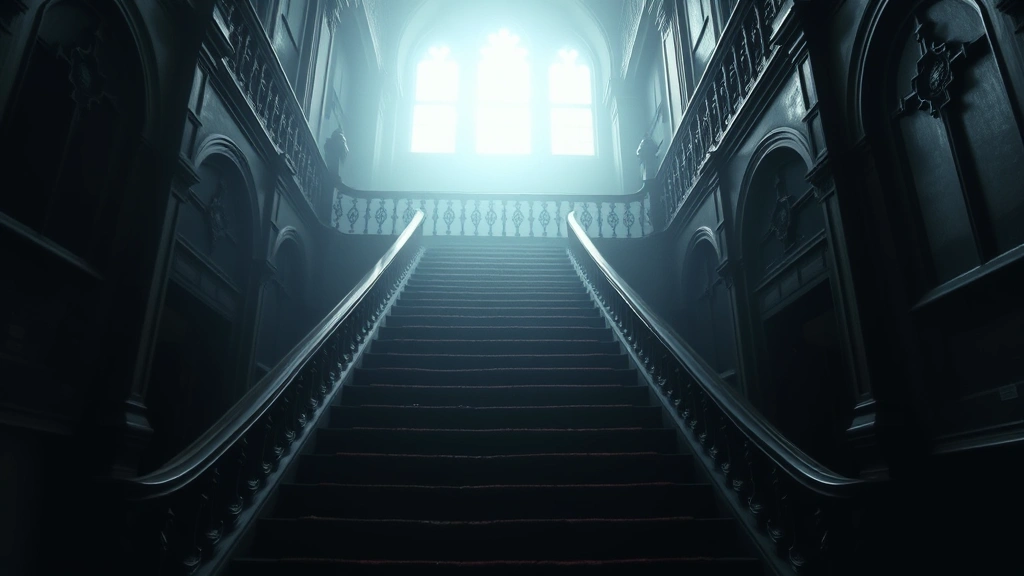
The film’s setting, a sprawling mansion on a fog-shrouded island in post-World War II Jersey, immediately establishes an environment where light itself becomes precious and threatening. Amenábar understood that horror thrives in what we don’t see, in the spaces between moments of clarity. The constant fog, the heavy curtains, the servants who move with unsettling grace through dim corridors—these elements create a sensory experience where the audience never feels entirely safe or oriented. This approach drew inspiration from classic Gothic literature and Henry James’s The Turn of the Screw, but Amenábar modernized the technique for contemporary cinema.
The atmospheric choice to minimize external threats while maximizing internal psychological pressure proved revolutionary. Rather than relying on orchestral stings and sudden loud noises (though Amenábar employs these sparingly), the film uses silence as its primary tool. Long stretches of dialogue-free sequences force viewers to sit with their discomfort, to project their fears onto the shadowy spaces of the mansion. This patience—the willingness to let scenes breathe without immediate payoff—became a hallmark of elevated horror that would flourish in subsequent decades through films exploring similar streaming platforms and critical appreciation.
Nicole Kidman and Character-Driven Terror
Nicole Kidman’s performance as Grace Stewart represents a crucial turning point in how horror cinema portrays female leads. Rather than the typical scream queen or resourceful action heroine, Kidman inhabits a character defined by psychological fragility, obsessive control, and mounting paranoia. Grace is not sympathetic in conventional ways; she’s rigid, often harsh with her children, and driven by compulsions that hint at deeper trauma. This complexity makes her simultaneously the audience’s identification figure and the source of unease.
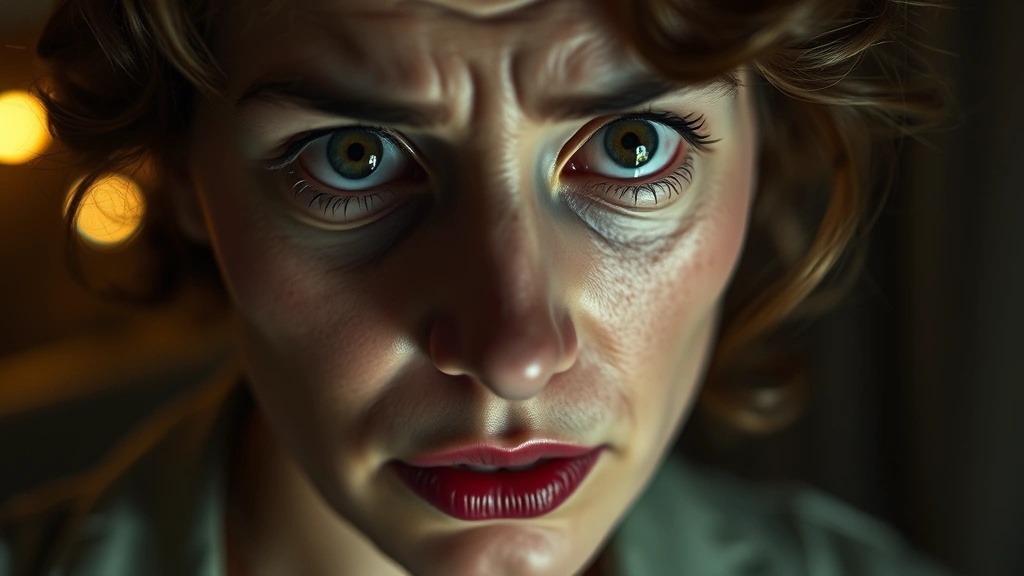
Kidman’s performance excels in conveying emotional states through minimal expression. Her face registers anxiety through subtle shifts—a tightening around the eyes, a barely perceptible tension in the jaw. She portrays Grace’s descent into psychological breakdown with such precision that viewers experience her deterioration as their own. When she begins to doubt her perception of reality, we doubt alongside her. This character-centric approach to horror, where the protagonist’s psychology becomes the actual threat, influenced how filmmakers like Ari Aster and Robert Eggers would later construct their own psychologically complex horror narratives.
The performance also benefits from Amenábar’s casting of child actors Alakina Mann and James Bentley as Grace’s photosensitive children. Their eerie stillness and formal dialogue patterns create an unsettling dynamic that keeps viewers questioning whether the children are truly innocent victims or something far more sinister. This ambiguity—never fully resolved until the film’s revelation—demonstrates how strong ensemble casting can deepen horror’s psychological impact. For those interested in understanding exceptional film performance, our guide on becoming a film critic explores how to analyze such nuanced acting choices.
The Genius of Narrative Misdirection
Amenábar’s screenplay operates as a masterclass in misdirection, systematically guiding the audience toward an entirely false conclusion while planting the genuine truth in plain sight. The narrative structure itself becomes a horror mechanism—we’re trapped alongside Grace in her increasingly paranoid interpretation of events. Every creaking floorboard, every unexplained sound, every strange behavior from the servants reinforces her (and our) conviction that the house is genuinely haunted by malevolent spirits.
The film carefully establishes the rules of its supernatural logic. We learn that the children have severe photosensitivity, requiring the heavy curtains and constant dimness. We meet the mysterious new servants who appear without explanation. We witness apparent manifestations—furniture moving, children speaking in voices not their own, the sound of a child’s music box playing by itself. Amenábar presents each element as evidence supporting the haunting hypothesis, never allowing viewers to question the fundamental framework until the final revelation recontextualizes everything.
This narrative technique proved influential across horror and thriller cinema. Films like The Sixth Sense (which coincidentally released the same year) demonstrated similar misdirection, but The Others accomplished something more sophisticated: it made the misdirection itself thematic. The film isn’t merely tricking us; it’s exploring how trauma, guilt, and denial can fundamentally distort perception. Grace’s paranoia isn’t random psychological breakdown—it’s the manifestation of her subconscious knowledge of unspeakable truth. The narrative misdirection mirrors the psychological defense mechanisms of denial and projection.
Visual Language and Haunted House Aesthetics
Cinematographer Javier Aguirresarobe creates a visual palette that transforms the mansion into a character itself. The film employs an almost monochromatic color scheme—grays, blacks, whites, and muted browns dominate the frame. This visual restraint intensifies the emotional experience; without chromatic distraction, viewers focus entirely on composition, movement, and the play of light and shadow. The camera moves deliberately, often lingering on empty corridors and abandoned rooms, emphasizing the vastness and emptiness of the space.
The production design by Benjamín Fernández deserves particular recognition for creating a space that feels simultaneously intimate and labyrinthine. The mansion’s layout becomes progressively more disorienting—rooms seem to connect in impossible ways, corridors stretch endlessly, and the geography shifts in our perception as Grace’s mental state deteriorates. This spatial confusion contributes to the film’s psychological horror; we, like Grace, never feel oriented or safe within the house’s confines. The heavy furniture, elaborate wallpapers, and period-appropriate decor create authentic 1940s atmosphere while also feeling suffocating and oppressive.
Amenábar’s use of negative space—the empty rooms, the darkened hallways, the obscured views—demonstrates sophisticated visual storytelling. Rather than filling the frame with visual information, the director leaves spaces deliberately empty, allowing the audience’s imagination to populate them with dread. This restraint contrasts sharply with the visual maximalism of contemporary horror, proving that less can indeed be more. The film’s aesthetic influenced the development of what critics term “atmospheric horror,” as documented in Pew Research Center’s studies on media consumption patterns showing increased audience appreciation for subtle, psychologically complex horror narratives.
The Twist That Changed Everything
The revelation that Grace and her children are themselves ghosts—that they’ve been dead throughout the film—ranks among cinema’s most perfectly executed narrative twists. What makes this twist particularly effective isn’t merely the shock value but how completely it recontextualizes everything preceding it. Every scene, every piece of dialogue, every seemingly inexplicable event suddenly makes perfect sense. The film demands immediate reinterpretation upon completion; viewers instinctively replay scenes mentally, recognizing the clues they missed.
More significantly, the twist carries profound thematic weight. Grace’s paranoia, her obsessive control, her violent outbursts—all become understandable as the manifestations of someone trapped in denial about her own horrific actions. She murdered her children in a moment of desperate confusion, then convinced herself they were alive, creating an elaborate psychological fiction to avoid confronting unbearable guilt. The haunting she experiences isn’t external; it’s internal, the manifestation of her conscience literally haunting her with the truth she refuses to acknowledge.
This psychological dimension elevates the twist beyond mere narrative surprise. The film explores how trauma and guilt can create alternate realities, how denial can be so powerful that it literally reshapes perception. Grace’s journey from paranoid victim to the source of horror mirrors the viewer’s own reinterpretation. We’ve been experiencing her delusion alongside her, and recognizing this forces uncomfortable self-examination about how easily we accept surface narratives without questioning deeper truths.
The twist also challenges genre expectations in productive ways. Rather than the typical horror resolution where the protagonist defeats the threat, The Others offers no such catharsis. Grace must ultimately accept the truth of her actions, a reckoning far more devastating than any supernatural confrontation could provide. This emotional resolution—or rather, the absence of traditional resolution—proved influential on subsequent psychological horror films that prioritize internal reckoning over external triumph.
Legacy and Influence on Contemporary Horror
The influence of The Others on subsequent horror cinema cannot be overstated. The film demonstrated that sophisticated, psychologically complex horror could achieve both critical acclaim and commercial success. This validation encouraged filmmakers to pursue character-driven, atmosphere-dependent horror rather than relying solely on spectacle and gore. Directors like Ari Aster (Hereditary, Midsommar), Robert Eggers (The Lighthouse, The Witch), and Karyn Kusama (The Invitation) clearly drew inspiration from Amenábar’s template: psychological horror rooted in character development, atmospheric dread, and narrative complexity.
The film’s influence extends beyond direct imitation. It legitimized what critics term “elevated horror”—films that employ horror conventions while aspiring to literary and artistic sophistication. This classification, which emerged prominently in the 2010s, traces its lineage directly to The Others. The film proved that horror could be formally ambitious, thematically rich, and emotionally devastating without sacrificing genre integrity. For those interested in understanding this evolution, our comprehensive guide to movie review sites includes resources analyzing contemporary horror’s development.
Contemporary streaming platforms have further validated the approach Amenábar pioneered. Series like The Haunting of Hill House and Midnight Mass explicitly borrow from The Others‘ template: ensemble casts, haunted locations, and revelations that reframe entire narratives through psychological complexity. The film’s success demonstrated that audiences possessed sophisticated enough sensibilities to appreciate horror that trusted them to interpret ambiguous situations and complex character motivations.
The twist-ending format itself became more acceptable in mainstream cinema partly due to The Others‘ success. While twist endings existed previously, this film’s particular achievement—a twist that enriches rather than merely surprises—created template for subsequent films. However, the proliferation of twist-dependent narratives in the 2010s also prompted critical reconsideration of the device, with some arguing that lesser films used twist mechanics as substitutes for genuine thematic development. The Others remains the gold standard precisely because its twist emerges organically from character psychology and thematic exploration rather than existing as narrative apparatus.
Technical Mastery and Sound Design
While cinematography and production design rightfully receive praise, the film’s sound design deserves equal recognition for creating its pervasive sense of unease. Composer Fernando Velázquez creates a score that operates primarily through absence and suggestion rather than melodic declaration. The music swells minimally, instead relying on dissonant strings and unsettling harmonic progressions that create psychological discomfort without overwhelming the soundtrack. This restraint proves more effective than orchestral bombast, allowing the viewer’s imagination to fill the silence with dread.
The sound effects design proves equally crucial. Amenábar and sound designer Mauro Fiore employ selective amplification—certain sounds, like footsteps or door creaks, receive heightened prominence while others remain muted. This selective attention mirrors how paranoid consciousness works; the mind latches onto potentially threatening sounds while filtering others into background noise. The famous sequence where Grace hears a child’s music box playing by itself demonstrates this principle perfectly. The sound becomes increasingly prominent, increasingly distorted, until it dominates the soundscape. Later, understanding that Grace is the ghost hearing echoes of living children creates retroactive meaning.
The film also employs negative space in its sound design—stretches of near-complete silence that create tension through absence rather than presence. These quiet moments force viewers into heightened alertness; the absence of sound becomes more disturbing than any noise could be. This approach influenced contemporary horror’s sound design philosophy, with films increasingly using silence and selective amplification rather than constant auditory stimulation. Entertainment industry publications have documented this shift toward more sophisticated audio approaches in modern horror cinema.
FAQ
What makes The Others different from typical haunted house films?
The Others distinguishes itself through psychological complexity and narrative misdirection. Rather than presenting straightforward supernatural threats, the film uses atmosphere and character development to explore how trauma and guilt manifest psychologically. The twist revelation reframes the entire narrative, making the real horror internal rather than external. This approach prioritizes psychological realism over spectacle, influencing what became known as elevated or prestige horror.
How does Nicole Kidman’s performance contribute to the film’s horror impact?
Kidman’s nuanced portrayal of Grace Stewart creates identification through psychological vulnerability rather than heroic action. Her subtle facial expressions convey anxiety, paranoia, and deteriorating mental state with precision. This character-centric approach makes viewers complicit in her delusion; we share her interpretations and fears, creating intimate psychological horror that surpasses external threats. Her performance demonstrates how strong acting can elevate genre material.
Why is the twist ending so effective?
The twist succeeds because it emerges organically from character psychology and thematic exploration rather than existing as mere narrative surprise. Upon reinterpretation, every scene gains new meaning. The twist also carries profound thematic weight—it’s not simply a gotcha moment but rather an exploration of how denial and trauma distort perception. The revelation forces viewers to reconsider their own interpretations, making the twist thematically integral rather than ornamental.
How has The Others influenced contemporary horror?
The Others legitimized psychological horror and atmospheric dread as viable alternatives to gore-based or spectacle-dependent approaches. The film’s success encouraged filmmakers to pursue character-driven narratives and formal ambition within the horror genre. Contemporary elevated horror, streaming series like The Haunting franchise, and indie horror all trace their lineage to principles Amenábar established in this film.
What is the film’s commentary on guilt and motherhood?
The film explores how maternal guilt and the pressure to protect children can lead to psychological breakdown. Grace’s actions emerge from desperate, confused desperation rather than malice, yet the guilt becomes unbearable. Her subsequent denial and paranoia represent psychological mechanisms for avoiding confrontation with unforgivable truth. The film suggests that some truths are so devastating that the psyche constructs elaborate fictions to avoid them, ultimately trapping the individual in psychological purgatory.
Where can I find more film analysis and criticism?
The Screen Vibe Daily Blog offers comprehensive film critique and analysis. Additionally, our resource on famous movie quotes provides insights into how films communicate thematic material through dialogue. For broader film appreciation, academic journals and academic film studies databases offer peer-reviewed analysis of horror’s evolution and influence.
Is The Others appropriate for all audiences?
The Others contains psychological horror, mild violence, and thematic elements involving child death. While it avoids graphic content, the psychological intensity and disturbing implications make it most suitable for mature audiences. The film’s PG-13 rating reflects its lack of explicit content rather than its emotional impact; the psychological horror may prove more disturbing to sensitive viewers than films with more graphic but less psychologically complex content.