WW2 Movies: A Cinematic Retrospective Analysis
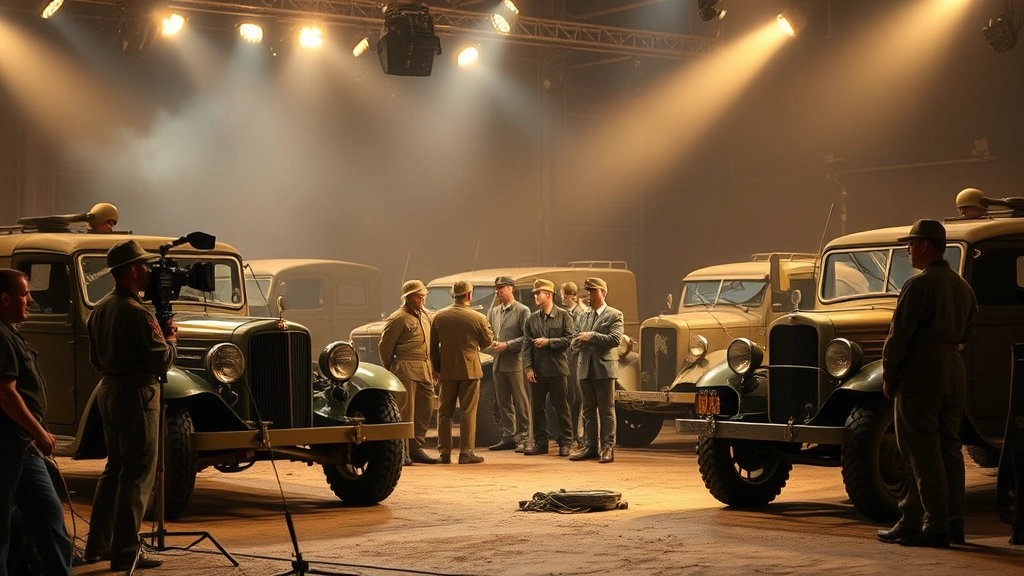
World War 2 remains one of cinema’s most compelling subjects, offering filmmakers an opportunity to explore humanity’s darkest chapters while examining courage, sacrifice, and moral complexity. From intimate character studies to sweeping historical epics, World War 2 movies have evolved dramatically since the war’s conclusion, reflecting changing cultural perspectives, technological advancement, and audience expectations. These films serve as cultural artifacts that shape how generations understand the conflict, making them essential to both film history and historical discourse.
The cinematic representation of WW2 has transformed from propaganda-laden documentaries and patriotic narratives into nuanced explorations of individual experiences, psychological trauma, and the war’s lasting global impact. Today’s WW2 cinema encompasses diverse perspectives—from Allied viewpoints to German experiences, from Holocaust documentation to Pacific Theater battles. This retrospective analysis examines how filmmakers have approached this monumental subject, the evolution of storytelling techniques, and why these narratives continue resonating with audiences worldwide.
The Evolution of WW2 Cinema: From Propaganda to Art
The earliest world war 2 movies emerged during the conflict itself, functioning primarily as propaganda instruments designed to bolster morale and justify military objectives. American films like “Mrs. Miniver” (1942) and British productions served governmental interests, presenting carefully curated narratives that emphasized heroism and national unity. These early works, while historically important, prioritized emotional manipulation over nuanced storytelling.
The immediate post-war period saw a shift toward documenting the conflict’s realities, though still filtered through nationalist perspectives. Films increasingly addressed the human cost of warfare, yet rarely questioned the fundamental justifications for military action. By the 1960s and 1970s, filmmakers began interrogating WW2 narratives more critically. Directors like Stanley Kubrick and Sam Peckinpah presented war not as glorious struggle but as mechanized horror and moral ambiguity. This represented a fundamental transformation in how cinema approached historical representation.
The 1980s and 1990s witnessed another paradigm shift, with films like “Schindler’s List” (1993) and “Saving Private Ryan” (1998) combining technical sophistication with emotional authenticity. These productions demonstrated that WW2 cinema could achieve both commercial success and artistic credibility while maintaining historical responsibility. The evolution reflects broader cultural changes: societies moving from patriotic consensus toward acknowledging complexity, from victors’ narratives toward inclusive perspectives, from sanitized representations toward unflinching documentation.
Defining Moments: Iconic Films That Shaped the Genre
Certain films transcended entertainment status to become definitive cultural statements about WW2. “Casablanca” (1942) established romantic melodrama as a framework for exploring wartime sacrifice and moral compromise. Though produced during the war, its exploration of conflicted loyalty and impossible choices anticipated post-war cinema’s psychological sophistication. The film’s enduring appeal demonstrates how iconic movie quotes can crystallize complex historical moments into memorable cultural touchstones.
“The Great Escape” (1963) pioneered the ensemble war film, emphasizing individual personalities within collective struggle. Its influence extended far beyond WW2 cinema, establishing templates for heist narratives and team-based storytelling. Meanwhile, “Dr. Strangelove” (1964) used dark comedy to interrogate Cold War anxieties rooted in WW2’s aftermath, suggesting that cinema could address historical subjects through unconventional tonal approaches.
“Apocalypse Now” (1979), while technically a Vietnam War film, fundamentally reframed how audiences understood all war cinema. Francis Ford Coppola’s psychedelic nightmare suggested that cinema could explore warfare’s existential horror rather than its strategic mechanics. This influence permeated subsequent WW2 productions, which increasingly emphasized psychological authenticity over historical accuracy.
“Saving Private Ryan” (1998) represents perhaps the most significant technical innovation in WW2 cinema. Steven Spielberg’s D-Day sequence established new standards for depicting combat realism, using handheld cameras, desaturated color palettes, and visceral sound design to immerse audiences in historical trauma. The film’s opening thirty minutes became the benchmark against which all subsequent WW2 combat sequences were measured. Its massive commercial success demonstrated that audiences desired unflinching historical representation paired with emotional resonance.
“Schindler’s List” (1993) established Holocaust representation as cinema’s moral imperative, demonstrating that historical atrocity could be depicted respectfully while maintaining dramatic power. Spielberg’s decision to film in black-and-white, utilize authentic locations, and center victim experiences rather than perpetrator psychology became influential templates for subsequent Holocaust cinema.
Technological Innovation and Cinematic Realism
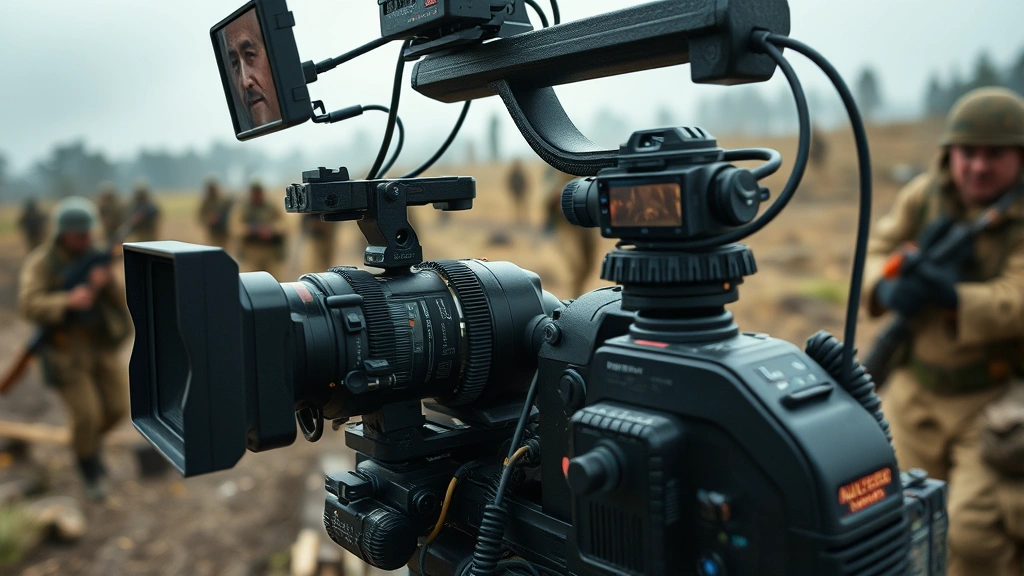
Technological advancement fundamentally transformed how filmmakers could represent WW2. Early cinema relied on studio sets, practical effects, and theatrical performances that created emotional distance from depicted events. Kodachrome color film introduced in the 1950s allowed for historically informed color choices, though many filmmakers deliberately employed black-and-white cinematography to emphasize authenticity and connect visually with period photography.
Digital cinematography revolutionized WW2 filmmaking beginning in the 2000s. High-definition cameras permitted unprecedented detail in recreating historical environments, while digital color correction enabled filmmakers to achieve specific visual atmospheres. Films like “Dunkirk” (2017) employed IMAX cinematography to create immersive, almost overwhelmingly visceral experiences of historical conflict.
Sound design evolved equally dramatically. Early WW2 films utilized studio-recorded sound effects that now sound artificial to contemporary ears. Modern productions employ spatial audio, recorded battlefield acoustics, and sophisticated mixing to create three-dimensional sonic environments. The psychological impact of authentic soundscapes—the specific acoustic qualities of different weapons, the spatial relationships of combat—contributes significantly to how audiences process historical trauma.
Visual effects technology enabled filmmakers to recreate large-scale battle sequences without massive budgets or actual destruction. Computer-generated imagery permits depicting historical locations with archaeological precision, reconstructing cities as they appeared during specific historical moments. However, this technological capability also introduced ethical questions about whether digital recreation of historical atrocity constitutes appropriate representation.
Character-Driven Narratives and Personal Stories
Contemporary WW2 movies increasingly prioritize individual perspectives over grand historical narratives. Rather than presenting WW2 as monolithic historical event, modern filmmakers recognize that the conflict encompassed infinite personal experiences—soldiers, civilians, resistance fighters, victims, perpetrators, and bystanders each navigated the war through fundamentally different circumstances.
Films like “The Reader” (2008) explored complicity and moral responsibility through intimate relationships, suggesting that WW2’s historical significance lay partly in how it tested individual ethical frameworks. “Come and See” (1985), though a Soviet production, presented WW2 through a child’s devastating perspective, demonstrating how warfare destroys innocence while questioning the narrative frameworks that justify military violence.
Gender perspectives have increasingly enriched WW2 cinema. Films like “Hidden Figures” (2016) examined how women contributed to Allied victory while experiencing systematic discrimination. “Atomic Blonde” (2017) presented female secret agents as central to intelligence operations. These narratives challenge traditional WW2 cinema’s male-dominated perspectives, suggesting that historical completeness requires acknowledging women’s multifaceted roles.
LGBTQ+ perspectives have emerged more recently in WW2 cinema, with films like “Paragraph 175” (2000) documenting persecution of homosexual individuals under Nazi regimes. These narratives expand understanding of WW2’s human dimensions, recognizing that the conflict affected marginalized communities in specific, historically documented ways.
International Perspectives and Global Storytelling
Western cinema, particularly American productions, has historically dominated WW2 representation. However, filmmakers worldwide have contributed essential perspectives that complicate simplistic narratives. Soviet cinema, particularly Sergei Bondarchuk’s “War and Peace” (1966) adaptation and Elem Klimov’s “Come and See,” presented Eastern European experiences often marginalized in Western accounts. These films emphasized the Eastern Front’s horrific scale and psychological devastation, correcting Western cinema’s occasional tendency to minimize Soviet contributions.
German cinema has grappled uniquely with WW2 representation, navigating complex historical responsibility while avoiding either self-exculpation or self-flagellation. Films like “The Tin Drum” (1979) and “Downfall” (2004) presented German perspectives with moral seriousness, suggesting that understanding history requires empathy even for those on the wrong side of conflict—not to excuse atrocity but to comprehend how ordinary individuals became complicit in extraordinary evil.
Japanese cinema has increasingly documented Pacific Theater experiences, presenting perspectives often absent from Western WW2 cinema. Films like “Grave of the Fireflies” (1988) depicted civilian suffering under American bombing campaigns, complicating narratives that presented Allied actions as morally unambiguous. These international perspectives collectively suggest that historical understanding requires multiple viewpoints, acknowledging that WW2 was genuinely global conflict with experiences varying dramatically by geography, nationality, and individual circumstance.
When exploring WW2 cinema’s global dimensions, it’s valuable to consult resources for film criticism that examine international cinema seriously. Additionally, checking upcoming film releases helps identify emerging WW2 productions from diverse filmmakers.
The Holocaust in Film: Responsibility and Representation
Holocaust representation occupies a unique position within WW2 cinema, presenting filmmakers with profound ethical responsibilities. The Holocaust’s industrialized genocide defies conventional narrative frameworks, challenging filmmakers to find cinematic language adequate to historical atrocity. Early Holocaust cinema often struggled with this challenge, sometimes employing melodramatic conventions that risked trivializing systematic murder.
“Schindler’s List” established templates for respectful Holocaust representation that influenced subsequent filmmakers. The film’s commitment to historical accuracy, its centering of victim experiences, and its refusal to aestheticize suffering became influential models. However, subsequent debates questioned whether any cinematic representation could appropriately depict Holocaust atrocity without potentially exploiting suffering for emotional manipulation.
Documentary approaches, exemplified by Claude Lanzmann’s “Shoah” (1985), offered alternative frameworks emphasizing testimony and memory rather than dramatic recreation. Lanzmann’s nine-hour film eschewed archival footage and dramatization, instead presenting extended interviews with survivors, perpetrators, and witnesses. This approach suggested that Holocaust representation required prioritizing survivor voices and historical testimony over cinematic convention.
Contemporary Holocaust cinema increasingly emphasizes diverse perspectives and previously marginalized narratives. Films addressing Jewish resistance, LGBTQ+ persecution, Roma victimization, and disabled individuals’ systematic murder expand understanding of Nazi atrocity’s scope. However, this expansion also raises questions about representation ethics: can cinema appropriately depict atrocity without risking commodification of suffering?
Filmmakers have developed sophisticated approaches acknowledging these tensions. Some employ restraint and suggestion rather than explicit depiction. Others prioritize survivor testimony and historical documentation over dramatic interpretation. The most responsible contemporary Holocaust cinema recognizes that representation involves ethical obligations extending beyond historical accuracy toward honoring victim memory and preventing future atrocity.
Contemporary WW2 Films and Modern Filmmaking
Recent world war 2 movies reflect contemporary filmmaking sensibilities while maintaining historical engagement. Christopher Nolan’s “Dunkirk” (2017) employed non-linear narrative structure and temporal manipulation to create psychological rather than chronological realism. The film’s fragmented storytelling suggested that trauma disrupts linear time perception, presenting audience experience that paralleled psychological authenticity rather than historical sequence.
“1917” (2019) utilized continuous-shot cinematography to create real-time immersion in single soldiers’ experiences. The technical innovation—filming to appear as unbroken shots through careful planning and digital stitching—demonstrated how contemporary cinema could employ technological sophistication to enhance emotional authenticity rather than replace it.
Streaming platforms have increasingly invested in WW2 content, producing limited series like “The Crown,” “Manhunt: Unabomber,” and “The Plot Against America” that explore WW2’s cultural aftereffects. These productions suggest that WW2’s historical significance extends beyond the conflict itself, encompassing how societies remember, commemorate, and process historical trauma. For audiences interested in contemporary film production, exploring best movies on Netflix reveals how streaming platforms approach historical storytelling.
Contemporary WW2 cinema increasingly acknowledges historiographical debates, presenting multiple interpretations rather than singular historical truths. Films like “The Monuments Men” (2014) explored contested questions about cultural preservation during warfare. “Midway” (2019) examined strategic decision-making while acknowledging the enormous human costs underlying military calculations. These approaches suggest that WW2 cinema has matured toward recognizing history’s complexity.
The relationship between WW2 cinema and contemporary politics remains significant. As fascist movements resurge globally, WW2 films acquire renewed contemporary relevance. Audiences increasingly watch these films not merely as historical entertainment but as warnings about authoritarianism, genocide’s possibilities, and resistance’s necessity. This contemporary resonance explains why WW2 cinema continues commanding significant cultural attention and investment despite the conflict’s temporal distance.
For those interested in cinema more broadly, exploring film criticism and analysis provides deeper engagement with how movies shape cultural understanding. Additionally, those considering film careers might explore becoming a film critic, a path that could involve specializing in historical cinema’s cultural significance.
FAQ
What are the most historically accurate WW2 movies?
Films like “Saving Private Ryan,” “Dunkirk,” and “Schindler’s List” prioritize historical accuracy while maintaining dramatic engagement. However, all cinema involves interpretation; perfect historical accuracy is impossible given narrative requirements. The most responsible WW2 films acknowledge their interpretive choices while maintaining fidelity to documented historical facts and victim testimony.
Why do filmmakers continue making WW2 movies?
WW2 remains cinematically compelling because it presents fundamental questions about human nature, morality, and survival. The conflict’s global scope, technological innovation, and moral clarity (despite complexity) provide rich dramatic material. Additionally, as survivors age, filmmakers recognize urgency in documenting and preserving historical testimony before firsthand witnesses disappear.
How have WW2 movies influenced historical understanding?
Cinema has profoundly shaped how populations understand WW2, sometimes more significantly than academic history. Iconic films establish visual and narrative frameworks that influence how people imagine historical events. This power creates responsibility: filmmakers must balance dramatic necessity with historical fidelity, recognizing that their interpretations shape collective memory.
Are there significant WW2 movies beyond English-language productions?
Absolutely. Soviet, German, Japanese, Italian, and French cinema have produced significant WW2 works offering perspectives often absent from American films. “Come and See,” “The Tin Drum,” “Grave of the Fireflies,” and “Bicycle Thieves” represent essential global cinema exploring WW2’s impact. International perspectives complicate simplistic narratives while demonstrating the conflict’s truly global significance.
How should audiences approach WW2 Holocaust films ethically?
Viewers should approach Holocaust cinema recognizing that these films represent real historical atrocity and suffering. Respectful viewing involves acknowledging victim experiences, resisting emotional catharsis that might trivialize suffering, and recognizing that cinema cannot adequately capture Holocaust’s full horror. Pairing film viewing with historical education, survivor testimony, and memorial engagement provides more complete understanding.
What emerging trends characterize contemporary WW2 cinema?
Recent trends include increased international perspectives, emphasis on previously marginalized narratives (women, LGBTQ+ individuals, colonized peoples), technical innovation creating immersive experiences, and engagement with WW2’s contemporary political relevance. Streaming platforms are democratizing access while enabling longer-form storytelling. Additionally, filmmakers increasingly acknowledge historiographical complexity rather than presenting singular historical interpretations.


