Fargo’s Cast Impact: A Retrospective Analysis
The 1996 Coen Brothers masterpiece Fargo stands as a watershed moment in American cinema, not merely for its innovative storytelling and distinctive directorial voice, but fundamentally for how its ensemble cast redefined character-driven filmmaking in the 1990s. The film’s narrative—a darkly comic crime thriller set in frozen Minnesota—could have become just another genre exercise, yet the performances elevated it into something transcendent. Each actor brought layers of authenticity and nuance that transformed the Coens’ script into a cultural phenomenon, influencing casting decisions and performance styles for decades to come.
The retrospective examination of Fargo‘s cast reveals how strategic ensemble casting, combined with committed performances from both established and emerging talent, can fundamentally reshape a film’s cultural resonance. From Frances McDormand’s Oscar-winning turn as Marge Gunderson to Steve Buscemi’s unsettling portrayal of Carl Showalter, every principal actor contributed to the film’s enduring legacy. This analysis explores how these performances transcended typical crime-thriller conventions and established new benchmarks for authenticity in cinema.
Frances McDormand’s Breakthrough Performance
Frances McDormand’s portrayal of Marge Gunderson represents one of cinema’s most transformative lead performances, fundamentally altering perceptions of female protagonists in crime narratives. Before Fargo, McDormand had appeared in numerous films and television productions, yet she remained largely underutilized in roles that could showcase her full range. The Coen Brothers recognized something essential in her ability to convey intelligence, warmth, and quiet authority simultaneously—qualities that would define Marge and distinguish her from every detective character that preceded her.
What made McDormand’s performance revolutionary was its rejection of genre clichés. Rather than playing Marge as a hardened detective compensating for her femininity in a male-dominated profession, McDormand presented a character utterly comfortable with herself. Her pregnant police chief radiates competence without arrogance, maternal instinct without sentimentality, and humor without cynicism. The famous scene where Marge interviews the criminals at a car dealership demonstrates this perfectly—her genuine curiosity about their motivations and her ability to connect with them as human beings rather than criminal subjects creates tension precisely because she operates outside conventional thriller logic.
The Academy’s recognition of McDormand’s work with the Best Actress Oscar validated the Coens’ casting instinct and signaled a shift in how the industry valued performance quality. Her win demonstrated that audiences and critics could embrace a lead character who spoke with a distinct regional accent, wore practical clothing, and prioritized her family’s wellbeing over dramatic heroics. This validation opened doors not just for McDormand but for a generation of actresses seeking complex, unglamorous roles that still commanded narrative centrality.
The Ensemble’s Supporting Architecture
While McDormand anchors the film, Fargo‘s brilliance emerges from how its supporting cast constructs a complete ecosystem of criminality, desperation, and moral confusion. William H. Macy’s Jerry Lundegaard represents the film’s moral center precisely because he’s the least capable criminal—a used car salesman whose desperation for financial salvation pushes him into a kidnapping scheme that spirals catastrophically beyond his control. Macy’s performance captures Jerry’s pathetic quality without rendering him entirely contemptible; we see his weakness as tragedy rather than mere character flaw.
Steve Buscemi and Peter Stormare, as Carl Showalter and Gaear Grimsrud respectively, create a criminal partnership that feels genuinely dangerous yet fundamentally incompetent. Buscemi’s Carl embodies nervous, talkative criminality—a small man perpetually trying to assert dominance through verbal aggression, his famous monologue about being disrespected establishing him as a threat not because of physical capability but because of his unpredictability and wounded pride. Stormare’s Gaear provides the counterpoint: laconic, genuinely menacing, capable of sudden violence. Their dynamic creates authentic tension precisely because they’re neither professional criminals nor sympathetic antiheroes—they’re desperate men whose poor decisions cascade into tragedy.
Steve Reevis’s appearance as Carl’s Native American acquaintance, though brief, adds another layer of social commentary. The Coens’ casting choices consistently avoided stereotyping, instead using smaller roles to populate a realistic Midwest landscape. These supporting performances collectively ground the film’s narrative in authentic human complexity rather than genre convention.
Examining performances from award-winning films provides context for understanding Fargo‘s cast achievements—you might explore best movie quotes of all time to recognize how dialogue delivery elevated these characters into cultural consciousness.
Character Authenticity and Midwest Representation
One of Fargo‘s most significant achievements was its respectful yet unflinching portrayal of Midwest American culture. The Coens, despite being Minnesota natives themselves, approached their setting with anthropological precision, and their casting reflected this commitment to authenticity. Rather than importing famous actors and having them affect regional accents, the Coens prioritized performers who could embody Midwestern sensibilities naturally.
The film’s dialogue—featuring distinctive Minnesota-Norwegian speech patterns, characteristic politeness even in moments of crisis, and a particular relationship to violence and morality—required performers capable of delivering these linguistic and cultural markers without irony or condescension. McDormand’s Marge speaks with genuine warmth to the criminals she’s pursuing; she’s not performing niceness as a tactic but expressing genuine human connection. This authenticity matters enormously because it prevents the film from descending into mockery.
The casting extended to minor roles: the various police officers, the car dealership employees, the motel clerks—all contributed to a portrait of a specific American region rendered with dignity and complexity. This approach influenced how subsequent filmmakers approached regional storytelling, demonstrating that authentic casting and performance could serve both narrative and thematic purposes. When examining contemporary film analysis, the influence of Fargo‘s approach to regional authenticity remains evident.
Post-Fargo Career Trajectories
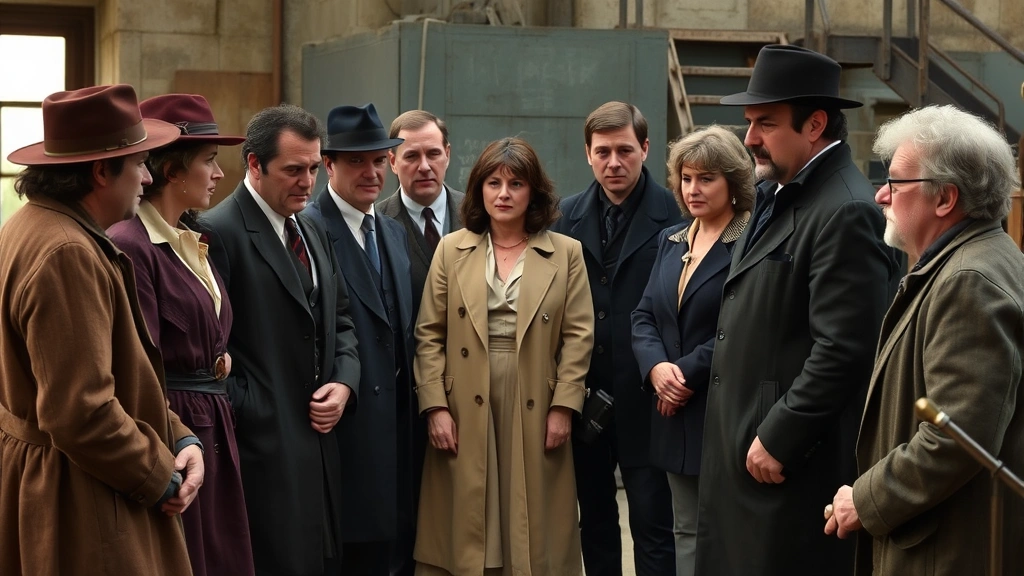
The film’s success launched or significantly elevated the careers of virtually every principal performer. Frances McDormand’s Oscar win established her as a major talent, leading to collaborations with prestigious directors and selection for leading roles in significant productions. She would return to work with the Coens multiple times, developing a professional relationship that produced some of cinema’s finest performances.
Steve Buscemi leveraged his Fargo visibility into a sustained career as both actor and director. His ability to inhabit morally compromised characters with humanity made him a sought-after supporting actor, and his directorial work demonstrates how his performance sensibilities translated into visual storytelling. Peter Stormare similarly emerged as a character actor of choice for complex, often menacing roles, his Fargo performance establishing him as capable of sustained screen presence without dialogue.
William H. Macy’s trajectory proves perhaps most instructive about the film’s casting impact. Though he’d worked consistently before Fargo, the film’s success positioned him as a leading man capable of carrying dramatic weight while maintaining the everyman quality that made Jerry Lundegaard so compelling. His subsequent work in contemporary cinema demonstrates how Fargo fundamentally altered his career possibilities.
Harve Presnell, as the kidnapper’s father, brought gravitas and moral complexity to a smaller role, demonstrating how the Coens attracted quality performers across all cast levels. This commitment to casting depth influenced industry practices regarding ensemble work and the value placed on character actors capable of elevating minor roles.
Cultural Influence and Industry Impact
The success of Fargo‘s ensemble cast influenced how studios approached crime narratives and character-driven storytelling throughout the late 1990s and 2000s. The film demonstrated that audiences would embrace crime stories centered on ordinary people rather than glamorous antiheroes, and that strong performances could compensate for unconventional narrative structures. This validation encouraged more ambitious casting choices and greater willingness to invest in character development over plot mechanics.
The film’s influence extended to television, where the success of character-driven narratives with strong ensemble casts became increasingly apparent. Shows like The Wire and True Detective operate within frameworks that Fargo helped establish—the notion that crime narratives could foreground character complexity, regional specificity, and moral ambiguity while maintaining dramatic momentum. The Coen Brothers’ own television series Fargo, which premiered in 2014, directly extends the original film’s casting philosophy by featuring strong ensemble casts with rotating leads across seasons.
Industry analysts and casting directors cite Fargo as a watershed moment in understanding how committed performances from lesser-known actors could generate cultural impact rivaling films built around established stars. This democratization of casting—the recognition that talent matters more than marquee value—influenced funding decisions and production approaches throughout the industry. When exploring film criticism and analysis, the examination of casting choices and performance quality became increasingly sophisticated, partly due to Fargo‘s example.
Legacy in Modern Television and Film
The legacy of Fargo‘s cast extends prominently into contemporary television, where the film’s approach to ensemble casting and character authenticity influenced how prestige television productions assemble their casts. The FX series Fargo, created by Noah Hawley, explicitly embraces the original film’s casting philosophy while updating it for contemporary television. Each season features a different ensemble centered on a strong lead performance, with supporting actors selected for depth of character portrayal rather than recognizability.
The film’s influence appears in how contemporary crime dramas and character studies approach regional storytelling. The success of McDormand’s performance in particular encouraged casting directors to seek female leads for stories traditionally centered on male characters, and to value authenticity and nuance over conventional attractiveness or star power. This shift contributed to more diverse and complex female representation in genre narratives.
Modern filmmakers frequently cite Fargo when discussing casting philosophy. The Coen Brothers’ approach—prioritizing the character over the actor, seeking performers capable of inhabiting specific regional and cultural contexts authentically, and investing equally in supporting roles—has become a model for ambitious independent and mid-budget productions. When examining contemporary action cinema and modern horror productions, the influence of character-driven casting approaches inherited from Fargo remains evident.
Research from the Pew Research Center examining media consumption patterns shows sustained audience interest in character-driven narratives and ensemble casts, validating the approach that Fargo pioneered. Academic studies in film and media emphasize how the film’s casting choices contributed to its critical and commercial success, making it a frequently cited example in film schools and criticism courses.

The enduring cultural presence of Fargo demonstrates how casting decisions function as creative choices equal in importance to direction, cinematography, and editing. The film’s actors didn’t simply execute a script; they participated in the creation of a new template for how character-driven narratives could function within genre frameworks. Their performances established benchmarks for authenticity, complexity, and depth that continue influencing casting decisions decades later.
Understanding Fargo‘s cast impact requires recognizing that great performances emerge from alignment between actor, character, director, and material. The Coen Brothers’ success in assembling an ensemble capable of bringing their vision to life demonstrates the creative importance of casting as a directorial responsibility. In an industry often dominated by star power and marquee value, Fargo proved that authentic talent, thoughtful selection, and committed performance could create cultural impact transcending conventional metrics of success.
The film’s legacy in casting continues shaping how the industry values performance quality, regional authenticity, and character complexity. For contemporary filmmakers and casting directors, Fargo remains a masterclass in how ensemble casting serves narrative and thematic purposes simultaneously. The performances of McDormand, Macy, Buscemi, Stormare, and the supporting cast established new possibilities for character-driven storytelling and influenced generations of creative professionals seeking to balance artistic ambition with audience engagement.
FAQ
Who was originally considered for the lead role in Fargo?
While the Coen Brothers ultimately selected Frances McDormand for Marge Gunderson, they had envisioned the character as central to their narrative vision from early development. The role was written with McDormand in mind, reflecting the Coens’ confidence in her ability to embody the character’s unique combination of warmth, intelligence, and authority. This intentional casting approach differed from typical industry practice where roles are written generically and cast afterward.
How did the actors prepare for their Midwest accents?
The cast’s approach to regional authenticity varied based on their backgrounds. Frances McDormand, being Minnesotan herself, brought natural linguistic authenticity to the role. Other actors worked with dialect coaches and spent time in Minnesota communities to absorb speech patterns and cultural mannerisms authentically. The Coen Brothers prioritized natural integration of regional characteristics rather than exaggerated performance.
What impact did Fargo have on casting practices in Hollywood?
Fargo demonstrated that films centered on lesser-known actors could achieve critical and commercial success, validating a casting philosophy prioritizing character fit over star power. This influenced subsequent productions to invest more heavily in ensemble casting and character-actor alignment, contributing to a broader shift in how the industry evaluated casting decisions.
Did the cast reunite for the FX television series?
The television series Fargo features different casts for each season, operating as an anthology rather than a direct continuation. While the original film’s cast did not return, the television adaptation explicitly embraces the original film’s casting philosophy of ensemble ensembles with rotating leads selected for depth and authenticity.
How did Steve Buscemi’s performance influence his career?
Buscemi’s portrayal of Carl Showalter established him as a character actor capable of embodying morally compromised, often menacing figures with humanity and complexity. This visibility led to consistent work in supporting roles and eventually to his development as a director, demonstrating how strong performances in quality films can launch multifaceted careers.
What made William H. Macy’s Jerry Lundegaard so compelling?
Macy’s performance rendered Jerry simultaneously pathetic and sympathetic—a man whose desperation drives him toward catastrophic decisions without rendering him entirely contemptible. This balance between weakness and humanity created audience investment in a fundamentally flawed character, demonstrating Macy’s ability to find depth in seemingly one-dimensional roles.