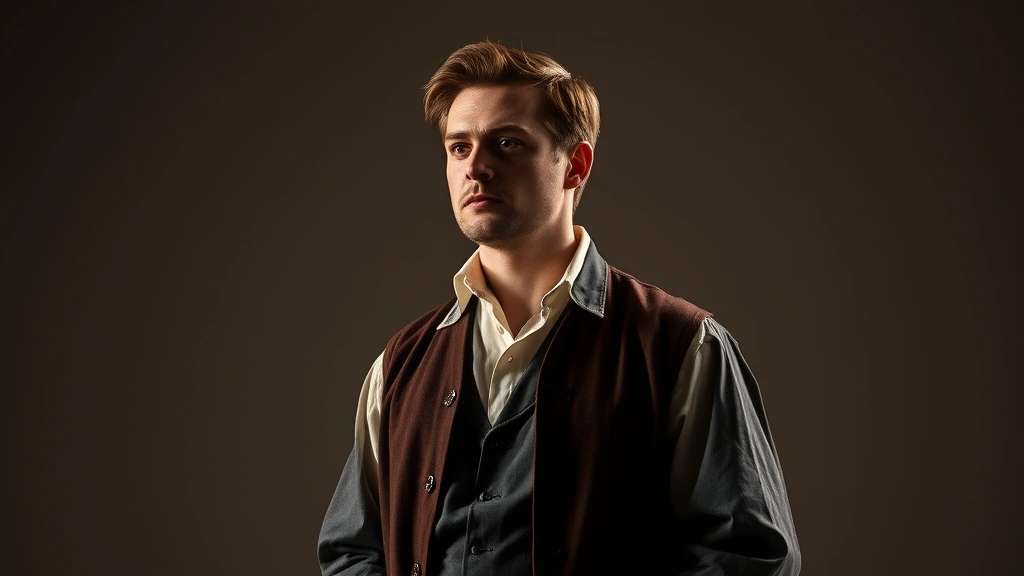
Mark Rylance’s Impact: A Comprehensive Filmography Overview
Mark Rylance has established himself as one of contemporary cinema’s most versatile and critically acclaimed performers, seamlessly transitioning from his legendary stage career to become a commanding presence on film and television. His filmography reflects a deliberate, thoughtful approach to role selection—one that prioritizes artistic merit and character depth over commercial appeal. Since his film debut in the 1980s, Rylance has demonstrated an extraordinary range, inhabiting complex characters that span genres from intimate psychological dramas to large-scale historical epics and espionage thrillers.
What distinguishes Rylance’s approach to acting is his commitment to authenticity and emotional truth. Drawing from decades of Shakespearean performance and classical theatrical training, he brings a theatrical precision to screen work that elevates every production he touches. This exploration of his filmography reveals not just a catalog of performances, but a trajectory of artistic evolution that has reshaped how audiences perceive character-driven cinema in the digital age.
Early Career and Breakthrough Roles
Mark Rylance’s journey to international recognition began in the 1980s and 1990s with supporting roles that showcased his distinctive presence and technical mastery. His early work included appearances in films like Prospero’s Books (1991), where his collaboration with visionary director Peter Greenaway demonstrated his willingness to engage with experimental and challenging material. These formative years were crucial in establishing Rylance as an actor unafraid of unconventional storytelling approaches.
Throughout the 1990s, Rylance balanced film work with his celebrated return to the Royal Shakespeare Company, where he would eventually become Artistic Director. This period saw him taking on roles that allowed him to develop his craft in diverse contexts. Films such as Angels and Insects (1995) revealed his capacity for period drama and nuanced emotional work, establishing patterns that would define his later career choices. His commitment to theatrical excellence informed every screen performance, creating a distinctive quality that audiences and critics began to recognize as quintessentially Rylance.
The transition from respected character actor to major film star accelerated in the early 2000s, particularly with his appearances in films that began attracting attention from prestigious filmmakers. His work demonstrated that quality film storytelling required actors capable of sustaining complex internal lives across entire narratives. This period established Rylance as someone who could carry films with his presence alone, without relying on action sequences or conventional star power.
The Spielberg Collaborations: Defining Partnership
The partnership between Mark Rylance and Steven Spielberg represents one of contemporary cinema’s most significant actor-director relationships, fundamentally altering the trajectory of both careers. Beginning with Bridge of Spies (2015), Rylance demonstrated an uncanny ability to embody the quiet intensity that Spielberg’s Cold War thriller demanded. His portrayal of James Donovan—the insurance lawyer thrust into international espionage—earned him an Academy Award for Best Supporting Actor, validating his transition to leading roles in prestigious productions.
What makes this collaboration particularly significant is how it showcases Rylance’s ability to anchor narratives through restraint and authenticity. In Bridge of Spies, he conveys enormous dramatic tension through minimal gestures and carefully modulated vocal delivery. This approach aligns perfectly with Spielberg’s directorial sensibility, which values emotional realism over histrionics. The success of this film opened doors to subsequent collaborations, including The Post (2017), where Rylance played Ben Bradlee opposite Meryl Streep’s Katharine Graham in this examination of press freedom and government accountability.
The Ready Player One (2018) collaboration demonstrated Rylance’s range within the Spielberg partnership, as he took on the role of James Halliday in this science fiction spectacle. Here, Rylance’s ability to convey isolation and emotional longing within a visually overwhelming narrative environment proved essential to the film’s emotional core. His work across these Spielberg films established a template for how classical theatrical training could enhance contemporary blockbuster filmmaking, influencing casting decisions across the industry.
Subsequent collaborations including West Side Story (2021), where Rylance played Lieutenant Schrank, and Fabelmans (2022), where he portrayed Burt Fabelman opposite Paul Dano, continued this pattern of deepening partnership. Each film allowed Rylance to explore different facets of character work while maintaining the distinctive emotional authenticity that defines his performances. This sustained creative relationship demonstrates the value of director-actor partnerships that evolve over multiple projects, allowing for increasingly sophisticated storytelling possibilities.
Building Character Depth Across Genres
Beyond his Spielberg collaborations, Mark Rylance’s filmography reveals a deliberate strategy of genre exploration that showcases his versatility. His work in Dunkirk (2017) opposite Tom Hardy and Kenneth Branagh presented him as a civilian mariner navigating extraordinary circumstances, bringing gravitas and humanity to Christopher Nolan’s ambitious war narrative. This performance demonstrated his capacity to hold his own within ensemble casts of major stars, never disappearing despite the film’s technical and narrative complexity.
In psychological thrillers and character studies, Rylance has proven equally compelling. His roles in films like Twelfth Night (1996) and various adapted literary works showcase his understanding of Shakespearean nuance and literary adaptation. When exploring film criticism and character analysis, critics frequently highlight how Rylance elevates source material through his interpretative choices.
His work in The Tragedy of Macbeth (2021), directed by Joel Coen, allowed him to return to Shakespeare on screen with a filmmaker whose sensibility matched his own artistic rigor. This film exemplified how classical dramatic training continues informing contemporary cinema, with Rylance’s performance anchoring Coen’s stark, visually distinctive interpretation. The film’s success validated the commercial viability of Shakespeare adaptations featuring mature, classically trained actors capable of delivering the text’s complexity.
Rylance has also demonstrated comfort with genre films that might seem beneath his stature, approaching each role with equal commitment. This democratic approach to character work—treating a supporting role with the same intensity as a lead—has earned him respect across the industry and contributed to his reputation as a consummate professional who elevates every project he touches.

Television Excellence and Prestige Projects
While film work has brought Rylance international recognition, his television career has allowed for even more ambitious character exploration across extended narratives. His appearance in the acclaimed series Wolf Hall (2015) demonstrated how his theatrical skills translated to prestige television, bringing Thomas Cromwell to vivid life in this adaptation of Hilary Mantel’s historical novel. The success of this project positioned Rylance as a major talent for ambitious streaming and broadcast productions.
More recently, Rylance’s work in Slow Horses (2022-present), the Apple TV+ spy series based on Mick Herron’s novels, has proven remarkably influential in establishing a new template for intelligent espionage television. His portrayal of Jackson Lamb—a slovenly, brilliant MI5 agent navigating institutional bureaucracy—showcases his comedic timing alongside dramatic depth. This performance has generated significant critical acclaim and expanded his audience considerably, introducing him to viewers who might not engage with his film work.
His television work demonstrates that quality storytelling across platforms benefits from mature, experienced performers capable of sustaining character arcs across multiple seasons. The extended format allows Rylance to develop characters with the kind of nuance typically reserved for theatrical work, creating performances of remarkable depth and complexity. This television renaissance has proven that his star power translates effectively across media formats, enhancing rather than diminishing his cultural relevance.
Critical Recognition and Awards
Mark Rylance’s awards recognition reflects the industry’s acknowledgment of his exceptional talent and consistent excellence. His Academy Award for Bridge of Spies marked a watershed moment, validating his transition from respected character actor to major star. This recognition opened doors to subsequent prestigious projects and elevated his status within the industry’s hierarchy of respected performers.
Beyond the Oscar, Rylance has accumulated numerous accolades including Golden Globe nominations, BAFTA recognitions, and Screen Actors Guild awards. More significantly, his work has earned consistent critical praise from publications and critics focused on evaluating film performance and artistic merit. This critical consensus regarding his excellence has established him as a reference point for discussions of quality acting in contemporary cinema.
The respect Rylance commands extends beyond traditional awards recognition. He is frequently cited by fellow actors and directors as an exemplary performer whose approach to character work represents the highest standards of the craft. This peer recognition, often more meaningful than industry awards, reflects his profound influence on contemporary performance practices across film and television.
His work has influenced casting decisions throughout the industry, with filmmakers increasingly seeking mature, classically trained actors capable of bringing Rylance-like authenticity to character roles. This shift represents a significant cultural moment, demonstrating renewed appreciation for actors whose primary tool is emotional truth rather than conventional star power or physical spectacle.
Recent Work and Continued Evolution
Recent years have seen Mark Rylance continuing to expand his artistic reach while maintaining the quality standards that define his career. His involvement in projects like The Outfit (2022) and various other independent and prestige productions demonstrates his commitment to diverse storytelling. Unlike actors who settle into comfortable patterns once achieving major success, Rylance continues actively seeking roles that challenge and expand his capabilities.
His continued collaboration with prestigious filmmakers and his willingness to explore new genres and formats suggest an artist still in the midst of creative evolution. The success of Slow Horses has positioned him as a major television presence, while his film work continues earning critical recognition and awards consideration. This balance between film and television work allows him to maintain the kind of artistic variety that sustains long-term creative engagement.
Looking forward, Rylance’s trajectory suggests continued influence on how the industry values experienced, classically trained performers. His career demonstrates that age and maturity represent assets rather than liabilities in contemporary filmmaking, particularly for character-driven narratives. As audiences increasingly seek meaningful storytelling and authentic performances, Rylance’s particular gifts become increasingly valuable.
His recent work also reflects a growing trend toward casting mature actors in roles of authority and complexity, reversing decades of industry bias toward younger performers. This shift, partially attributable to Rylance’s success and influence, suggests a maturing entertainment landscape that values the depth and nuance that come from decades of professional experience and artistic development.
FAQ
What was Mark Rylance’s breakthrough film role?
While Rylance worked in film throughout the 1990s and 2000s, his major breakthrough came with Bridge of Spies (2015), directed by Steven Spielberg. This role earned him an Academy Award for Best Supporting Actor and established him as a major film star, though he had already achieved significant acclaim in theater and supporting film roles.
How many films has Mark Rylance appeared in?
Mark Rylance has appeared in over 50 films since his debut in the 1980s, ranging from small supporting roles to major leads. His filmography spans multiple genres including drama, thriller, science fiction, and period pieces, demonstrating remarkable range and versatility across his career.
What is Mark Rylance’s most famous role?
While Bridge of Spies brought him mainstream recognition, many consider his role in Slow Horses as Jackson Lamb to be equally significant in contemporary culture. His film work with Steven Spielberg across multiple projects has also become iconic, particularly in West Side Story and Fabelmans.
Has Mark Rylance won major acting awards?
Yes, Mark Rylance won the Academy Award for Best Supporting Actor for Bridge of Spies (2015). He has also received numerous other nominations and awards including Golden Globe nominations, BAFTA recognitions, and Screen Actors Guild awards throughout his career.
What is the connection between Mark Rylance and Steven Spielberg?
Mark Rylance and Steven Spielberg have collaborated on multiple films beginning with Bridge of Spies (2015). Subsequent collaborations include The Post (2017), Ready Player One (2018), West Side Story (2021), and Fabelmans (2022), creating one of contemporary cinema’s most significant actor-director partnerships.
Does Mark Rylance do television work?
Yes, Mark Rylance has achieved significant success in television, particularly in prestige projects. His role as Jackson Lamb in the Apple TV+ series Slow Horses (2022-present) has earned substantial critical acclaim and introduced him to broader audiences. He also appeared in the acclaimed BBC/PBS series Wolf Hall (2015).


