L.A. Confidential’s Impact on Film Noir: An Analysis
Curtis Hanson’s 1997 masterpiece L.A. Confidential stands as a pivotal moment in cinema history, not merely as a acclaimed film but as a transformative work that revitalized film noir for contemporary audiences. Decades after the classic noir period supposedly ended in the 1950s, this Los Angeles crime drama proved that the genre’s thematic depth, visual language, and moral complexity remained profoundly relevant. The film didn’t simply resurrect noir aesthetics—it fundamentally redefined how modern filmmakers could approach the genre while maintaining its essential philosophical core.
The impact of L.A. Confidential extends far beyond its critical reception and box office success. It demonstrated that audiences in the late 1990s possessed an appetite for morally ambiguous characters, intricate plotting, and the kind of atmospheric storytelling that defined classic noir. More importantly, it showed filmmakers worldwide that noir could serve as a contemporary vehicle for exploring corruption, institutional failure, and personal redemption. This analysis examines how the film reshaped noir cinema and continues to influence filmmakers today.
Understanding Classic Film Noir and Its Evolution
Film noir emerged in the 1940s as a distinctly American genre, though its roots traced back to German Expressionism and French poetic realism. The classic noir period, typically dated from 1941 to 1958, produced iconic works like The Maltese Falcon, The Big Sleep, and The Killers. These films shared common visual signatures: high-contrast black-and-white cinematography, dramatic shadows and lighting, urban settings, and a pervasive sense of moral ambiguity. Thematically, noir explored the corruption of American institutions, the femme fatale archetype, the doomed protagonist, and the fundamental unreliability of truth and justice.
By the 1970s and 1980s, filmmakers had begun experimenting with what critics termed “neo-noir”—works that transplanted noir’s thematic concerns and visual language into contemporary settings, often in color. Films like Chinatown (1974) and Blood Simple (1984) demonstrated that noir remained viable, yet many critics questioned whether the genre could achieve the mythic resonance of its classical predecessors. The conventions felt increasingly self-conscious, the moral universe more cynical than complex. This was the landscape when Curtis Hanson and cinematographer Kim Dickens began developing L.A. Confidential, adapting James Ellroy’s dense 1990 novel.
The challenge facing Hanson was substantial: how to honor noir’s classical traditions while creating something that felt urgent and contemporary. The answer lay not in abandoning noir’s core elements but in deepening them, in treating the genre’s moral questions with renewed seriousness. Where some neo-noir films had emphasized style over substance, L.A. Confidential insisted on marrying impeccable visual craft with thematic weight.
L.A. Confidential’s Visual and Narrative Innovation
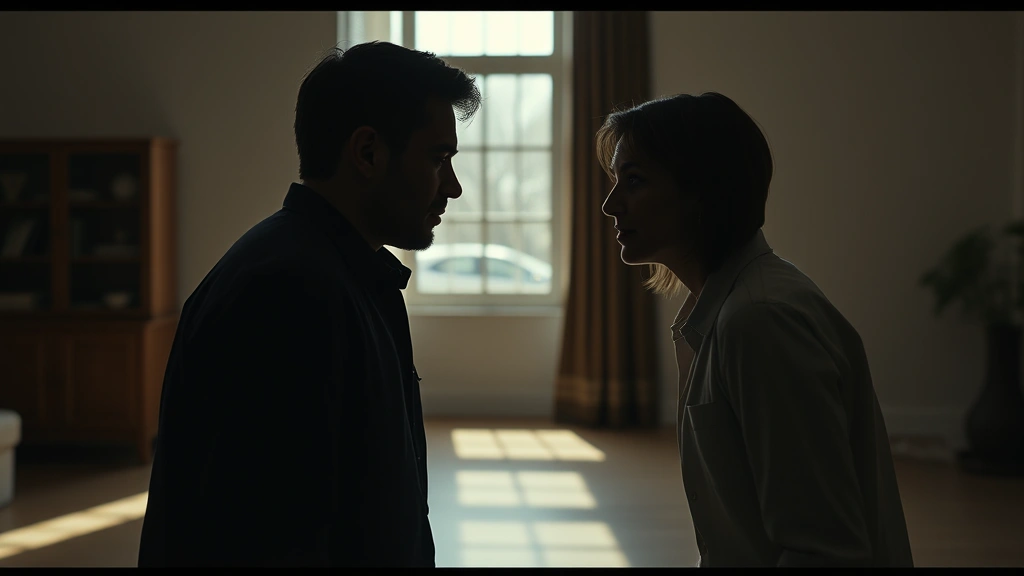
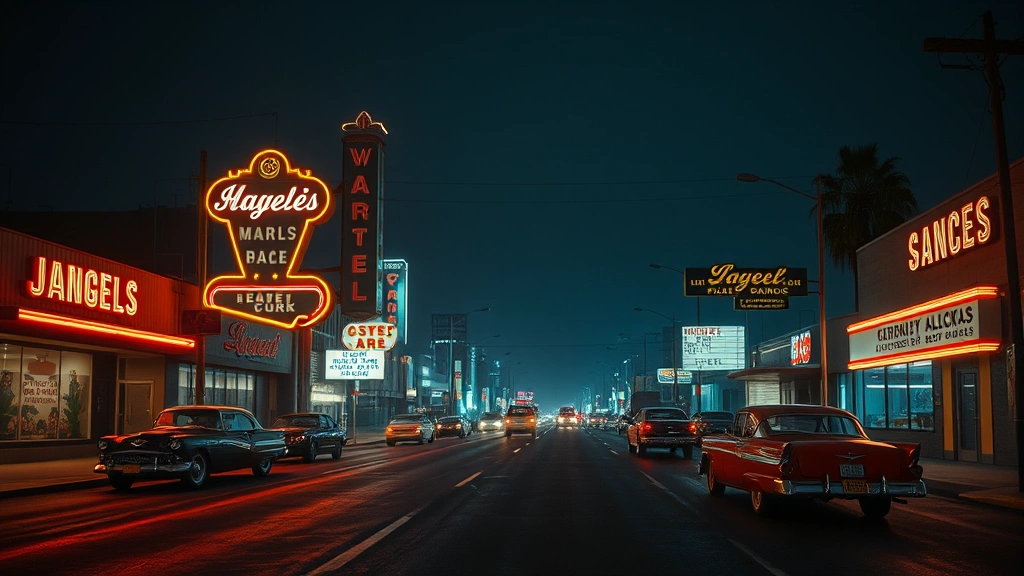
L.A. Confidential occupies a unique position in noir cinema because it bridges the gap between homage and innovation. Cinematographer Kim Dickens crafted a visual language that evoked classic noir while remaining distinctly modern. The film employs chiaroscuro lighting—those dramatic shadows and contrasts—but does so in color, creating a palette dominated by cool blues, amber streetlights, and the warm tones of 1950s interiors. This chromatic choice was crucial; it allowed the film to feel both period-specific and emotionally contemporary.
The narrative structure itself represents a significant innovation. Rather than following a single protagonist’s descent into moral corruption, L.A. Confidential tracks three police officers with competing moral frameworks. Detective Exley (Guy Pearce) represents institutional ambition and rule-following; Detective Vincennes (Russell Crowe) embodies pragmatic corruption; and Officer White (James Cromwell) operates from a place of loyalty and protection. This tripartite protagonist structure allows the film to explore noir’s central question—what does morality mean in an corrupt system?—from multiple perspectives simultaneously. The viewer cannot simply align with one character’s moral position; instead, we’re forced to grapple with the validity of each approach.
The screenplay, adapted by Hanson and Brian Helgelson from Ellroy’s novel, demonstrates remarkable economy. The “Bloody Christmas” beating, the Nite Owl massacre, the pornography ring, and the conspiracy that connects them all unfold with a clarity that respects the audience’s intelligence. Unlike some complex noir narratives that prioritize obfuscation, L.A. Confidential reveals information strategically, allowing viewers to piece together the larger picture alongside the protagonists. This approach grounds the film in procedural realism while maintaining noir’s essential ambiguity about institutional truth.
The Film’s Treatment of Corruption and Institutional Decay
At its heart, L.A. Confidential explores how institutional corruption doesn’t emerge from individual moral failure but from systemic incentive structures. The Los Angeles Police Department depicted in the film isn’t populated by cartoonish villains; rather, it’s an organization where good people make compromises that gradually erode their moral foundations. Captain Dudley Smith (James Cromwell) represents the film’s most sophisticated exploration of institutional corruption. He’s not a criminal mastermind in the traditional sense; he’s a bureaucrat who has rationalized his crimes as necessary for maintaining order and protecting his officers.
This nuanced treatment of corruption distinguishes L.A. Confidential from both classical noir and much neo-noir cinema. Where classic noir often depicted corruption as a personal moral choice—the protagonist’s decision to betray their principles for money or love—this film presents corruption as structural. The LAPD’s racism, brutality, and systematic cover-ups aren’t aberrations but features of an institution designed to serve certain interests over others. When Detective Exley uncovers evidence of the Nite Owl massacre’s true perpetrators, he doesn’t discover a simple conspiracy; he uncovers the way institutional power protects itself.
The film’s portrayal of the LAPD also reflects the historical reality of 1950s Los Angeles, a city where police brutality and institutional racism were normalized. By setting the narrative in this period while addressing these issues with contemporary moral clarity, Hanson created something that resonates across decades. The film doesn’t judge 1950s Los Angeles from a position of contemporary superiority; rather, it asks viewers to recognize how institutional structures that seemed normal and necessary at the time were in fact fundamentally corrupt. This temporal distance allows for a kind of clarity that might be harder to achieve in a strictly contemporary setting.

Character Complexity in Modern Noir
The three central characters in L.A. Confidential each represent different responses to institutional corruption, and the film’s genius lies in refusing to privilege one response as clearly superior. Detective Exley pursues truth through institutional channels, believing that the system can be reformed from within. His approach is idealistic, grounded in faith that evidence and procedure matter. Detective Vincennes, by contrast, has already accommodated himself to institutional corruption; he parlays his knowledge of police brutality into a lucrative side business as a consultant to a Hollywood scandal magazine. Officer White operates from loyalty, protecting his fellow officers even when doing so requires moral compromise.
As the narrative progresses, each character is forced to confront the limitations of their moral framework. Exley discovers that institutional procedures can be manipulated to serve power rather than justice. Vincennes learns that cynical accommodation has costs he didn’t anticipate. White realizes that loyalty to corrupt institutions ultimately betrays the values he claims to uphold. The film’s resolution doesn’t provide clear answers about which approach is correct; instead, it suggests that meaningful action requires synthesizing elements of all three perspectives. This refusal of moral simplicity is quintessentially noir, yet the way L.A. Confidential executes it feels fresh and contemporary.
The performances anchor these character complexities. Russell Crowe’s Vincennes combines charm and menace, making the character’s corruption sympathetic without excusing it. Guy Pearce’s Exley brings a kind of wounded idealism to the role, suggesting a man learning that the world doesn’t reward virtue. James Cromwell’s Captain Smith radiates a paternal warmth that makes his villainy all the more disturbing—he genuinely believes he’s protecting his officers, which makes his actions simultaneously more understandable and more damning. These performances elevate the material, demonstrating that noir’s character archetypes could accommodate genuine psychological depth.
Influence on Contemporary Noir Cinema
The success of L.A. Confidential didn’t immediately spawn a wave of noir imitations, but it did demonstrate to studios and filmmakers that audiences would embrace intelligent, morally complex crime narratives. In the years following the film’s release, directors began approaching noir-influenced material with renewed confidence. The influence manifests not in direct stylistic imitation but in a shared commitment to exploring institutional corruption and moral ambiguity with seriousness.
Films like Mystic River (2003), Brick (2005), and Drive (2011) all reflect lessons learned from L.A. Confidential. They share the film’s willingness to let moral questions remain genuinely open, its commitment to atmospheric visual storytelling, and its understanding that noir’s power derives from exploring how institutions and systems shape individual choices. Television series like True Detective and Chinatown-adjacent prestige dramas similarly draw on the template established by Hanson’s film: complex protagonists, institutional corruption as central theme, and visual sophistication in service of emotional and thematic depth.
Moreover, L.A. Confidential influenced how filmmakers approach source material adaptation. The film demonstrates that faithfulness to a novel’s themes and moral complexity matters more than literal scene-by-scene translation. Hanson and Helgelson condensed and restructured Ellroy’s sprawling narrative, but they preserved its essential concerns. This approach has become more common in prestige cinema, where filmmakers recognize that successful adaptation requires understanding a work’s core DNA rather than merely transcribing its plot.
The film also demonstrated the viability of period noir settings. Rather than confining noir to contemporary urban landscapes, L.A. Confidential showed that the genre’s thematic concerns could be explored through historical settings. This opened possibilities for films like Lawless (2012) and Killers of the Flower Moon (2023), which use historical periods to examine institutional corruption and moral complexity. By proving that noir’s emotional and thematic language transcended specific eras, L.A. Confidential expanded the genre’s possibilities.
Critical Reception and Cultural Significance
Upon its release in September 1997, L.A. Confidential received widespread critical acclaim. Major critics recognized the film as a significant achievement, praising its narrative intelligence, visual sophistication, and performances. The film earned eight Academy Award nominations, including Best Picture, Best Director, and Best Adapted Screenplay. While it ultimately lost the Best Picture Oscar to Titanic, the nominations themselves signaled that the Academy recognized noir as worthy of prestige recognition.
More importantly, the film’s reception demonstrated that audiences and critics alike had been underestimating noir’s potential for contemporary relevance. The film performed respectably at the box office and found a devoted audience in subsequent years through home video and cable television. It became a reference point in discussions of American cinema, cited alongside Chinatown as a modern noir classic. Film criticism and scholarship increasingly engaged with the film as a pivotal moment in genre cinema.
The cultural significance of L.A. Confidential extends beyond cinema studies. The film’s exploration of LAPD corruption and brutality anticipated broader cultural conversations about police accountability that would intensify in subsequent decades. While the film is set in the 1950s, its examination of institutional racism and violence within law enforcement resonated with audiences grappling with contemporary issues. This temporal displacement allowed the film to comment on present-day concerns through historical specificity, a technique that has become increasingly common in prestige cinema.
For readers interested in exploring film criticism more deeply, the process of becoming a film critic often involves studying films like L.A. Confidential, which reward close analytical attention. The film demonstrates how visual language, narrative structure, and thematic coherence work together to create meaningful cinema. Additionally, those interested in understanding how films translate literary source material should explore the best movies adapted from novels, where L.A. Confidential consistently ranks among the most successful examples.
The film’s enduring cultural significance also stems from its quotability and memorable moments. The most iconic movie quotes from crime cinema often include lines from L.A. Confidential, such as “Rollo Tomasi” and “Call-girl list.” These quotes have become shorthand for discussing institutional corruption and moral compromise in cinema. The film’s influence on contemporary film criticism and review remains substantial, with the film serving as a touchstone for discussions of noir, adaptation, and institutional critique.
For those interested in broader film discourse, the ScreenVibe Daily Blog regularly features analysis of films that follow in L.A. Confidential‘s tradition, examining how contemporary cinema engages with noir themes and aesthetics. The film’s impact continues to shape how filmmakers and critics approach crime narratives and institutional storytelling.
FAQ
What makes L.A. Confidential different from other noir films?
L.A. Confidential distinguishes itself through its multi-protagonist structure, sophisticated treatment of institutional corruption, and the way it synthesizes classical noir conventions with contemporary moral seriousness. Rather than following a single protagonist’s moral decline, the film explores three different ethical frameworks simultaneously, refusing to privilege any as clearly superior. This narrative complexity, combined with impeccable visual craftsmanship and nuanced performances, elevates the film beyond typical noir pastiche.
Is L.A. Confidential considered a neo-noir or classic noir film?
Technically, L.A. Confidential is a neo-noir film because it was made in 1997, well after the classical noir period (1941-1958). However, the film’s achievement lies in bridging the gap between homage and innovation. It employs classical noir conventions—high-contrast lighting, morally ambiguous characters, institutional corruption—while bringing them into contemporary dialogue. Many critics argue that L.A. Confidential represents the apex of neo-noir cinema precisely because it treats noir’s thematic concerns with the seriousness and depth they deserve.
How does L.A. Confidential compare to the novel by James Ellroy?
The film adaptation condenses and restructures Ellroy’s sprawling 500-page novel while preserving its thematic core. Hanson and Helgelson eliminated subplots, combined characters, and streamlined the narrative for cinematic purposes. However, they maintained the novel’s exploration of institutional corruption, moral ambiguity, and the way power structures shape individual choices. The adaptation demonstrates that faithfulness to source material means understanding essential themes rather than literal translation, a principle that has influenced how contemporary filmmakers approach literary adaptation.
What was the historical accuracy of the LAPD depicted in L.A. Confidential?
The film’s portrayal of the 1950s LAPD reflects documented historical reality. The era was marked by widespread police brutality, institutional racism, and systematic cover-ups. The “Bloody Christmas” beating depicted in the film was based on an actual 1951 incident. By grounding its fictional narrative in historical specificity, L.A. Confidential achieves authenticity that enhances its thematic exploration of institutional corruption. The film suggests that such corruption wasn’t aberrational but structural to the institution itself.
How has L.A. Confidential influenced modern crime dramas?
L.A. Confidential demonstrated that audiences would embrace intelligent, morally complex crime narratives with visual sophistication. The film’s influence appears in television series like True Detective and films like Mystic River and Drive, which share its commitment to exploring institutional corruption through multiple perspectives. The film also proved that noir could be adapted to historical periods and contemporary settings, expanding the genre’s possibilities. Its success helped legitimize noir as a serious vehicle for thematic exploration rather than mere stylistic exercise.