
Nightmare on Elm Street: Iconic Poster Analysis
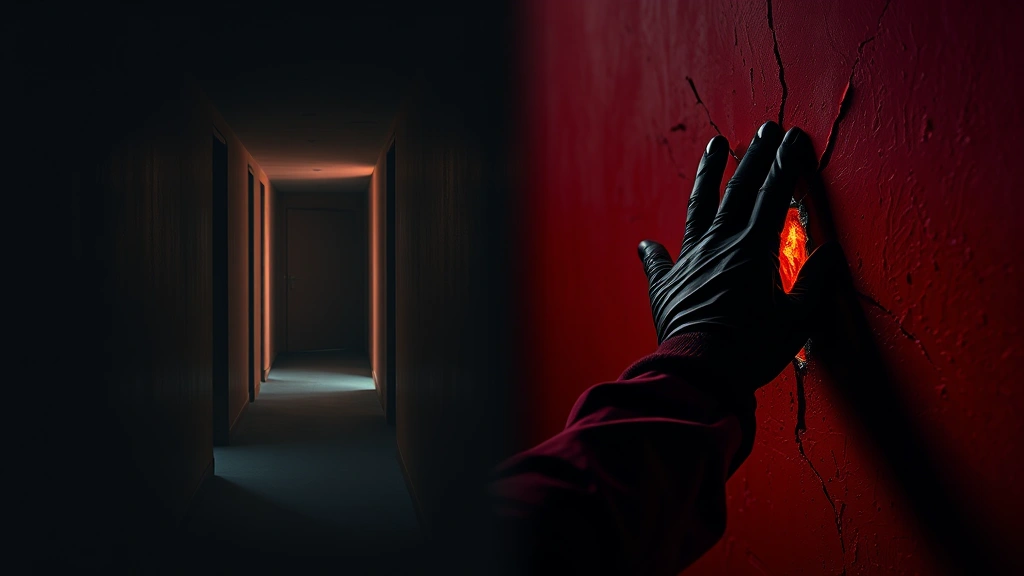
Few horror movie posters have achieved the cultural permanence of the original A Nightmare on Elm Street (1984) artwork. When Wes Craven’s slasher masterpiece emerged from the independent film circuit to become a phenomenon, its poster became an instantly recognizable symbol of 1980s horror cinema. The image of Freddy Krueger’s gloved hand reaching through a wall, fingers bent at impossible angles, communicated pure dread in a single frame. This wasn’t just promotional material—it was visual storytelling that promised audiences something genuinely unsettling.
The poster’s genius lies in its simplicity and psychological impact. Unlike contemporary horror marketing that relied on gore imagery or monster reveals, the Nightmare poster suggested rather than showed. The burnt, scarred figure barely visible in shadow, the arterial red color palette, and that iconic leather glove created an aesthetic that would define horror marketing for decades. Understanding this poster’s design choices, cultural impact, and legacy reveals how effective visual communication can transcend film marketing to become genuine art.
Design Elements and Visual Language
The original A Nightmare on Elm Street poster employs a masterclass in compositional restraint. Rather than cramming the frame with imagery, designer Pat Hanratty focused on a single focal point: that unmistakable gloved hand emerging from textured darkness. This compositional choice reflects broader design philosophy in effective movie marketing campaigns.
The hand itself becomes a character. Freddy’s leather glove, adorned with razor-sharp finger blades, breaks through what appears to be drywall or human flesh—the ambiguity is intentional. The distorted fingers suggest both mechanical artificiality and organic wrongness. This design element would become the character’s defining visual signature, more recognizable than his face. The glove represents violation, danger, and the intrusion of nightmare logic into physical reality.
Typography on the poster maintains stark, bold lettering that demands attention. The title “A Nightmare on Elm Street” appears in a typeface that suggests both the playful and the sinister—a tonal balance that Craven’s film itself achieves. The font carries weight without overwhelming the image, allowing the visual to remain the primary storytelling mechanism. This restraint in typography demonstrates understanding of hierarchy in visual design.
The background texture creates depth through subtlety. Rather than a flat color, the poster features a grainy, almost photographic quality that suggests a real environment corrupted by nightmarish presence. This textural quality makes the image feel tactile, as if viewers could actually feel the rough surface the glove penetrates. Such attention to surface detail elevates the poster beyond simple illustration to something more photorealistic and disturbing.
Color Psychology in Horror Marketing
The poster’s color palette—dominated by deep reds, blacks, and flesh tones—operates on fundamental psychological principles. Red functions simultaneously as warning and attraction, creating cognitive dissonance that makes the image impossible to ignore. Horror marketing frequently employs red, but the Nightmare poster uses it with surgical precision rather than saturation.
The deep red tones suggest blood, violence, and danger, yet they’re tempered with blacks that evoke darkness and mystery. This combination creates visual tension—the eye doesn’t know whether to be attracted or repelled, a sensation that mirrors the film’s central conceit about being trapped between waking and dreaming states. The absence of bright colors reinforces the nightmare aesthetic, suggesting a world drained of normal color and vitality.
Flesh tones in the poster ground the image in human vulnerability. Freddy’s scarred face, barely visible in shadow, appears almost corpse-like—neither fully alive nor dead. This ambiguous mortality resonates with the film’s exploration of death that persists beyond the grave. The color choices communicate that this isn’t a traditional slasher about a human killer, but something fundamentally more disturbing and supernatural.
Comparative analysis with other horror posters reveals how color choice dictates emotional response. Where action-oriented horror films might use brighter colors to suggest kinetic energy, Nightmare on Elm Street uses its palette to create psychological dread. The muted quality of the colors prevents the image from feeling sensational or exploitative, instead achieving something closer to artistic horror.

Freddy Krueger’s Visual Identity
Before the poster existed, Freddy Krueger was conceptual. The poster made him iconic. Wes Craven and makeup artist David Miller created a design that would be instantly recognizable, and the poster crystallized this visual identity in the public consciousness. Freddy’s burnt face, scarred and disfigured, emerged from nightmare logic rather than realistic injury.
The character’s design—fedora hat, striped sweater, burnt visage—became as culturally significant as Jason’s hockey mask or Michael Myers’ blank expression. Yet in the original poster, Freddy remains partially obscured, visible primarily through his gloved hand. This withholding of the full image creates anticipation and mystery. Audiences who hadn’t seen the film could construct their own mental image of the killer, making the poster function as a gateway to imagination.
The glove itself deserves extended analysis. Unlike machetes, knives, or firearms, the glove feels personal and intimate. It’s a weapon that requires proximity, that demands the killer approach his victims. The razor blades suggest both craftsmanship and madness—someone took time to construct this instrument. The glove becomes an extension of Freddy’s personality, a physical manifestation of his cruelty and creativity.
Subsequent posters across the franchise’s sequels would feature more of Freddy’s face, gradually revealing the design as audiences became familiar with it. This evolution demonstrates understanding of how iconic imagery functions over time. The first poster’s restraint gives way to fuller reveals as the character becomes established. This progression parallels how audiences experience horror—the unknown is scarier than the revealed, but once a monster is established, showing it becomes part of the character’s power.
Cultural Impact and Iconic Status
The Nightmare on Elm Street poster transcended its original purpose as promotional material to become a cultural artifact. Hung in dorm rooms and bedrooms, reproduced on merchandise, referenced in countless horror films and television shows, the image achieved the rare status of being recognized by people who’ve never seen the film. This cultural penetration reflects the poster’s effectiveness as visual communication.
Horror movie posters, as examined in contemporary media studies, function as primary drivers of audience awareness and interest. The Nightmare poster proved that restraint and psychological suggestion could outperform explicit gore imagery in creating desire to experience the film. It demonstrated that horror marketing could achieve artistic credibility.
The poster’s influence on subsequent horror marketing cannot be overstated. Filmmakers and designers studied its composition, color choices, and psychological impact. The gloved hand reaching through barriers became a visual language for invasion and violation that appeared in posters for films across multiple decades. The image established visual conventions that remain influential in horror marketing today.
Film critics and aspiring critics analyzing cinema often reference this poster as exemplary design. Its presence in museum exhibitions and film retrospectives confirms its status as artwork worthy of serious consideration. The poster represents horror cinema’s transition from exploitation to art form.
Poster Evolution Across the Franchise
As A Nightmare on Elm Street spawned sequels, the franchise’s poster designs evolved in fascinating ways. Early sequels maintained the original’s aesthetic sensibility while introducing new imagery. Later films, particularly the comedic entries, embraced more explicit Freddy imagery, reflecting how the character had become knowable and domesticated through cultural familiarity.
A Nightmare on Elm Street 2: Freddy’s Revenge (1985) featured more of Freddy’s face while maintaining the original’s color palette. Dream Warriors (1987) introduced more elaborate imagery, showing Freddy in action rather than in mysterious shadow. Each poster tracked how the franchise’s tone shifted from pure horror to action-horror to comedy-horror across subsequent entries.
The franchise’s 2010 remake attempted to recapture the original’s aesthetic with a more contemporary design sensibility. The remake’s poster featured Freddy’s glove prominently but lacked the psychological subtlety of the original. This comparative failure demonstrates how context, timing, and cultural moment influence poster effectiveness. What worked in 1984 cannot be simply replicated decades later.
Collector culture surrounding Nightmare posters has elevated original theatrical prints to significant monetary value. This economic reality confirms the poster’s cultural importance. Enthusiasts recognize that owning an original 1984 one-sheet represents owning a piece of cinema history. The poster has achieved the status of fine art within popular culture.
Modern Horror Poster Trends
Contemporary horror posters continue to reference the visual language established by A Nightmare on Elm Street. The emphasis on psychological suggestion over explicit gore, the use of color psychology, and the focus on iconic visual elements all reflect lessons learned from this foundational image. Modern filmmakers understand that restraint creates more effective marketing than spectacle.
Recent horror successes like Hereditary, The Babadook, and A Quiet Place employ poster designs that prioritize atmospheric dread over monster reveals. These films’ marketing materials echo the Nightmare poster’s philosophy that suggestion proves more powerful than showing. The influence persists across theatrical releases, streaming platforms, and digital marketing.
Streaming services have changed how horror posters function in contemporary media consumption. Where theatrical posters commanded attention through size and placement, streaming thumbnails operate in miniature. Yet the principles established by the Nightmare poster—clear focal point, distinctive color palette, psychological impact—remain essential. Designers must create images that work at thumbnail size while retaining visual power.
Digital media analysis from entertainment industry sources demonstrates that iconic imagery drives engagement across social platforms. The Nightmare on Elm Street poster remains frequently shared, referenced, and remixed in online spaces. Its continued cultural circulation proves that truly effective design transcends its original medium and moment.
Horror poster design courses and film analysis resources regularly feature the original Nightmare poster as foundational case study. Students learning visual communication study how this image achieved maximum psychological impact through compositional and chromatic choices. The poster functions as educational material in design schools and film programs worldwide.
The legacy of the A Nightmare on Elm Street poster extends beyond horror cinema into broader visual culture. Graphic designers reference its principles when creating psychological tension through imagery. Advertisers study its color psychology and focal point strategy. The poster demonstrates that commercial art can achieve genuine aesthetic significance when executed with intelligence and restraint.
Understanding this poster’s success requires recognizing that effective marketing operates on multiple levels simultaneously. The image functions as commercial promotion, artistic expression, psychological manipulation, and cultural artifact. It sells the film while transcending the commodity it promotes. This multivalent quality explains why the Nightmare on Elm Street poster remains relevant decades after its creation.
FAQ
Who designed the original A Nightmare on Elm Street poster?
Pat Hanratty designed the iconic original poster. Hanratty’s work demonstrated sophisticated understanding of psychological visual communication and color theory, creating an image that would define horror marketing for generations.
Why is the gloved hand so significant in the poster?
The gloved hand serves as Freddy’s primary visual signature and represents invasion, violation, and the intrusion of nightmare logic into physical reality. It’s more recognizable than the character’s face and communicates danger through intimacy rather than distance.
How did the poster influence other horror films?
The poster established visual conventions for horror marketing emphasizing psychological suggestion over explicit gore. Subsequent filmmakers adopted its principles of color psychology, compositional restraint, and iconic imagery, making it foundational to modern horror marketing language.
What makes the color palette so effective?
The deep reds, blacks, and flesh tones create psychological tension through color opposition. Red attracts and warns simultaneously, while blacks suggest mystery and darkness. This combination creates cognitive dissonance that makes the image impossible to ignore while conveying nightmare aesthetics.
Has the poster’s design influenced streaming-era horror marketing?
Yes, contemporary horror posters—whether for theatrical or streaming release—continue applying the Nightmare poster’s principles of clear focal points, psychological color use, and iconic imagery. The design philosophy remains relevant regardless of distribution platform.
Why hasn’t the 2010 remake poster achieved similar iconic status?
The remake’s poster, while visually competent, lacked the original’s psychological subtlety and cultural moment. Iconic status requires not just effective design but also cultural resonance and historical timing. The original poster captured a specific moment when horror cinema was evolving artistically.


